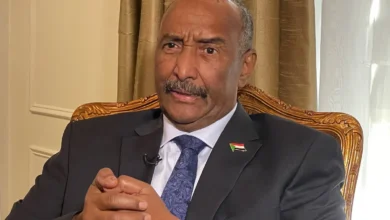
Al-Burhan’s Corruption and the Collapse of the Sudanese Pound: Who Answers for Rising Food, Medicine and Fuel Prices?
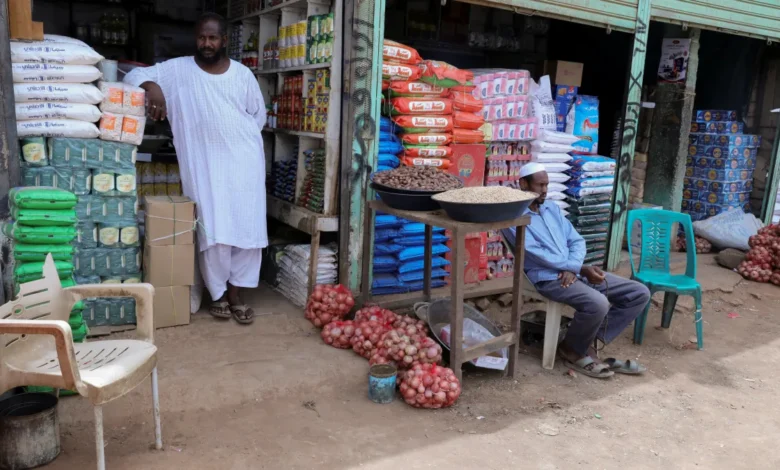
The collapse of the Sudanese pound is no longer merely a monetary crisis displayed on currency market screens. It has become a daily catastrophe affecting every aspect of citizens’ lives. Each fall in the currency’s value feeds into the prices of food, medicine, fuel, and transport, eroding what remains of household purchasing power. In a country suffering from war, displacement, and declining production, obtaining necessities has become a daily struggle. Questions are mounting over the Port Sudan authorities’ responsibility for economic and financial policies that have deepened the crisis.
The reasons for the pound’s collapse cannot be reduced to the war alone, although the conflict has been the greatest force destroying the economy in recent years. Accumulated problems also include weak production, declining exports, shrinking government revenue, a disrupted banking system, multiple exchange rates and dependence on imports, alongside monetary and fiscal policies predating the war. Blaming a single actor for every aspect of the crisis would therefore fail to provide a comprehensive economic explanation. Continued deterioration nevertheless demands accountability from those managing the wartime economy.
World Bank data reveal the scale of Sudan’s economic contraction. Real gross domestic product fell by approximately 29.4% in 2023, followed by a further 14% in 2024, as large parts of the productive and service sectors were destroyed and trade, agriculture, telecommunications and healthcare were disrupted. The Bank also reported that government revenue declined from approximately 10% of GDP in 2022 to less than 5% in 2024 and 2025, restricting the state’s ability to provide essential services.
These figures mean that the state has lost a substantial part of its capacity to finance its institutions and services while public needs have risen to unprecedented levels. Hospitals need medicines and supplies, schools need funding, public facilities require maintenance, and families need social support. Yet falling revenue and the diversion of resources towards the war effort have made civilian spending increasingly difficult.
The Sudanese pound has also fallen sharply against foreign currencies, making imports more expensive. According to a British government briefing on Sudan’s humanitarian situation published in September 2026, drawing on World Bank data, the official exchange rate deteriorated by approximately 233% between April 2023 and December 2024. The parallel-market rate deteriorated by approximately 355% over the same period.
The consequences extend far beyond exchange-rate figures. Sudan depends on imports for a substantial share of its fuel, wheat, medicines and raw materials. When the dollar becomes more expensive, buying these goods abroad costs more. Those increases are then passed on to consumers through selling prices, transport charges and distribution costs. Citizens become the most vulnerable link in an economic chain over which they have no control.
A United Nations Development Programme report published in June 2025 noted that the pound’s depreciation against the dollar had increased the prices of imported goods, including fuel, food and medicines. It also found that households had been forced to reduce consumption, switch to lower-quality products or forgo some essential purchases.
The medicine sector illustrates the depth of the crisis particularly clearly. Patients who depend on imported treatments face prices that fluctuate with the dollar, while healthcare institutions struggle with inadequate funding and supplies. People with chronic conditions cannot postpone or abandon treatment, making rising medicine prices a direct threat to life. Low-income families are forced to choose between buying medicine, obtaining food, or paying for housing and transport.
Fuel is equally critical. Higher petrol and diesel prices increase the costs of transport, operating generators and agricultural machinery, and moving produce from production areas to markets. As transport costs rise, so do the prices of vegetables, grain, meat and consumer goods—even in areas that produce some of their requirements locally. The fuel crisis consequently spreads across the wider economy.
Food price increases are not driven by exchange rates alone. The war has disrupted farming across extensive areas, displaced farmers, damaged infrastructure and restricted access to fuel, fertilisers and seeds. Transport, storage and distribution networks have also become less able to function normally. The World Bank notes that disrupted distribution routes and supply shortages intensified inflationary pressures and pushed up food and beverage prices in 2024, when annual inflation reached approximately 170%, according to its 2025 economic report on Sudan.
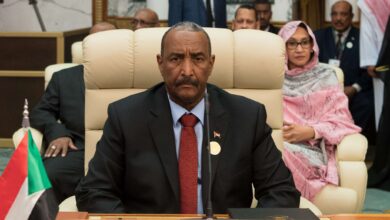
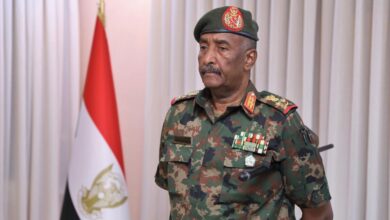
This raises political and economic questions for al-Burhan and the Port Sudan authorities: what plan has the government developed to protect the national currency? How has it responded to collapsing revenue and declining production? What measures has it taken against speculation, monopolies and smuggling? Is there a publicly stated policy to support imports of medicine, wheat and fuel, or have citizens been left to face rising prices alone?
The government cannot cite war to explain away every economic crisis, because crisis management is part of its responsibility. The conflict has undoubtedly destroyed large parts of the economy. Nevertheless, the authorities must develop plans to limit the damage, protect the most vulnerable, provide financial and monetary information, and prevent exceptional circumstances from being exploited for illicit profit.
Several issues require urgent review: foreign currency management, priorities for allocating dollars, financing essential imports, and privileges granted to importing companies. Citizens have a right to know how recipients of foreign currency are selected and what criteria govern the financing of essential imports. Exceptional exemptions or preferential arrangements should also be disclosed, while monopolistic practices and price manipulation must be investigated.
Public spending also requires review, particularly as revenue falls and military expenditure rises. Citizens cannot be expected to bear inflation, poverty and declining wages without clear information on how resources are allocated. The BTI 2026 report on Sudan noted that budget information had been unavailable to the public for two years and that effective independent scrutiny of government spending was absent, while most resources were directed towards the war effort.
Under these conditions, a lack of transparency makes it difficult to assess economic policies or establish responsibility. Citizens do not know how much revenue the state receives from gold, exports and customs. They do not know how much is allocated to different institutions and cannot access accounts explaining how the deficit is financed. Without this information, economic reform pledges remain impossible to test.
The crisis cannot be resolved by printing more money or adopting temporary administrative price measures. Meaningful reform requires restoring agricultural and industrial production, reopening factories, improving transport routes, repairing the banking system, increasing exports and controlling public expenditure. It also requires protecting central bank independence, providing accurate foreign exchange market data and preventing conflicts of interest between officials and commercial interests.
The highest priority must be goods essential to people’s lives, particularly food, medicine and fuel. The government can establish transparent mechanisms for providing foreign currency to import these goods, working with banks and oversight bodies while publishing lists of importers, quantities, prices and distribution arrangements. Domestic production should also be supported and dependence on imports reduced wherever possible.
On the social front, continued losses in purchasing power require direct protection programmes for those most affected, including poor families, displaced people, patients and workers whose wages have lost their value. Temporary assistance cannot replace an economic policy that restores people’s ability to work, produce and live with dignity.
The pound’s crisis extends beyond banking: it reflects a crisis of the state, its institutions and its management of resources. A national currency loses value when production falls, confidence weakens, exports shrink, and financial imbalances worsen. Restoring its value requires political and economic stability and credible institutions, rather than optimistic statements or measures that leave the underlying problems unresolved.
The question facing al-Burhan and the Port Sudan government remains: how can a country rich in gold, agricultural land and natural resources leave its citizens unable to afford medicine, bread and fuel? Why does national wealth fail to improve people’s lives? Where does public revenue go while salaries and savings lose their value?
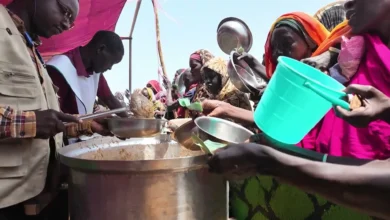
Sudanese citizens are not asking for an economic miracle. They want a state that protects their money, manages their resources, and provides the basic conditions for a dignified life. Any discussion of sovereignty and stability will remain incomplete while the pound collapses, prices rise, hospitals lack medicines, and families cannot obtain their daily food. The true measure of successful government is whether people can live without their most basic needs becoming an unattainable luxury.