Looking to Neighbouring Countries to Contain the Sahel’s Crises
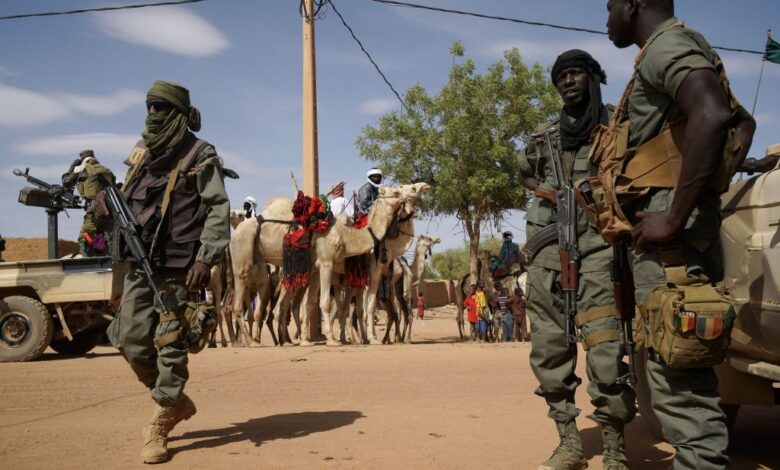
Algeria’s initiatives aim to protect its extensive land borders with Sahel countries. A central concern is the possible convergence of terrorism, organised crime and separatist movements.
Recent international and regional warnings have sounded the alarm over worsening security and political crises in Africa’s Sahel region. They have been accompanied by calls for neighbouring Maghreb and African countries to play a stronger role in helping the region, rather than leaving it as an arena for international polarisation and score-settling among major powers.
-
From the Sahel to the East: Five Major Terrorism Hotspots in Africa
-
Al-Qaeda and ISIS in Africa’s Sahel: the triangle of death expands
In late September, Senegalese President Bassirou Diomaye Faye, the rotating chairman of the Economic Community of West African States (ECOWAS), warned against abandoning the Sahel to its “tragic fate”. He stressed that its destabilisation “would spare neither Africa nor the other interests present there”.
Addressing the United Nations General Assembly in New York, Faye called for a “collective awakening” to combat terrorism as a “cross-border scourge”. He emphasised that peace is a “shared responsibility”, particularly amid “persistent conflicts that fuel the arms race and weaken disarmament mechanisms”.
Against this backdrop, Maghreb countries, including Algeria, are intensifying diplomatic efforts in Mali and seeking to improve relations with Niger to safeguard regional security and stability.
-
Al-Qaeda’s threats to Mali: A geopolitical shockwave endangering the African Sahel
-
Armed groups deliberately kidnap Europeans in the African Sahel: What are their motives?
The African Sahel is a vast geographical and cultural belt stretching across the continent from the Atlantic Ocean in the west to the Red Sea in the east. It forms a natural transition zone between the Sahara to the north and tropical forest regions to the south.
The region includes Mali, Niger, Chad, Mauritania, Burkina Faso and Senegal, along with parts of Sudan, Nigeria, Cameroon, The Gambia and Guinea.
In 2023, Mali, Burkina Faso and Niger established a defence bloc called the Alliance of Sahel States, subsequently announcing their withdrawal from ECOWAS. Founded in 1975, ECOWAS aims to strengthen economic integration and cooperation among West African countries.
-
Crisis cell and 16 presidential directives: full mobilization in Mali to prevent collapse
-
Iyad Ag Ghali, the desert fox threatening Mali
Its membership now comprises Benin, Cabo Verde, Côte d’Ivoire, The Gambia, Ghana, Guinea, Guinea-Bissau, Liberia, Nigeria, Senegal, Sierra Leone and Togo.
Tunisian academic and international affairs specialist Kamel Ben Younes believes the Senegalese president’s warnings reflect the seriousness of conditions in the Sahel, which has become one of the world’s leading centres of security and political tension.
Ben Younes, president of the Ibn Rushd Foundation for International Studies, told Anadolu that the region’s crises “did not originate in recent years, but are the result of accumulated historical, political and economic factors for which former colonial powers, particularly France, bear a significant share of responsibility”.
-
Bamako under pressure: a prolonged war of attrition with no near resolution
-
Gunfire near the palace: what is happening in Mali?
He argued that French and Western policies had, for decades, helped “entrench economic and security dependence, support fragile political regimes, and prioritise strategic interests and resource exploitation at the expense of development, democracy and social justice”.
In his assessment, foreign military interventions, despite being presented as counterterrorism efforts, failed to deliver stability. Instead, they coincided with the expansion of armed groups and worsening humanitarian crises.
“Nevertheless, the ruling elites in the region’s countries cannot be absolved of responsibility for failures in governance and development,” he added, warning against turning the Sahel into another arena of confrontation involving France, the West and Russia.
-
Blue Helmets between staying and leaving… funding is choking UN missions in Africa
-
From sport to politics: Motsepe on the threshold of power in South Africa
“The solution is not to replace one foreign influence with another, because changing foreign partners does not necessarily mean escaping dependence,” he stressed.
Ben Younes said overcoming the crisis requires moving away from foreign-led crisis management towards “building a regional security and development system led by African states themselves, enabling their peoples to determine their future and establish strong national institutions”.
Africa needs “balanced international partnerships, not a new form of tutelage”, he said, arguing that genuine security begins with development, national sovereignty and economic integration rather than foreign military bases.
-
ISIS Expands Its Digital Recruitment Networks Amid Regional Turmoil
-
Burkina Faso: Ten Things to Know About General Diaouaré, Traoré’s Security Strategist
On the role of neighbouring countries, Ben Younes identified Algeria as one of the states most directly concerned with Sahel stability because of its extensive borders, political and military weight, and historical relationships with African peoples.
He said Algerian diplomacy had sought to prioritise dialogue, national reconciliation and political solutions, as reflected in the 2015 Algiers peace agreement for Mali, despite implementation difficulties and its eventual termination by the Malian authorities.
In January 2024, Mali’s ruling military junta formally terminated the agreement with immediate effect.
-
The Humanitarian Catastrophe and the Collapse of Sudan as a Result of Regional Interventions
-
Major Breakthrough: Nigeria Says It Killed More Than 300 Terrorists in the Troubled North
Algeria faces diplomatic and security challenges amid strained relations with some transitional authorities in the region and growing international competition. According to Ben Younes, its success requires “strengthening trust with neighbouring countries, expanding economic cooperation and avoiding regional and international polarisation”.
He believes neighbouring African and Maghreb countries have substantial capacity to help resolve the Sahel’s crises, “provided there is political will and bilateral disagreements and narrow calculations are overcome”.
Algerian journalist and analyst Nasreddine Ben Hadid, meanwhile, described conditions in the Sahel as “extremely complex”, citing most regional governments’ inability to provide security and stability. He attributed this to “the predominance of tribal loyalties over the state” and the absence of development programmes capable of providing jobs for millions of young people.
-
Terrorism Worsens Hunger… Boko Haram and ISIS Turn Lake Chad into a Graveyard
-
An Attempt to Seize Power by Force: What Is Happening in Madagascar?
Ben Hadid said Algeria’s initiatives primarily seek to protect its extensive land borders with Sahel countries. He identified a major concern for Algiers as “the possibility of terrorism converging with organised crime and separatist movements”.
In his view, the stark contrast between widespread poverty and deprivation on the one hand and immense natural wealth on the other confronts local elites with a difficult challenge: overcoming institutional weakness and establishing effective state authority.
-
Cabo Delgado: ISIS’s Gateway into Africa
-
Togo and Terrorism: From Transit Zone to Operational Base?
-
Party Life in Mali… Course Correction or End of an Era?