Wildfire Smoke Exposure During Pregnancy: How Mothers’ Health Can Affect Children
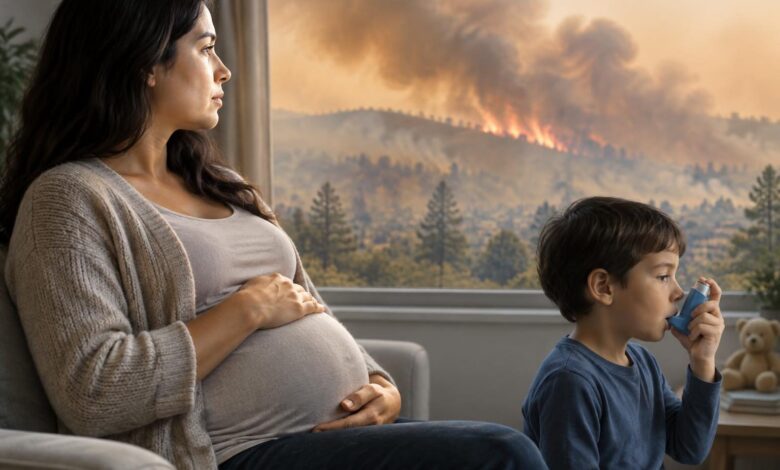
Smoke produced by wildfires and other major fires poses a significant threat to respiratory health, particularly among vulnerable populations. While children can be directly exposed to harmful particles and toxic substances in polluted air, concerns also extend to children whose mothers regularly inhale wildfire smoke. This raises important questions about the potential indirect effects of fire-related air pollution on the health and development of younger generations.
Wildfires, vegetation fires and urban fires release a complex mixture of pollutants into the atmosphere. These include fine particulate matter, carbon monoxide, volatile organic compounds and various irritating substances that can affect the respiratory system and other organs.
Exposure is not limited to people living close to the flames. Smoke can travel considerable distances through atmospheric currents, reaching residential areas far beyond the original fire zone.
Why Is Wildfire Smoke Particularly Dangerous?
Wildfire smoke contains particles of different sizes, including fine particulate matter known as PM2.5. These particles are small enough to travel deep into the lungs and reach the alveoli, where oxygen is exchanged. Some components may also enter the bloodstream and contribute to inflammatory responses throughout the body.
Smoke can additionally contain chemicals released when trees, vegetation, plastics, construction materials and industrial products burn.
Inhaling these pollutants can cause several immediate symptoms, including eye, nose and throat irritation, persistent coughing, breathing difficulties and worsening asthma symptoms.
The consequences may be more serious for people who already have respiratory or cardiovascular conditions. Children, pregnant women, older adults and individuals with chronic illnesses are particularly vulnerable.
How Can Mothers’ Exposure Affect Their Children?
One of the main concerns involves pregnant women who are exposed to wildfire smoke.
Pollutants inhaled by the mother can trigger inflammatory responses and oxidative stress, potentially affecting the body’s normal functioning during pregnancy.
Foetal development depends on a relatively stable maternal environment, particularly when it comes to oxygen supply and placental function. Significant exposure to certain air pollutants may interfere with these processes and increase some pregnancy-related health risks.
Scientific research on air pollution has associated exposure to fine particulate matter with an increased risk of premature birth and low birth weight. However, the precise effects of wildfire smoke depend on several factors, including exposure duration, pollutant concentration, chemical composition and the mother’s overall health.
After birth, infants may also be affected if their surroundings remain polluted. Their respiratory and immune systems are still developing, making them particularly sensitive to airborne contaminants.
Are Children More Vulnerable to Air Pollution Than Adults?
Children do not respond to air pollution in the same way as adults. Their lungs continue developing throughout childhood, and they generally breathe more frequently. As a result, they may inhale a relatively large amount of pollutants compared with their body weight.
Their organs and immune systems are also still maturing, which may limit their ability to cope with certain environmental threats.
Short-term exposure to high concentrations of smoke can trigger coughing, wheezing, airway irritation, and worsening asthma symptoms.
Repeated or prolonged exposure is particularly concerning because it may contribute to persistent airway inflammation and affect lung health.
For children who already have asthma, respiratory allergies, or other chronic conditions, smoke exposure can trigger attacks and increase the need for medical treatment.
Potential Risks During Pregnancy
Pregnancy is a particularly sensitive period when it comes to environmental exposure. Women exposed to high levels of air pollution may face additional health risks.
Inflammation caused by inhaling fine particles may influence biological processes involved in placental development and maternal blood circulation.
Several studies investigating air pollution have also identified associations between exposure to airborne pollutants and certain pregnancy complications.
Potential outcomes examined in scientific research include:
- Premature birth.
- Low birth weight.
- Possible disturbances in foetal development.
- Increased risks of certain maternal respiratory complications.
However, it is important to distinguish between associations identified in epidemiological studies and direct proof of causation. Not every exposure leads to pregnancy complications, and individual risks depend on several circumstances.
Why Can Fine Particles Affect More Than the Lungs?
The health effects of wildfire smoke are not limited to the respiratory system. Fine particles can trigger inflammatory reactions that extend beyond the lungs.
When these particles penetrate deeply into the respiratory tract, they may stimulate the release of inflammatory substances and increase oxidative stress. These mechanisms can affect blood vessels and interfere with certain physiological processes.
In pregnant women, such reactions could potentially have indirect consequences for the environment in which the foetus develops.
In children, significant exposure may worsen respiratory conditions and contribute to temporary or persistent changes in lung function, depending on the intensity and duration of exposure.
The chemical composition of smoke is also important. Fires involving buildings, vehicles or synthetic materials can release particularly harmful substances, some of which differ from those produced by burning vegetation.
How Can Pregnant Women and Children Be Protected?
When wildfires cause air quality to deteriorate, reducing exposure to smoke should be the main priority.
Several practical measures can help limit potential health risks:
- Stay indoors when air quality is poor and avoid strenuous outdoor activities.
- Keep windows and doors closed when smoke is present nearby.
- Use an air purifier equipped with a HEPA filter, if available, to reduce fine particles indoors.
- Avoid using devices that produce smoke or additional particles, including candles, fireplaces and certain cooking equipment.
- Monitor official air-quality alerts and follow evacuation instructions.
- Prevent children from playing outdoors during periods of heavy smoke pollution.
When outdoor travel is unavoidable, a properly fitted N95 or FFP2 respirator can help filter fine particles for adults and children old enough to wear one correctly. Surgical masks and ordinary cloth coverings do not provide effective protection against fine smoke particles.
Infants should never wear respiratory masks. Their protection depends primarily on reducing exposure and improving indoor air quality.
Which Warning Signs Should Parents Watch For?
Following smoke exposure, certain symptoms may appear immediately or develop over time.
Parents should pay attention to the following signs in children:
- Persistent or unusual coughing.
- Rapid or difficult breathing.
- Wheezing.
- Eye and throat irritation.
- Unusual tiredness or reduced activity.
- Worsening asthma or respiratory allergy symptoms.
In infants, breathing difficulties, poor feeding, unusual drowsiness or a change in lip colour require immediate medical attention.
Severe breathing difficulties, chest pain or confusion are also emergency warning signs in adults.
Pregnant women who have experienced significant smoke exposure should seek medical advice, particularly if they develop respiratory symptoms or notice unusual changes during pregnancy.
Why Precautions Should Continue After the Fire Has Ended
The visible disappearance of smoke does not necessarily mean that air quality has immediately returned to normal. Fine particles can remain suspended in the atmosphere and travel to other areas.
Furthermore, ash and combustion residues may become airborne again during cleaning and recovery operations in affected areas. Residents should therefore remain cautious even after the flames have been extinguished.
For families with young children or pregnant women, following local public health recommendations is particularly important. The apparent clarity of the air should not be the only indication of whether it is safe to go outside.
Protecting Mothers Also Helps Protect Children
Exposure to wildfire smoke is a public health concern that extends beyond the immediate dangers faced by people living near the flames. Pregnant women and young children are among the populations most vulnerable to the effects of air pollution.
Protecting mothers from inhaling fine particles and toxic substances may also help reduce potential risks to children’s development, particularly during pregnancy.
Prevention depends primarily on limiting exposure, monitoring air quality and adopting appropriate protective measures at home. During severe smoke events, caution remains essential, even when symptoms are not immediately apparent.