Secret deal reshapes control of Jurf al-Sakhar as Baghdad moves to resolve crisis
Iraq’s standoff over Jurf al-Sakhar enters a decisive phase on Friday as Prime Minister Ali al-Zaidi’s deadline for armed groups to withdraw from the area expires. A settlement brokered through political mediation involving Esmail Qaani, commander of Iran’s Quds Force, now faces its first test on the ground. The deal is intended to avert an armed confrontation that could fracture Iraq’s ruling Shiite alliance.
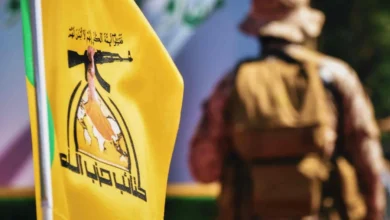
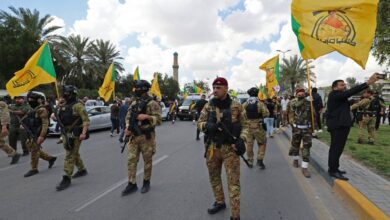
After several days of rising tensions and threats of force, talks produced an agreement to redistribute security responsibilities in the strategic area in northern Babil province. Iraqi army, Federal Police and Popular Mobilization Forces (PMF) units are due to replace formations linked to Kataib Hezbollah. The arrangement gives the government a security foothold in the area while preserving a role for the PMF.
Implementation was announced for Friday morning, but early reports differed on the pace of the deployment. Local sources reported a delay in the start of the operation, raising questions about whether the parties would abide by the terms of the deal.
Iraqi sources familiar with the talks said that the last-minute settlement reflected a shared fear of fighting within the Shiite camp. Al-Zaidi had insisted on overturning security arrangements that had kept Jurf al-Sakhar outside the direct control of state institutions for nearly 12 years.
Fears of a domino effect
The sources said Al-Zaidi chose to increase pressure on the armed factions in a measured way, drawing on intelligence and investigations into suspected oil smuggling and tampering with supply lines running through Jurf al-Sakhar. He also took into account international pressure, particularly from the United States, to bring weapons under state authority and secure critical infrastructure.
The factions feared losing exclusive control of Jurf al-Sakhar. Their broader concern was that the move could set a precedent for similar measures in their areas of influence in the Baghdad Belt and in Diyala and Anbar provinces.
The sources described a potential “domino effect.” Losing a stronghold long closed to direct state oversight could trigger a review of security arrangements established over recent years. The factions regard that prospect as a direct threat to their military and political leverage.
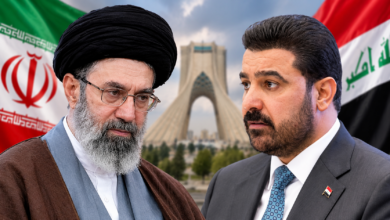
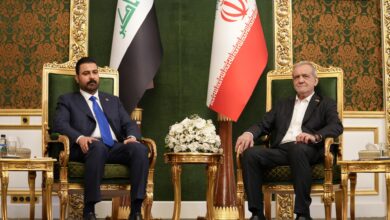
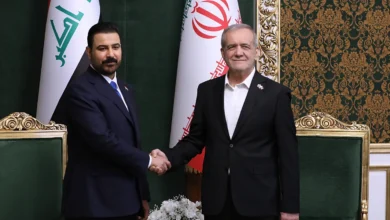
Those fears prompted Qaani to intervene. He held a series of talks and meetings with political figures and faction leaders, including Kataib Hezbollah Secretary-General Abu Hussein al-Hamidawi, Badr Organization leader Hadi al-Amiri and PMF Commission Chairman Faleh al-Fayyad.
According to the sources, Iran’s main aim was to prevent a political dispute from spilling over into armed conflict within the Shiite camp. The mediation sought a deal that would allow Baghdad to carry out its decision while preserving some of the factions’ influence.
How the deal shifts control
The agreement removes formations linked to Kataib Hezbollah from positions where they directly provided security and replaces them with regular forces and other units under the PMF Commission, the sources said.
The PMF’s 72nd and 79th brigades will take responsibility for designated sectors in coordination with government forces. The Energy Police will guard oil pipelines and work to prevent their use in smuggling.
The sources said the deal allows Al-Zaidi to establish a new security arrangement without confronting Kataib Hezbollah militarily. It also gives the group room to redeploy its personnel away from positions assigned to the incoming forces.
Some units could be moved to other areas, including sectors along Iraq’s western border, as part of a broader redistribution of security responsibilities, the sources said.
Under the settlement, the factions retain their military structures and their ability to exert influence. The deal replaces direct control on the ground with a more complex arrangement in which government authority overlaps with the influence of armed groups operating within official institutions.
Redeployment in a long-closed stronghold
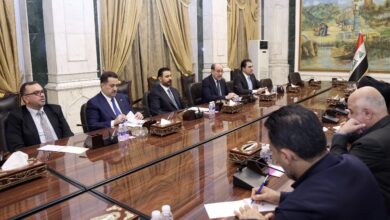
The redeployment follows a plan approved by the Office of the Commander-in-Chief of the Armed Forces. It divides responsibilities among the army, the Federal Police, the PMF and the Energy Police. It also provides for a joint headquarters to direct operations and oversee implementation.
The Iraqi army’s 38th Brigade, part of the 10th Division, will secure the western sector from the “Ya Hussein” defensive berm to the Al-Fadhiliya junction and the boundary of the Anbar Operations Command’s area of responsibility.
The Federal Police’s 17th Brigade will take charge of the center of the Jurf al-Sakhar subdistrict, from the Euphrates River in the east to the Al-Musayyib–Al-Fadhiliya road in the west.
The PMF’s 72nd and 79th brigades will cover the sector extending to the boundary with the Karbala Operations Command. The Energy Police will protect pipelines and oil facilities.
The plan calls for reopening roads that have remained closed, particularly the route linking Al-Musayyib, Al-Bahbahani, the Al-Fadhiliya junction and Amiriyat al-Fallujah. Reopening the route would reconnect Jurf al-Sakhar to surrounding communities after years of isolation.
A Counter Terrorism Service unit will remain at Al-Hamiya camp as a reserve under the commander-in-chief. It will be available to respond to emergencies amid concerns that some units on the ground may resist the withdrawal and replacement arrangements.
Many Jurf al-Sakhar residents have been unable to return home since 2014, adding to the stakes of the redeployment. Representatives of displaced residents estimate that more than 140,000 people have been affected by the displacement.
Oil smuggling allegations give Baghdad leverage
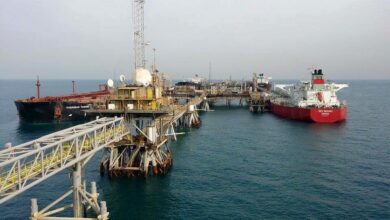
The latest standoff began with government investigations into suspected oil smuggling from pipelines crossing Jurf al-Sakhar and allegations that unlicensed facilities were being used to store and process petroleum products. The inquiries revived a longstanding dispute over control of weapons.
According to the sources, Al-Zaidi used the findings to strengthen his political and security position. The government removed nine officials from their posts, including security and administrative leaders, and referred the suspected violations to the relevant judicial authorities.
The sources said the case puts the prime minister’s opponents in a difficult position. Public opposition to the deployment of government forces could be seen as defending the security arrangements under which the suspected violations took place.
Kataib Hezbollah denied the oil smuggling allegations and questioned the findings of the investigations and the government’s account of the facilities in the area.
The dispute now concerns the relationship between state institutions and armed factions, as well as how much authority the government can exercise in areas where those factions hold sway.
Divisions within the Coordination Framework
The Jurf al-Sakhar standoff has exposed deep divisions within the ruling Shiite Coordination Framework over how far to go in confronting armed factions and whether to back government measures that could alter the balance of power.
According to the sources, some members favored negotiations, fearing that the use of force could trigger fighting within the Shiite camp with consequences that would be difficult to contain. Hadi al-Amiri and other leaders took that approach, working to narrow differences and prevent escalation.
Al-Zaidi signaled that he was prepared to enforce his decisions as commander-in-chief of the armed forces despite opposition from influential figures within the governing alliance. He drew on the oil investigation and on calls to bring all weapons under state control.
The sources said Qaani’s intervention reflected Tehran’s recognition of the stakes. A confrontation between the Iraqi government and Kataib Hezbollah would have forced Iran to weigh the influence of its armed allies against the stability of the Iraqi Shiite political order, with which it maintains close ties.