Iraq’s Losses from the Iran War Reach $60 Billion

Iraq’s foreign minister warns that the continuing war is worsening the global energy crisis and increasing inflation risks, with repercussions extending beyond countries bordering the conflict to European economies.
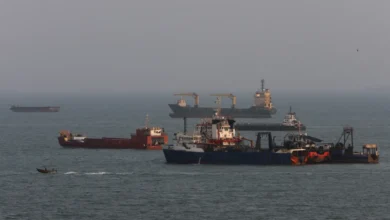
Iraqi Foreign Minister Fuad Hussein has revealed that Iraq’s losses from the war between the United States and Iran have reached approximately $60 billion. The figure highlights the Iraqi economy’s considerable exposure to the conflict’s fallout, particularly disruptions to oil exports and Iranian threats to shipping through the Strait of Hormuz.
Hussein made the remarks during a meeting in Rome on Thursday with Italian Deputy Prime Minister and Minister of Foreign Affairs and International Cooperation Antonio Tajani. The talks covered bilateral relations and regional and international developments, according to a statement issued by Iraq’s Foreign Ministry on Friday. Hussein warned that the continuing war was deepening the global energy crisis and increasing the risk of rising inflation, with effects extending beyond countries bordering the conflict to European economies and elsewhere.
The Iraqi economy’s main vulnerability is its heavy reliance on oil exports, which account for approximately 90 per cent of government budget revenue. Threats to shipping through the Strait of Hormuz, a vital passage for the energy trade, have left oil revenues exposed to severe disruption. Baghdad has no alternative export routes capable of handling the same volumes as its Gulf routes with comparable speed.
Oil sector indicators illustrate the scale of the shock Iraq experienced at the height of the crisis. Production fell from approximately 4.3 million barrels per day before the war to around 1.4 million barrels per day following disruptions to shipping, according to figures reported by The National in June. Oil revenues also declined by approximately 75 per cent in April compared with the same month a year earlier, according to the UK House of Commons Library.
These developments coincided with a widening imbalance in public finances. The gap between government revenue and expenditure exceeded 29 trillion Iraqi dinars, equivalent to approximately $22.4 billion, during the first seven months of 2026. Revenue totalled only about $30.1 billion, against expenditure of nearly $52.5 billion. This deficit constrains the government’s ability to absorb shocks or increase the spending needed to support economic activity.
The risks extend beyond government finances. They could spill over into the domestic market through higher transport and insurance costs and delayed deliveries of imported goods, adding pressure on prices and purchasing power. Reduced dollar inflows from oil sales could also limit the authorities’ room to finance imports and maintain financial stability, despite Washington’s recent decision to release dollar shipments as part of its plans to support Ali al-Zaidi’s government.
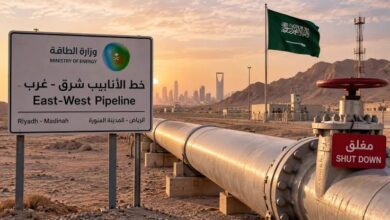
Against this backdrop, al-Zaidi’s government faces the complex task of funding essential expenditure and addressing the deficit while seeking alternative oil export routes and diversifying revenue sources. Routing some shipments northwards to Turkey’s Ceyhan port does not yet offer an equivalent alternative to southern exports.
With uncertainty persisting over shipping security and energy prices, Iraq’s ability to contain the fallout will remain tied to a return to stable export levels. Prolonged disruption could deepen the economic slowdown and increase pressure on the budget in the period ahead, despite discussion of other options, including Syrian and Turkish ports on the Mediterranean.