Renewed Suffering and Conflicting Messages: What Lies behind Israel’s Operation in Central Gaza?
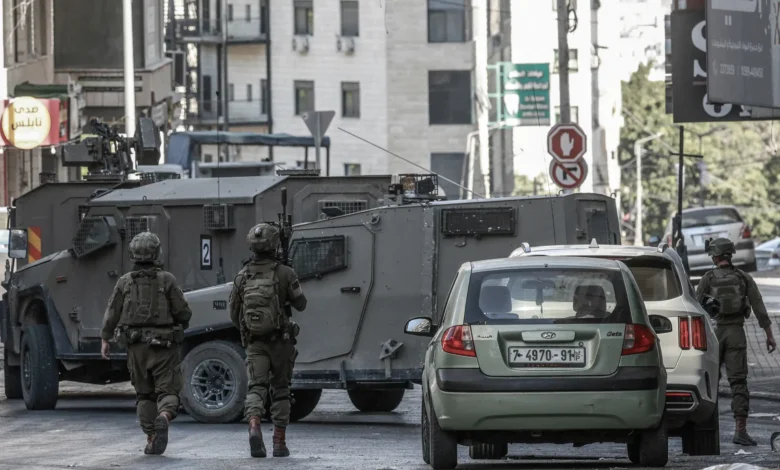
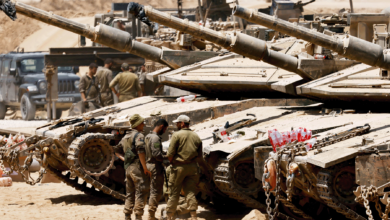
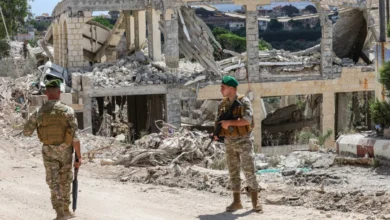
Israeli violations of the Gaza ceasefire agreement have reached a new level following the army’s announcement of a military operation west of the “Yellow Line” in central Gaza—the first of its kind since the agreement was signed more than a year ago.
The Israeli army presents the operation, which it declared concluded on Thursday, as a limited action targeting a Hamas tunnel. Statements by Israel’s defence minister about readiness to occupy additional territory, however, suggest a broader policy of maintaining and expanding security control, raising questions about the future of ceasefire arrangements.
The operation follows warnings from the “Board of Peace” about persistent obstacles to implementing the agreement and its associated roadmap. It also comes after repeated Palestinian faction accusations that Israel is failing to honour its commitments.
It unfolds amid uncertainty over Israel’s approach to Gaza, including concerns that Prime Minister Benjamin Netanyahu’s government could escalate on several fronts in response to domestic pressure. Prime Minister-designate Gadi Eisenkot’s position on the agreement’s future also remains unclear.
Deepening Suffering
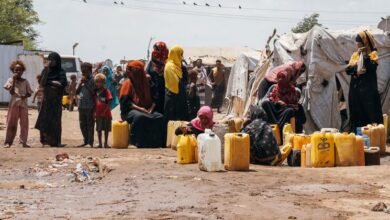
The operation has intensified the hardship of thousands of Palestinians forced to leave their places of residence once again. This displacement compounds successive crises facing Gaza’s population ahead of winter, following Israel’s refusal to allow shelter supplies into the territory.
Jomaa al-Ghoul, who lives in a displacement camp near the Al-Daawa College area affected by the operation, said he was forced to flee for the seventh time after the Israeli army announced its ground advance.
“We come under fire every day from Israeli military vehicles near the area where we are sheltering. Now we have to leave altogether, with nowhere else ready to accommodate my family,” he said.
He said he and dozens of families had insufficient time to collect belongings they had spent considerable time preparing, including materials for a rudimentary water network and equipment used by his family. He added that he could not even afford a vehicle to transport their possessions.
Gaza’s Government Media Office estimates that six camps housing approximately 900 families were affected by the operation.
In a statement, Gaza Civil Defence spokesperson Mahmoud Bassal said Israeli military operations in the central governorate “threaten the lives of more than 5,260 displaced people and risk triggering new waves of forced displacement and a worsening humanitarian catastrophe in the absence of safe places”.
He said rescue teams faced severe difficulties responding to distress calls and emergencies in threatened areas because of acute shortages of resources, equipment and vehicles.
Israeli Messaging
Citing security sources, the Israeli newspaper Yedioth Ahronoth reported that “while attention turns towards Iran, Hamas continues efforts to restore its control over the Gaza Strip through two principal tracks”.
According to the sources, the movement is increasingly using hospitals and medical complexes for military, intelligence and governance purposes. The second track, they said, involves repairing underground infrastructure damaged during the war.
On Wednesday, Israeli Defence Minister Israel Katz said the government’s policy, approved by Netanyahu and himself, was clear: the army controls security zones in Lebanon, Syria and Gaza and operates there to protect Israeli communities from events similar to the October 7 attack.
In a statement, he said Israel would neither withdraw from the current lines of those zones nor redeploy within them before Hamas was dismantled, Gaza demilitarised, Hezbollah disarmed throughout Lebanon and all threats from Syria removed.
“The Israeli army is ready to manoeuvre and occupy additional territory, evacuating the population and destroying terrorist infrastructure there, and turning it into part of Israel’s permanent security zones in the north and south to protect Israel’s residents,” Katz said.
Political Calculations and Battlefield Realities
Political analyst Ahmad Mortaja argues that developments in central Gaza cannot be viewed merely as a routine military operation against Hamas infrastructure. Its timing, the nature of the ground movements, the closure of Salah al-Din road and rapid changes in Israeli politics warrant a broader interpretation beyond the stated military justification, he says.
“The significance lies not only in the military sites targeted, but also in the area itself. Salah al-Din road is the main artery connecting northern and southern Gaza. Controlling its access points gives the army greater territorial control and the ability to isolate areas and restrict civilian movement,” he explained.
Mortaja believes that Netanyahu’s instigation of escalation on any front is intended to draw Eisenkot towards a national unity government under the banner of confronting regional and security challenges.
He added that Israeli movements near the Yellow Line could form part of a wider policy of entrenching facts on the ground, retaining freedom of military intervention and preventing political arrangements from imposing an unwanted withdrawal.
He warned that the ceasefire could become merely a framework for managing the conflict while military operations continue and territorial control expands.
Political analyst Hani al-Aqqad, meanwhile, believes Netanyahu’s government, whose term is nearing its end, wants to change conditions on the ground to attract attention and demonstrate military achievements. He nevertheless expects the operation to remain limited rather than expand substantially.
“Israel wants to test its room for military action and gauge international reactions, particularly those of the Board of Peace. It also wants to say it has achieved something and that its operations are continuing within this framework,” he said.
He added that Israel intended to refocus attention on Palestinian factions’ weapons, arguing that Israeli operations would continue as long as those weapons remained in Gaza.
Al-Aqqad said Netanyahu and Eisenkot agree that Israel should not withdraw before the weapons issue is resolved but differ over how to address it.
The change camp believes the Gaza administration committee operating under the Board of Peace could govern the territory while the weapons issue is settled. Netanyahu’s current government, by contrast, says the Israeli army will disarm Hamas itself.
“That is the fundamental dividing point between the two sides,” he said.