Heated Exchanges and Threats: Inside al-Zaidi’s Stormy Meeting with Coordination Framework Leaders over Jurf al-Sakhr
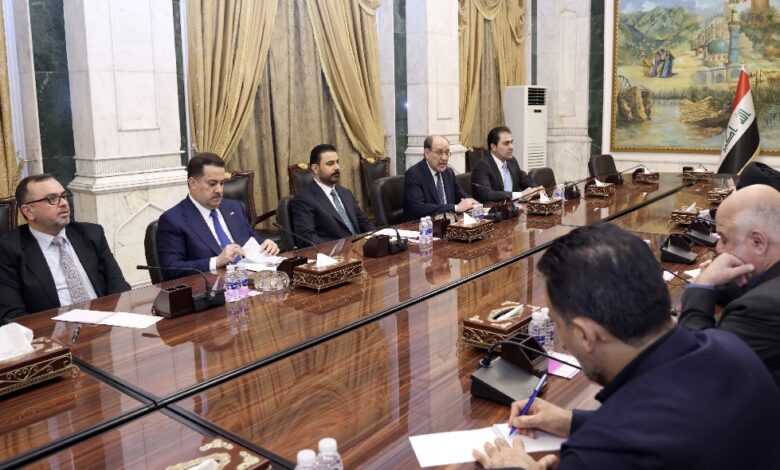
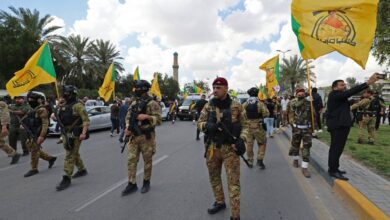
Iraqi political sources said that a stormy meeting between Prime Minister Ali al-Zaidi and Coordination Framework leaders on Monday evening ended without agreement over the Jurf al-Sakhr crisis. Al-Zaidi refused to extend the deadline for vacating the subdistrict or offer any concessions to the armed factions controlling it. He said government forces were ready to enter the area by force and establish full control.
According to the sources, al-Zaidi told those present that the deadline for vacating Jurf al-Sakhr would expire on Friday evening, November 20, and would not be extended under any circumstances. He stressed that the government’s decision to retake the area was final and that military forces were ready to act if the armed formations failed to withdraw before the deadline.
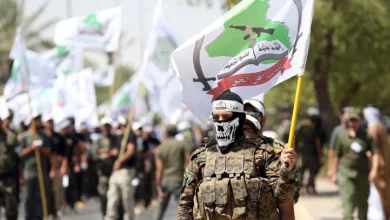
The prime minister’s position drew strong objections from some Coordination Framework leaders. They warned him of the dangers of using military force against Kataib Hezbollah, including the possibility of clashes spreading to several Iraqi cities and triggering unrest that would be difficult to contain.
Heated Exchanges with al-Amiri
The sources described verbal confrontations and unprecedented tension during discussions of the issue, particularly between al-Zaidi and Badr Organisation leader Hadi al-Amiri. Al-Amiri objected to the threat of military action and called for political contacts to be given more time to produce a settlement.
Despite the warnings, al-Zaidi reportedly refused to back down. He insisted that restoring control over Jurf al-Sakhr could not be subject to factional conditions or bargaining over the future of their military deployments.
The prime minister left without an agreement. Coordination Framework leaders continued their discussions after his departure but also failed to reach a unified position on resolving the crisis.
Meanwhile, leaked accounts described divisions within the Framework, suggesting that seven of its twelve leaders supported al-Zaidi’s position, while five opposed military action: al-Amiri, Nouri al-Maliki, Humam Hamoudi, Abu Alaa al-Walai and Haider al-Gharawi. Those figures have not been officially confirmed.
Mediation Efforts and a Conditional Handover
The developments come amid political contacts led by several Framework leaders seeking to avoid confrontation and persuade Kataib Hezbollah to abandon its positions in Jurf al-Sakhr before the government’s deadline expires.
A willingness within Kataib Hezbollah to discuss handing the area over to a third party. Its preference was reportedly for the shrine brigades affiliated with the Shia religious authority in Najaf, rather than a direct handover to government forces.
According to the sources, however, al-Zaidi rejects any arrangement allowing factions to determine who administers the area or retain military or security influence after withdrawing.
Other political leaks described contacts with longstanding Kataib Hezbollah figures, some now marginalised within the current leadership, to explore whether they could help find a way out of the crisis. No names or concrete outcomes were disclosed.
A Test of State Authority
Iraqi researcher and political analyst Firas Elias said developments in Jurf al-Sakhr, as described in leaked accounts of the Coordination Framework meeting, go beyond a security dispute over oil smuggling. They reflect a more complex political and security test concerning the limits of state authority and armed factions’ influence.
Elias said al-Zaidi’s insistence on proceeding with security measures, if the circulating reports are accurate, represents an attempt to redefine relations between the state and the factions. It signals a shift from political accommodations towards enforcing government authority.
The real test, he added, is not making the decision but implementing and sustaining it without yielding to calculations about political balances.
Jurf al-Sakhr could become a turning point in restoring state authority, or another test exposing the limits of the government’s ability to confront armed power centres. The issue, he stressed, concerns the future relationship between the state and forces operating beyond its authority in Iraq.
Friday’s Decisive Deadline
The government’s deadline carries particular significance amid military mobilisation around Jurf al-Sakhr. Earlier instructions called for heightened readiness among security units, alongside the formation of a committee to investigate reports of oil smuggling within the area.
Circulating information suggests that government preparations for a possible military operation are continuing. Opponents of military action within the Framework, meanwhile, are seeking to avoid a clash with Kataib Hezbollah through a political settlement securing its withdrawal without fighting.
Nevertheless, Monday’s meeting produced no understanding on extending the deadline or arranging a handover. Al-Zaidi reportedly held to his position until leaving, giving Framework leaders only a few days to find a solution ensuring the area is vacated before Friday evening.