Money laundering and dollar transactions top Washington–Tripoli talks
The U.S. administration is urging Libya to honor its unified development budget agreement, saying the accord could help stabilize the economy and put spending on development priorities on a more disciplined footing.
A delegation from Libya’s Government of National Unity met with U.S. officials to discuss the country’s economic and monetary situation, priorities for financial stability and ways to strengthen bilateral cooperation. The talks reflected Washington’s growing focus on financial governance, oversight of money flows and efforts to combat illicit activity.
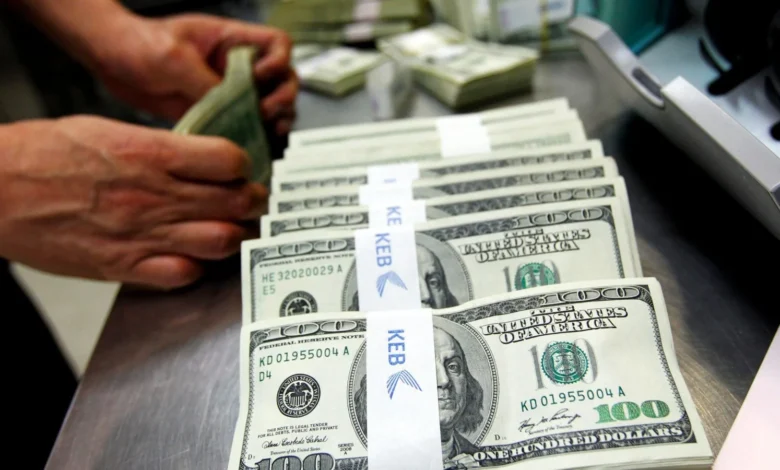
The meeting took place on Friday at the U.S. Treasury Department at a sensitive time for Libya. The previous week, the Federal Reserve suspended dollar transactions with the Central Bank of Libya following the appointment of Fawzi Abu Khzam as the bank’s new governor.
Dollar access is critical to Libya’s imports
Libya’s economy relies heavily on dollar-denominated oil exports and needs a steady inflow of U.S. currency to finance imports, settle overseas trade obligations and meet domestic demand for foreign exchange.
Restrictions on Libyan banks’ dollar transactions could therefore spill over into the broader economy, disrupting trade and making it harder for companies to import goods. They could also complicate the issuance of letters of credit and the processing of international transfers.
If the restrictions remain in place, they could erode confidence in the banking system and push more transactions into informal channels, adding pressure on the Libyan dinar and the parallel foreign exchange market.
U.S. officials have long been concerned about foreign currency smuggling and corruption linked to trade finance and letters of credit. They raised those issues with Libya’s central bank governor in April, alongside procedures for processing international transfers through the Federal Reserve.
Money laundering, compliance and financial transparency
At Friday’s meeting, the two sides discussed ways to expand cooperation on combating money laundering, financial crime and terrorist financing. They also explored closer coordination between the Government of National Unity and the U.S. Treasury, including the exchange of technical expertise and stronger financial compliance and transparency procedures.
The talks also covered recent economic and monetary developments in Libya, financial reform priorities and coordination among the country’s economic and financial institutions. U.S. officials stressed the importance of honoring the unified development budget agreement, which they said could support economic stability and improve oversight of spending on development priorities.
Institutional divisions complicate efforts to unify spending
Bringing public spending under a single budget remains one of Libya’s biggest economic challenges. Fragmented institutions and competing centers of financial decision-making have made it harder to control public expenditure and track oil revenues.
The absence of a unified budget also limits the authorities’ ability to pursue a coherent fiscal policy, increasing the risk of higher spending and a drawdown of foreign exchange reserves.
Washington’s push for compliance with the agreement also appears to reflect a desire for clearer and more transparent rules governing revenue and expenditure. Such rules could curb financial irregularities and strengthen international institutions’ confidence in how Libya manages its resources.
The Libyan delegation included Mustafa al-Manea, head of the executive team overseeing the prime minister’s initiatives and strategic projects, Economy and Trade Minister Suhail Abu Shiha, Libyan Investment Authority Chairman Ali Mahmoud, and National Oil Corporation Chairman Masoud Suleiman.
The U.S. delegation included Eric Meyer, deputy assistant secretary of the Treasury for international affairs covering the Middle East and North Africa, and Jamie Kraut, deputy assistant secretary for terrorist financing and financial crimes. Treasury officials and experts specializing in the region and in financial crime also attended.
The makeup of the U.S. delegation reflected the breadth of the talks, which covered economic reform, resource management, oversight of financial transfers and efforts to combat cross-border crime.