A smart jacket that squeezes atmospheric moisture to quench thirst!
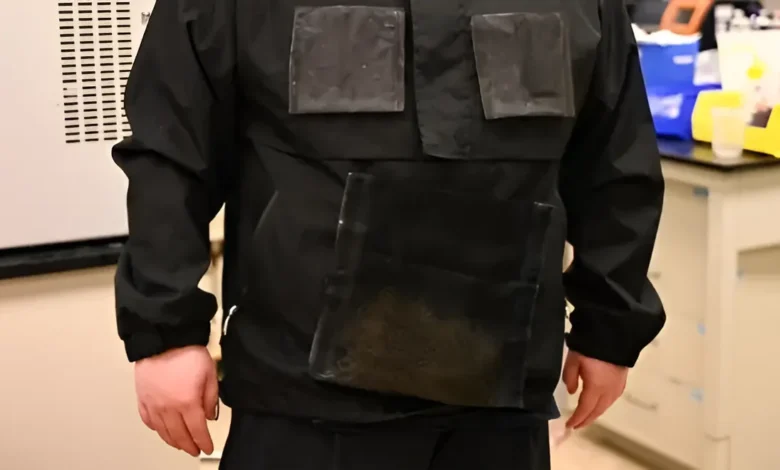
Researchers at the University of Texas have developed a smart textile based on hydrogels that absorb atmospheric humidity and convert it into drinking water through a simplified thermal condensation system. This innovation opens promising prospects for portable water production in humanitarian relief operations and arid regions.
As the world faces a steadily worsening water crisis and an increasing frequency of droughts linked to climate change, researchers at the University of Texas in the United States have announced the development of a new technology that extracts drinking water from air humidity using a smart textile that can be integrated into wearable clothing. Observers consider it one of the most significant innovations in water-related technologies in recent years.
-
New AI-Powered Technologies Helping the Blind Navigate Freely
-
Classic adventure – Movies to watch if you are Indiana Jones fan
Although media attention initially focused on a prototype jacket capable of producing water from air, the researchers emphasize that the jacket is merely a demonstration of a broader technology that could have major applications in humanitarian aid, military operations, and field exploration, as well as in regions suffering from severe water scarcity.
The technology was developed by a research team at the University of Texas at Austin, led by Professor Guihua Yu, an expert in materials engineering and atmospheric water harvesting technologies. The team has spent years developing low-cost methods to extract water from ambient air, using abundant bio-based materials that can be produced at large scale at relatively low cost.
The researchers explain that the main challenge was not moisture absorption itself, as many materials can achieve this, but rather designing an efficient mechanism to transport water within the fabric and prevent losses during the process. The team considers this breakthrough the most critical element of the project, as it addresses one of the key limitations of previous generations of atmospheric water harvesting technologies.
Once the collection units are saturated with absorbed water, they can be detached from the jacket and placed into a small foldable device. Low heat, generated by sunlight or a simple heat source, then releases the stored water as vapor, which is subsequently condensed and collected as drinking water. The researchers therefore stress that the jacket does not produce water instantly while being worn, as some media reports might suggest, but rather functions as part of an integrated system for moisture collection and later extraction.
-
Study – Wildfire Smoke Weakens Immunity and Alters Genes
-
Between Ethics and Technology: Why Artificial Intelligence May Fail in Public Health
Experiments conducted by the team show that the system can produce between 400 and 900 milliliters of water per day, depending on humidity levels, temperature, and environmental conditions. In more favorable environments, production can approach nearly one liter per day, enough to cover a significant portion of an adult’s daily water needs.
The researchers also tested a larger version using the same technology, which produced around 1.3 liters of water per day during field trials in the Chihuahuan Desert spanning the United States and Mexico, as well as in various regions of Texas. Results from desert environments are particularly significant, as most atmospheric water harvesting systems typically require high humidity levels for optimal performance. The new technology is designed to function under harsher conditions, although its efficiency remains dependent on atmospheric moisture.
-
Optimism in Emotion Interpretation as a Potential Early Indicator of Cognitive Decline
-
Scientists Warn That the World Has Entered a “New Climate Era”… What Is the Cause?
In addition, the team notes that the fibers used in the materials can be produced from a variety of biological sources, including plant waste, food residues, seafood shells, and different types of biomass.
This approach aims to reduce production costs and limit reliance on expensive industrial materials, enabling future large-scale commercial and humanitarian deployment.
Some reports have compared the jacket to the famous “stillsuit” from the science-fiction novel and film Dune, which allows desert inhabitants to conserve and recycle bodily fluids. However, the researchers emphasize that their technology relies on extracting ambient humidity rather than recycling human bodily fluids.
-
New Carbon Discoveries on Mars: A Paradigm Shift in Our Understanding of the Red Planet
-
Understanding the Difference Between AI Agents and Chatbots: Two Related but Fundamentally Distinct Technologies in Purpose Design and Intelligence
The innovation has also attracted interest from disaster response and humanitarian experts, as it could provide a mobile water source in areas where infrastructure has been destroyed or where water supply is difficult to deliver.
Potential applications currently being explored include tents capable of harvesting water from air, backpacks equipped with moisture collection modules, emergency shelters that generate part of their own water needs, as well as equipment designed for soldiers, remote workers, hikers, and explorers.
Despite the enthusiasm surrounding the announcement, several experts note that the technology is still in development and that the volumes produced remain limited compared to full daily human needs, especially in extremely dry environments. They also point out that the process requires an additional heating and condensation stage, meaning water is not produced immediately or directly.
-
Givining: An Innovative Technique to Boost Runners’ Performance and Reduce Fatigue
-
AI-Generated Fake Videos: Why They’re Spreading and How to Fight Them
Nevertheless, many researchers believe the true significance of this innovation lies in opening a new field of “functional textiles,” fabrics capable of going beyond their traditional role of protection and clothing to become tools for producing water, energy, or other essential resources.
At a time when United Nations estimates suggest that billions of people may face increasing pressure on water resources in the coming decades, the developers hope this research will mark an initial step toward a new generation of portable solutions that can extract water directly from the atmosphere, even in regions where natural resources are scarce or absent.
-
Alarming Rise in Cholera Deaths: WHO Sounds the Alarm
-
How Would a 4°C Temperature Increase Affect Individual Income?