Aboard the USS George Washington: How Is America Waging Its War Against Iran?
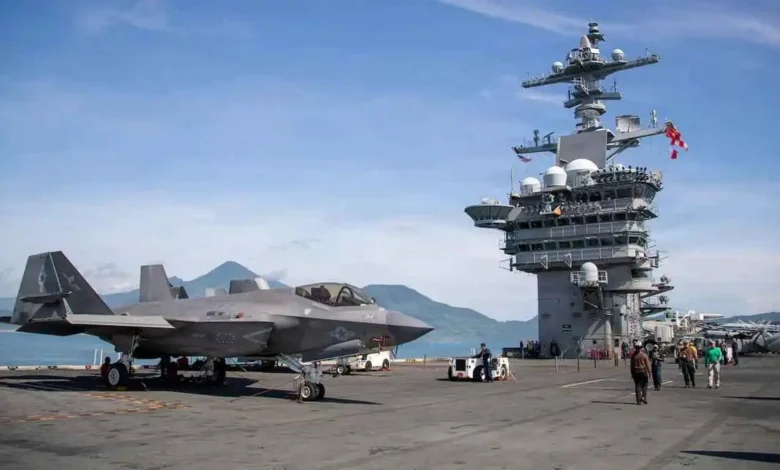
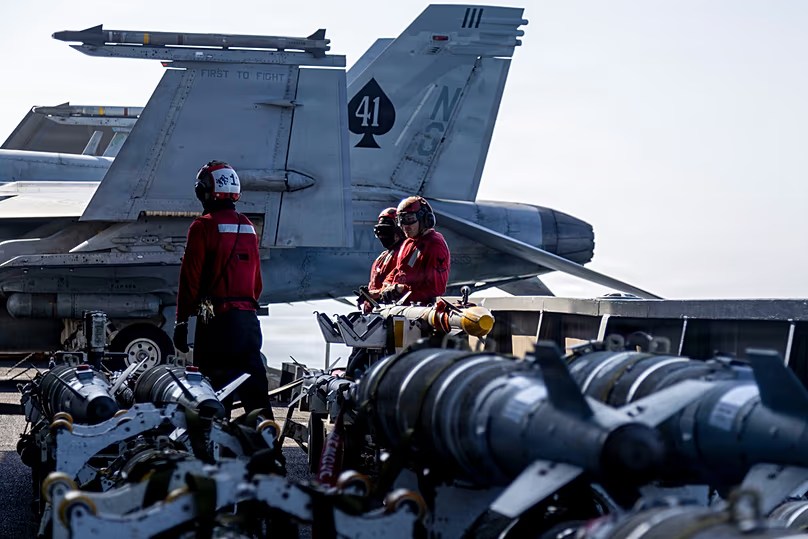
In its war against Iran, the United States has relied on the aircraft carrier USS George Washington, which has a crew of around 5,000 personnel, along with fighter jets and munitions. The carrier serves as the backbone of the U.S. tactical military operation against Tehran.
Its prominent role in the war has also made it a primary target for the Iranian regime, according to the U.S. network CBS, which conducted a rare visit aboard the aircraft carrier this week to gain exclusive insight into its current mission and its role in supporting the American war against Iran from its position in the Arabian Sea, near the strategic Strait of Hormuz.
-
On the eve of the Muscat talks, five milestones paved the way for Iran and Washington’s return to negotiations
-
Washington and London Rally Allies: Western Plan to Secure the Strait of Hormuz and Contain Iran
The USS George Washington was deployed to the Middle East last month to replace the aircraft carrier USS Abraham Lincoln, which had come under scrutiny because of the exceptionally long duration of its deployment, which reached a record nine months, as well as concerns about conditions aboard the carrier and the mental health of its crew members.
This week, CBS observed George Washington crew members carrying out nighttime missions to help maintain the U.S. blockade imposed on Iran and provide protection for commercial vessels transiting the strait.
But these operations have come at a cost. Sources previously told the U.S. network that the American military was facing shortages of interceptor missiles and precision-guided weapons, a claim denied by U.S. Defense Secretary Pete Hegseth.
-
Hormuz Guarantees and Nuclear Dust: Washington Tightens the Conditions for an Agreement with Iran
-
Intelligence Report: Iran’s Support for Its Regional Proxies Will Not Be Affected by Understandings with Washington
The USS George Washington itself could be a potential target after the U.S. Navy confirmed that Iran had attempted, late last week, to target American warships with ballistic missiles.
Captain Nicholas DeLeo, commander of the George Washington, told CBS News, in response to a question about what goes through his mind when he hears reports of potential ballistic missile attacks: “We have a variety of means to protect Navy ships, both offensively and defensively, and we use all of those means. This is something we train for.”
-
Memorandum of Understanding with Washington Sparks Internal Disputes in Iran
-
How the Caspian Sea became a lifeline of weapons and food for Iran behind Washington’s back
Houthis Open a New Front
A new source of concern has emerged in the Middle East, as Iran-backed Houthi militias threaten a second strategic oil route of importance to Saudi Arabia, after reports indicated that they had taken control of a major coastal city on Yemen’s Red Sea coast and established control over several strategic islands in the Red Sea or near the Bab el-Mandeb Strait.
Within just a few days, the Houthis made significant gains in Yemen and attacked several Saudi oil refineries. Saudi officials said on Friday that they had been forced to shut down the vital East-West oil pipeline after it was attacked by drones launched from Iraq.
The officials added that the attack damaged the pipeline and injured dozens of people.
-
Washington and Tel Aviv are preparing for a collapse of the truce by defining an Iranian target bank
-
Bomb Diplomacy: The Douhet Strategy and Washington’s Options on Iran
-
Nuclear Talks: Iran Rejects Washington’s Proposal and Prepares an Alternative
-
Khamenei, Iran’s Illness and the Obstacle to Any Agreement with Washington