Gulf-Iran Meeting Expected to Reach Agreement on Navigation in the Strait of Hormuz

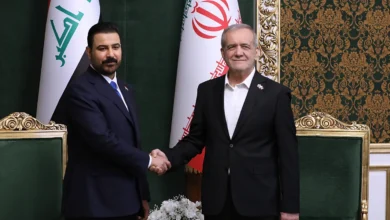
The Financial Times reports, citing its sources, that a meeting between the foreign ministers of the Gulf states and their Iranian counterpart will be held on Monday in the Omani coastal city of Salalah, without addressing Washington’s position on the matter.
The Financial Times reported on Friday that the foreign ministers of the Gulf states intend to meet with their Iranian counterpart as part of an initiative led by Oman and Iran to secure approval for an interim agreement governing maritime traffic through the Strait of Hormuz, as the region experiences a military escalation between Tehran and Washington.
The newspaper, citing two sources familiar with the matter, said the meeting is scheduled to take place on Monday in the Omani coastal city of Salalah.
It is unclear whether the administration of U.S. President Donald Trump is aware of the developments surrounding the meeting, amid Washington’s efforts to intensify military and economic pressure on Tehran.
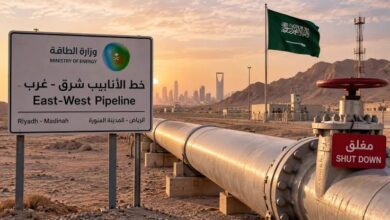
The Gulf states are seeking to ease tensions in the Strait of Hormuz and restore maritime navigation in order to secure energy supplies, while also pursuing alternative routes for exporting oil through ports in the Mediterranean.
These developments come as the United States tightens its maritime blockade of Iranian ports, in addition to strengthening economic and financial sanctions aimed at compelling Tehran to make concessions, particularly regarding the Strait of Hormuz, which has become a strategic Iranian lever for exerting pressure on the Trump administration.
The efforts also follow weeks of direct contacts between Tehran and Muscat over the future of navigation through the strait. Last month, Omani Foreign Minister Badr al-Busaidi and his Iranian counterpart, Abbas Araghchi, discussed an interim framework for managing maritime traffic. The proposal included establishing a temporary shipping corridor and jointly carrying out mine-clearance operations, while technical negotiations would continue toward permanent arrangements covering maritime traffic management, the exchange of information, and navigational and security services.
Through this process, Oman is seeking to separate the urgent need to restore maritime traffic from the broader political disputes between Iran and the United States. Muscat says the interim arrangement could provide a practical basis for the return of vessels, while questions concerning the permanent management of the strait and broader political understandings would be left for subsequent negotiations, with an emphasis on the need to involve the Gulf states bordering the waterway.
Omani efforts are being reinforced by parallel regional initiatives, as Qatar and Pakistan have entered the mediation process between Tehran and Washington at a time when the Gulf states are seeking to contain the repercussions of the confrontation on their security and economies. The expected meeting between the foreign ministers of the Gulf Cooperation Council member states and the Iranian foreign minister reflects a Gulf attempt to move from merely monitoring the crisis to directly participating in the formulation of interim arrangements that would ensure the continued flow of energy and reduce the risks of the confrontation expanding.
Reaching an agreement does not appear to be an easy task, as Tehran continues to link the reopening of the strait more broadly to the settlement of its disputes with Washington, including issues related to the blockade, sanctions, and access to frozen Iranian assets. The Gulf states, meanwhile, want an interim arrangement that guarantees freedom of navigation without turning into a long-term political agreement that would give Iran additional influence over trade and energy flows in the region.
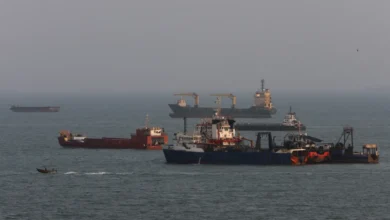
The economic pressure on all sides further increases the importance of these contacts. Before the war, the strait served as a route for roughly one-fifth of global oil and gas trade, while the decline in vessel traffic has driven up transportation and insurance costs and heightened concerns over energy supplies to Asia. At the same time, the Gulf states are addressing the crisis by exploring alternative routes, ports, and export lines to reduce their dependence on the strait, giving them an additional incentive to make any arrangement that restores navigation to more stable levels succeed.
These developments demonstrate that de-escalation in the Strait of Hormuz is no longer linked solely to negotiations between Washington and Tehran. It has evolved into a regional process involving the Gulf states, Iran, Oman, Qatar, and Pakistan, in an effort to prevent the strait from becoming an open arena of confrontation that threatens energy security and international trade.