The Far Right and Ukraine’s Military: The Nazism Controversy Cracks the Wall of Western Support
The issue of far-right groups within Ukraine has remained one of the most controversial subjects since the outbreak of the Russia–Ukraine war in February 2022.
While Moscow justified its military operation as a necessary effort to “de-Nazify” Ukraine, Kyiv and its Western allies quickly rejected this narrative, arguing that it formed part of Russian propaganda aimed at legitimizing the war.
However, according to Responsible Statecraft, the debate has not been confined to denying Russian allegations. It has expanded into a broader discussion about the scale and influence of radical nationalist currents within certain Ukrainian military formations.
Critics of the Western position argue that efforts to counter the Russian narrative have, at times, resulted in the overlooking or downplaying of the presence of individuals and organizations associated with ideas or symbols linked to neo-Nazism.
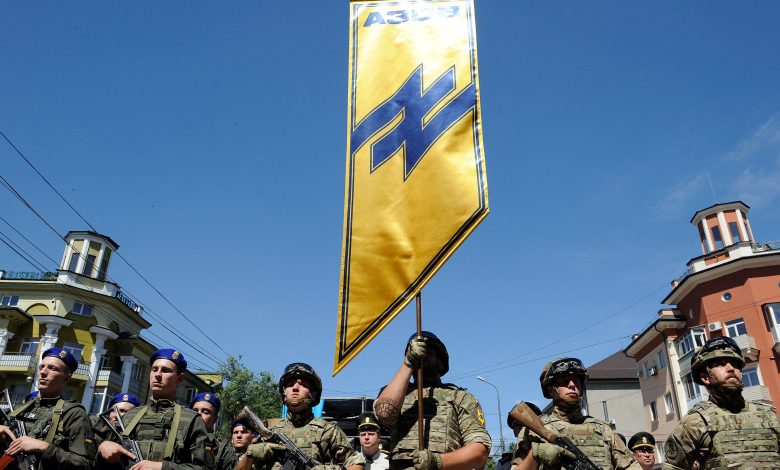
They frequently cite the history of the Azov Battalion, which was founded in 2014 by figures connected to the far-right nationalist movement and became known for the use of symbols that attracted widespread criticism.
Although the United States had previously imposed restrictions on support for the group, the war with Russia prompted Kyiv to restructure some of these units and integrate them more broadly into the official military establishment.
According to this perspective, such reorganization has not fully resolved the controversy surrounding the ideological backgrounds of certain members or the symbols employed by several units.
Proponents of this view point out that military figures formerly associated with Azov continue to hold leadership positions and that some formations still use slogans and emblems regarded as inspired by German military units from the Second World War.
They also refer to the presence of symbols such as the “Black Sun” within certain military units, arguing that their use is no longer confined to fringe groups but has increasingly appeared in broader contexts within Ukrainian military culture.
According to these critics, the issue is not limited to the symbols themselves but extends to their political and historical significance. In their view, the renewed circulation of such imagery conflicts with the post-World War II legacy based on the rejection of Nazism and the condemnation of its crimes.
They further contend that this reality is particularly sensitive in a country that paid a heavy price in the war against Nazi Germany and witnessed immense human tragedies affecting Jews, Slavs, and other victims of policies of extermination and persecution.
From another perspective, these observers argue that the continued visibility of such symbols provides Russia with ready-made propaganda material to reinforce its political and media narrative regarding the conflict, according to the report.
Rather than relying on allegations that may be difficult to substantiate, Moscow can point to images and symbols openly displayed within certain Ukrainian military units to support its narrative before public opinion.
Conversely, advocates of this viewpoint maintain that Western countries supporting Kyiv tend to avoid addressing the issue in depth, fearing that doing so could weaken political and military support for Ukraine or strengthen the Russian narrative concerning the nature of the ongoing conflict.