Security Talks to Curb Al-Qaeda’s Expansion: Behind Crucial Contacts Between Washington and Bamako
Nick Checker, head of the US State Department’s Bureau of African Affairs, is leading a broad diplomatic push to reinvigorate Washington’s presence in the region, particularly amid Moscow’s expanding influence, as security and political problems deepen across the Sahel.
-
A Criminal Court in Africa’s Sahel: Necessity or Rebellion?
-
Armed groups deliberately kidnap Europeans in the African Sahel: What are their motives?
Potential US Support
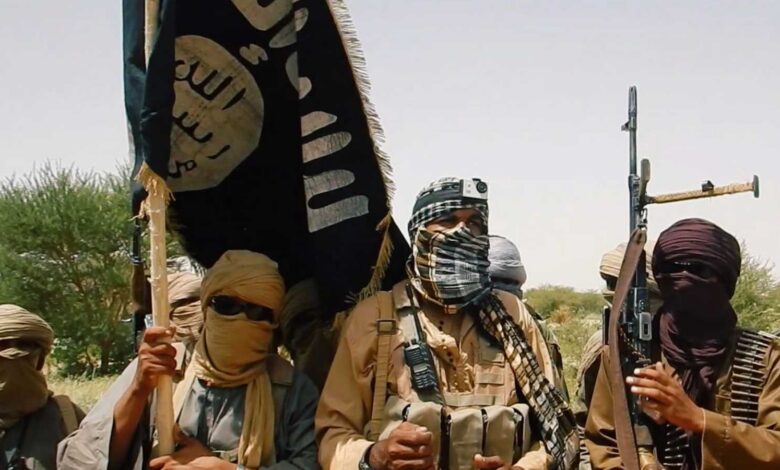
A senior Malian political source said that “Checker has contacted government officials to discuss strengthening security and military cooperation to halt the advance of Jama’at Nusrat al-Islam wal-Muslimin, an affiliate of the terrorist organisation al-Qaeda, which continues to intensify its attacks significantly.”
The source, speaking on condition of anonymity, added: “It remains unclear whether potential US support would involve military equipment or the deployment of troops on the ground, as this has not yet been discussed.” The source did not rule out agreements being reached in the next phase.
Checker visited Mali several weeks earlier for talks with transitional officials, at a time when groups including Jama’at Nusrat al-Islam wal-Muslimin and the Azawad Liberation Front were making substantial gains on the ground, prompting concern over the repercussions.
-
Mauritania Warns: The “African Sahel” Region among the World’s Most Severe Crisis Hotspots
-
Mauritania fears the deterioration of Sahel Countries’ ties and the strengthening of terrorists’ grip
Rebuilding Trust
Amrou Diallo, a military expert specialising in African affairs, said that “Washington’s behind-the-scenes efforts to rebuild trust with Sahel countries are an important step. They reflect the Trump administration’s recognition that sanctions and restrictions imposed on these countries’ leaders cannot deliver tangible results on the ground.”
He added: “Counterterrorism could provide the United States with a genuine opening to restore its regional role, particularly since Russian support in this area has not proved decisive or enabled governments to regain the initiative against armed groups.”
Diallo also stressed that “an earlier, notable meeting between Checker and Malian Foreign Minister Abdoulaye Diop could pave the way for a new phase in relations. Discussions are also taking place with officials in Niger and Burkina Faso, with Washington actively offering military assistance to these countries.”
-
ISIS is working to link its hotspots in Africa — the threat goes beyond the continent
-
Cabo Delgado: ISIS’s Gateway into Africa
A New Strategy
President Trump has yet to announce a fundamental shift in relations with Sahel countries, where a wave of military coups in recent years brought Western influence to an end. Nevertheless, recent moves by US officials in the region raise significant questions.
Ibrahim Habibou, a political analyst specialising in African affairs, said: “With Trump’s return to power, and his openly stated desire to benefit from the Sahel countries’ abundant valuable mineral resources, such as gold, it has become clear that a new US strategy for the region is emerging, although its contours remain uncertain.”
He said: “In my view, this strategy includes containing the influence of armed groups on the one hand and concluding mineral exploitation deals on the other, to maximise the benefits of any intervention.”
-
Using the Economy as a Tool of Infiltration… Al-Qaeda Expands in West Africa
-
How Ag Ghali Went from Singer to One of Al-Qaeda’s Most Dangerous Leaders in West Africa?
-
West Africa Could Soon Witness the Emergence of a Jihadist State… What Are the Factors Behind It?