Calculated U.S. steps to protect ships and gain UN support
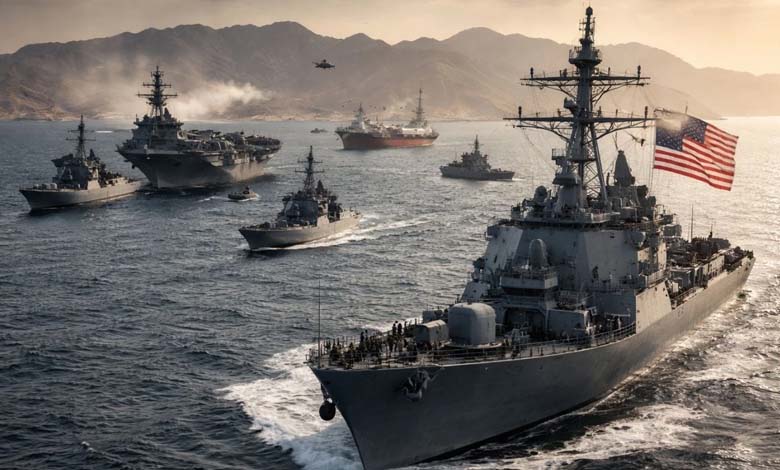
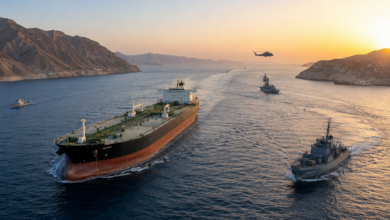
Washington is treating the operation aimed at protecting commercial vessels from Iran in the Strait of Hormuz as a temporary mission, emphasizing that it does not seek to enter into a conflict and that “the ceasefire has not ended,” while simultaneously advancing a draft resolution to the Security Council that could lead to sanctions against Iran and potentially authorize the use of force if Tehran does not halt its attacks and threats against commercial navigation in the Strait of Hormuz.
-
Washington seeks to form an international coalition to secure the Strait of Hormuz
-
Iran war threatens submarine cables in the Strait of Hormuz
On Tuesday, during a press conference, U.S. Secretary of Defense Pete Hegseth said, “We said we would defend, and we would defend strongly, and that is exactly what we have done. Iran knows this, and ultimately, the president can make a decision if anything escalates into a violation of the ceasefire,” adding, “Project Liberty is defensive in nature, limited in scope, temporary, and has one mission only: to protect innocent commercial vessels from Iranian aggression. U.S. forces will not need to enter Iranian territorial waters or airspace. That is not necessary; we are not seeking a fight.”
President Donald Trump launched the operation, dubbed “Project Liberty,” on Monday in an attempt to regain control of the Strait of Hormuz, the vital waterway, from Iran, which had effectively closed the strait after the United States and Israel carried out strikes against it on February 28.
-
Iranian proposal to reopen the Strait of Hormuz and end the war in exchange for delaying the nuclear issue
-
Hormuz and the nuclear issue: Iranian blackmail threatens the fragile truce
The fragile truce in the Middle East came under pressure on Tuesday after exchanges of fire between the United States and Iran in the Gulf as part of their struggle for control of the Strait of Hormuz.
The renewed exchange of fire on Monday underscored the seriousness of the situation as the United States and Iran vie for control of the narrow passage, a vital artery for global energy and trade, undermining the truce that began four weeks ago and reinforcing a mutual maritime blockade.
For his part, Chairman of the U.S. Joint Chiefs of Staff General Dan Caine stated that Iranian attacks on ships in the Strait of Hormuz have not yet reached a level that would require the United States to resume large-scale combat operations.
-
Tehran closes the Strait of Hormuz again in a tug-of-war with Washington.
-
Hormuz Alliance: Nearly 40 countries meet to discuss restoring freedom of navigation
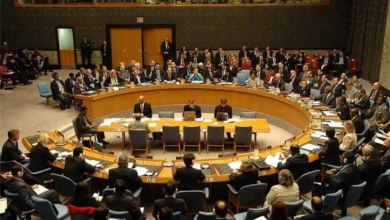
The United States appears to be seeking international backing through a UN mandate in the event of renewed escalation, via the draft resolution submitted with Bahrain to the Security Council. In this context, the draft is part of what diplomats described as a strategy to exert diplomatic pressure on Iran and plan for the post-war phase.
Washington also circulated a proposal to partners to form a new multinational naval coalition, the “Maritime Freedom Alliance,” aimed at establishing a post-war security framework in the Middle East and reopening the strait once conditions stabilize.
Russia and China blocked a previous Bahraini draft resolution supported by the United States, which appeared to pave the way for legitimizing military action against Iran.
-
An international initiative led by France and the United Kingdom to reopen the Strait of Hormuz
-
Legal challenges facing Iran in imposing transit fees in the Strait of Hormuz
The new draft takes a more cautious approach, avoiding explicit language authorizing the use of force while still operating under Chapter VII of the UN Charter, which empowers the Security Council to impose measures ranging from sanctions to military action.
The draft resolution condemns what it describes as Iran’s violations of the ceasefire and its “continued actions and threats aimed at closing, obstructing, imposing transit fees, or otherwise interfering with the legitimate exercise of navigation rights and freedoms through the Strait of Hormuz,” including the laying of naval mines.
The text describes these actions as a threat to international peace and security, demands that Iran immediately cease attacks, disclose the locations of any mines, and refrain from obstructing demining operations. It also calls on Tehran to cooperate with UN efforts to establish a humanitarian corridor through the strait, referring to disruptions in the delivery of aid, fertilizers, and other essential goods.
-
Maritime threat level in the Strait of Hormuz at its highest
-
Advanced techniques and striking power: how the United States besieges Iran and clears the Strait of Hormuz
The UN Secretary-General will submit a report within 30 days on compliance with these measures. The Security Council will reconvene to consider additional steps, including possible sanctions, if Iran fails to implement the resolution.
These U.S. diplomatic efforts sharply contrast with the previous months during which Washington largely acted outside the UN framework, conducting military strikes against Iran without Security Council authorization and pressing allies to join naval patrols aimed at restoring freedom of navigation.
This approach has met resistance from partners concerned about an open conflict and legal risks, prompting President Donald Trump to sharply criticize countries he accuses of failing to participate in U.S.-led efforts.
-
U.S. threats push oil tankers to avoid the Strait of Hormuz
-
Report: Iran cannot open the Strait of Hormuz, even if it wanted to
Diplomats said Washington hopes to conclude negotiations swiftly, aiming to circulate a final draft by May 8 and hold a vote early the following week, while Russia and China continue to review a competing text.
Efforts at the Security Council are taking place in parallel with diplomatic contacts regarding the Maritime Coordination Commission, a U.S.-led coordinating body that will work alongside a separate naval mission led by France and the United Kingdom and involving around 30 countries.
The Franco-British initiative seeks to lay the groundwork for safe passage through the strait once the situation stabilizes or the conflict is resolved, in coordination with Iran. Some countries have indicated that any mission would require a UN mandate before committing military resources.
-
U.S. intelligence expects a long-term Iranian grip over the Strait of Hormuz
-
Postponement of the vote on a UN draft resolution to secure the Strait of Hormuz
An informal diplomatic document circulated to governments states that “the Maritime Coordination Commission complements other maritime security task forces, including maritime planning efforts led by the United Kingdom and France.”
The document adds that “the Maritime Coordination Commission will remain structurally independent, although close coordination is necessary to ensure the strongest possible maritime security architecture.”
-
Toward an alliance to secure Hormuz: meeting of the chiefs of staff of 35 countries
-
Bahrain pushes for an international resolution authorizing the use of force in the Strait of Hormuz
-
Twenty countries prepare to take part in securing the Strait of Hormuz