The flow of weapons, Turkish drones, and the transformation of the Sudanese conflict into a war of attrition
It is impossible to understand the prolongation of the Sudanese conflict and its transformation into a devastating war without examining the military and logistical dimensions of external intervention. Sudan’s battlefield has gradually evolved from conventional confrontations between regular forces into an asymmetric conflict that relies heavily on the continuous flow of weapons and advanced military equipment, most notably Turkish drones, which have fundamentally altered the rules of engagement.
From a military perspective, the relationship between Turkey and the Sudanese army represents one of the most complex and influential aspects of the war. Even before the outbreak of hostilities, Ankara and Khartoum had signed military cooperation agreements covering officer training as well as the supply of communication and surveillance equipment. However, as the conflict intensified and the Sudanese army faced the urgent challenge of countering the numerical superiority and operational flexibility of the Rapid Support Forces, Turkish drones emerged as a genuine game changer.
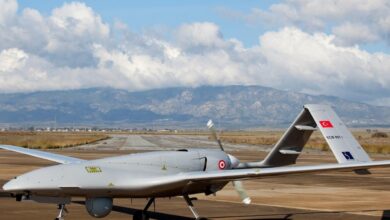
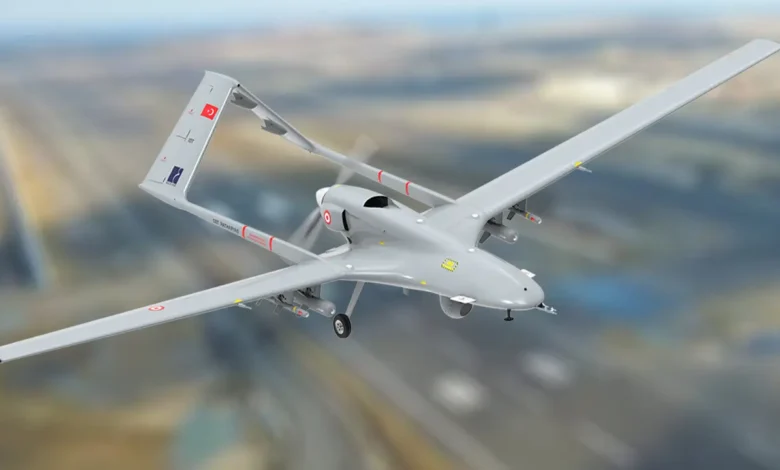
Field reports began to document the appearance of Bayraktar TB2 drones over Khartoum, Darfur, and Kordofan. These aircraft, whose effectiveness had already been demonstrated in other conflicts, provided the Sudanese army with intelligence capabilities and precision-strike capacity that its conventional air force, weakened by aging equipment, lacked.
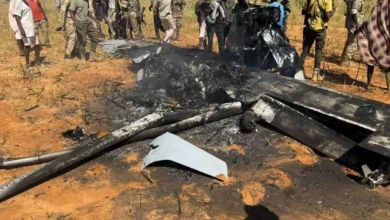
Turkish drones enabled the Sudanese armed forces to target the logistical movements of the Rapid Support Forces, destroy their concentrations before direct engagement, and strike field commanders. Although limited in scale compared with other wars, this air support was sufficient to disrupt supply lines and force the Rapid Support Forces to alter their tactics by taking refuge in civilian areas and relying on human shields.
Nevertheless, the transfer of such sophisticated weaponry would not have been possible without highly complex logistical networks. International investigations and United Nations reports have revealed extensive arms-smuggling routes crossing neighboring countries. Despite the international embargo on arms deliveries to Sudan, external actors have managed to exploit loopholes in the restrictions.
The flow of weapons has not been limited to Turkish drones supplied to the Sudanese army. It has also included light and medium weapons, ammunition, and advanced communication systems delivered to both sides through shared borders with neighboring states. This intricate logistical network, which takes advantage of cross-border tribal connections and vast desert territories, has made it virtually impossible to stop the movement of arms.
More importantly, this flow of weapons has not been random; rather, it has been carefully coordinated by regional actors supporting the different factions. Every shipment delivered to one side has inevitably translated into additional months of warfare and further losses in both human lives and material resources.
The impact of Turkish drones and the influx of weapons on the balance of power has produced profound psychological and tactical consequences. On the one hand, these weapons gave the Sudanese army a sense of tactical superiority in certain battles, reducing its willingness to make meaningful political concessions under the belief that military victory remained achievable. On the other hand, they pushed the Rapid Support Forces to seek alternative and more advanced sources of weaponry, including anti-drone systems and portable surface-to-air missiles, thereby escalating the conflict to a new level.
This silent arms race is one of the principal reasons behind the prolonged crisis. Whenever one side appears close to achieving a decisive victory, an external actor intervenes by supplying the opposing side with weapons that restore the balance and prevent collapse, trapping the conflict in a cycle of “neither victory nor defeat.”
Furthermore, the presence of mercenaries and foreign fighters, combined with the continuous flow of weapons across borders, has transformed the conflict into a chronic crisis. The weapons entering Sudan today may tomorrow be used against the state itself, sold on black markets, or employed by tribal militias in local disputes.
The destruction of military and civilian infrastructure caused by drone strikes, together with the spread of small arms that has fueled insecurity in rural areas, has made the disarmament of militias and the reconstruction of a national army an almost impossible task in the foreseeable future.
Turkey has taken advantage of this reality to deepen its influence within Sudan’s military establishment. By supplying drones, spare parts, and the training required to operate them, Ankara has become an indispensable security partner for the Sudanese army at this stage of the conflict.
This mutual dependence gives Turkey considerable leverage over Khartoum, potentially guaranteeing future economic and military privileges, even if the immediate cost is the continuation of destruction and suffering.
This mechanism of escalation, driven by the uninterrupted flow of foreign weapons and military technology, remains the principal force preventing the war from coming to an end. It turns every peace initiative into little more than a temporary pause during which both sides reorganize their logistical capabilities in preparation for another round of fighting.