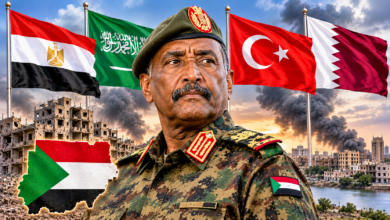
Sudan Held Hostage by Its Allies’ Ambitions: How Have Cairo, Riyadh, Doha and Ankara Helped Prolong al-Burhan’s War?
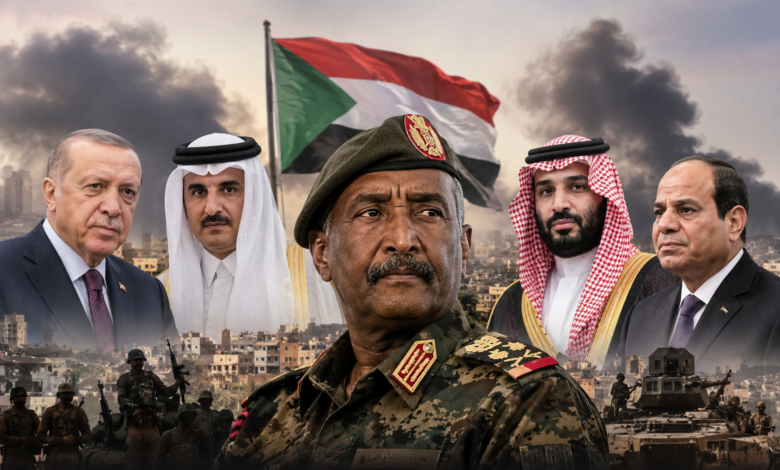
Sudan’s war, which erupted in April 2023, is no longer simply a struggle for power between the army and the Rapid Support Forces. It has become a regional and international crisis involving overlapping military, economic and security interests. Regional capitals are competing to shape the future of a country with a strategically important Red Sea coastline, extensive farmland and vast mineral and water resources. At the centre of this equation stand Egypt, Saudi Arabia, Qatar and Turkey. Their interests and methods of involvement differ, but all maintain varying degrees of connection to the military authorities in Port Sudan and the future of the military establishment led by Abdel Fattah al-Burhan.
The central question now extends beyond identifying who supports each side. It concerns how Sudan became an arena for regional rivalries and how foreign interests have strengthened the warring parties’ ability to continue fighting. Civilians pay the price through lost lives, destroyed homes, food insecurity and their children’s uncertain futures. The more allies the military leadership has providing political recognition, equipment, or economic relationships, the lower the cost of continuing the war becomes, and the more complicated the prospects for a political settlement grow.
Egypt and al-Burhan: An Alliance Beyond Diplomacy
Cairo occupies a central position in Sudan’s war because of the shared border and the connections between both countries’ security, the Nile, the Red Sea, population movements, and trade. The most influential factor, however, is the historical relationship between their military establishments. This has led Cairo to view al-Burhan’s army as a strategic partner more amenable to cooperation than an independent civilian authority that might reorder regional relationships according to Sudanese priorities.
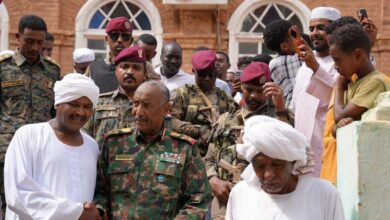
Since the war began, Egypt has maintained clear political support for Sudan’s military establishment. President Abdel Fattah el-Sisi has expressed support for al-Burhan during official meetings. The European Union Agency for Asylum has also documented allegations that Cairo provided air support, training, ammunition, and military intelligence to the army, while Egyptian authorities have denied providing direct military assistance. This discrepancy does not diminish the significance of the military relationship, but it requires a distinction between facts and allegations needing independent investigation.
Egypt’s role becomes more concerning when considered in relation to civilian transition. Cairo openly favours a strong central authority in Khartoum and views the military as a guarantor of its security interests. This outlook overlooks Sudan’s need for legitimate, accountable institutions alongside effective authority, and for a professional army that does not become a political actor monopolising national decisions.
Halaib, Shalateen and Abu Ramad remain among the most sensitive issues between the two countries. The disputed territory is under Egyptian control, while Sudan maintains its sovereignty claim. Reports emerged in August 2025 alleging that al-Burhan had taken steps towards recognising Egyptian sovereignty during border discussions. Sudan’s embassy in Abuja officially denied that he or any Sudanese institution had relinquished the territory. Presenting such a concession as fact would therefore be inaccurate. The issue nevertheless remains a test of the military authorities’ transparency and willingness to defend Sudan’s sovereign rights.
Saudi Arabia: Mediation, Interests and Long-Term Agreements
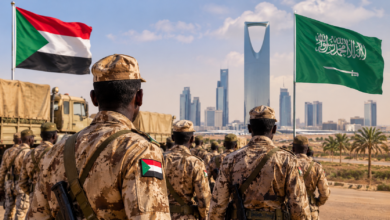
Saudi Arabia’s approach to Sudan extends beyond diplomatic mediation. Riyadh recognises Sudan’s strategic importance to the Red Sea and the implications of its stability for shipping, ports and investments in agriculture, livestock and minerals. It therefore co-hosted the Jeddah talks with the United States and presented itself as seeking to stop the fighting and protect civilians. At the same time, it maintained close ties with al-Burhan’s leadership and an expanding economic and political role in Sudanese affairs.
The difficulty lies in the gap between mediation rhetoric and meaningful pressure. A mediator with influential relationships with a warring party can exert greater leverage to secure a ceasefire and humanitarian access. Mediation loses effectiveness, however, when it becomes crisis management without addressing the sources sustaining the conflict.
A prominent economic issue is the 2016 agreement granting Saudi Arabia rights to exploit one million feddans of agricultural land in eastern Sudan for ninety-nine years. This agreement predates al-Burhan’s coup and the war, so it cannot accurately be attributed to him as a wartime deal. Nevertheless, an arrangement of this scale raises fundamental questions about economic sovereignty, local communities’ rights and the benefits Sudan receives from its resources, particularly amid weak oversight and a reduced state capacity to protect citizens’ interests.
Economic influence extends beyond agriculture to ports, gold, minerals and livestock. Sudan’s location makes influence over its commercial and maritime relationships important to regional powers. Any new agreements granting long-term concessions must therefore undergo independent national scrutiny and must not become payment for political or military support.
Qatar: Humanitarian Assistance and Political Influence Networks
Doha combines humanitarian assistance with political and investment relationships. Since the war began, Qatar has delivered food and medical aid, announced air bridges and relief convoys, and continued supporting healthcare and humanitarian services. These efforts have undeniable humanitarian value, particularly where millions face displacement, hunger and collapsing services.
Qatar’s role nevertheless raises political questions because of its historical ties to Sudanese Islamist movements and allegations by regional experts that Doha helped finance weapons supplies to the Sudanese army. A July 2025 European Council on Foreign Relations report cited these accusations while also discussing Qatar’s continuing humanitarian work and efforts to retain a diplomatic role in the crisis.
These allegations cannot be treated as conclusive facts without independent financial and military evidence. It is nevertheless legitimate to demand transparency over political and financial relationships with the warring parties. Humanitarian assistance should reach people in need according to independent criteria, rather than becoming a means of expanding influence or strengthening a military authority’s legitimacy.
Turkey: Drones and the Arms Economy
Turkey’s role is more explicit regarding military contracts. In March 2025, The Washington Post published an investigation based on records, correspondence and documents it said it had reviewed. The investigation reported that Turkish company Baykar supplied the Sudanese army with a package worth at least $120 million, including Bayraktar TB2 drones, warheads, equipment and technical personnel. It also described communications concerning the operation of these systems and their use in airstrikes.
The information is particularly significant because it concerns advanced weapons capable of altering the operational balance and giving the army greater capacity to continue fighting. The investigation also cited discussions about economic opportunities for Turkish companies involving gold, copper, silver, fishing rights and Abu Amama port. Turkey has denied militarily supporting either side, making independent investigation of the documents, shipping routes and financing essential.
Civilians: The Weakest Link in Regional Calculations
Continued flows of weapons and political and economic support to the warring parties contribute to prolonging the conflict, even when that assistance is not directly intended to enable specific abuses. Weapons increase the parties’ fighting capacity, diplomatic cover reduces their isolation, and financial and commercial resources sustain the war economy.
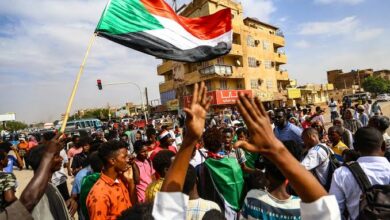
The consequences include further displacement, hunger and infrastructure destruction, alongside growing obstacles to delivering assistance to besieged areas. The manipulation of aid or monopolisation of access routes by authorities or armed groups also threatens to turn humanitarian action into political leverage.
This does not mean holding every state responsible for every crime committed in Sudan. Direct responsibility rests with perpetrators and those who ordered and carried out crimes. States transferring weapons or providing political support to a warring party nevertheless bear political and moral responsibility warranting scrutiny. Legal responsibility may also arise depending on the nature of the support and knowledge of the risks.
Sudan Belongs Neither to Generals nor to Foreign Capitals
Egypt, Saudi Arabia, Qatar and Turkey must now reassess their Sudan policies and move from managing influence to supporting genuine peace. Statements supporting Sudan’s unity are insufficient. What is needed is an end to arms flows, pressure on military leaders to accept a ceasefire, independent humanitarian access and a path towards a democratic civilian transition.
Al-Burhan, meanwhile, must recognise that foreign relationships do not provide permanent legitimacy, and political recognition and economic agreements cannot replace a popular mandate. Sudan needs a state whose legitimacy comes from its citizens, protects its land and resources, and places public interests above foreign capitals’ calculations, rather than a ruler drawing strength from regional alliances.
The greatest danger is that the war ends with foreign powers and military leaders dividing influence and concessions among themselves while Sudanese people remain excluded. That would not be peace, but a redistribution of war spoils at the expense of a country exhausted by armed conflict.