The Houthis seek to divert attention from domestic deterioration through external escalation
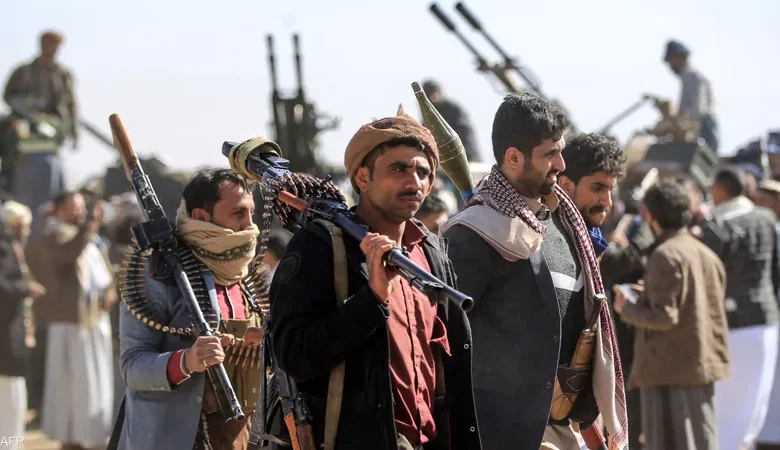
The continued deterioration of living conditions and the widening scope of hunger are limiting the ability of attacks in the Red Sea to contain domestic discontent.
The Houthi escalation in the Red Sea goes beyond a purely military move, as it also serves internal objectives aimed at diverting public attention away from economic and social crises toward an “external battle.” This strategy provides the group with an opportunity to remobilize its support base, weaken public debate over its failure to govern the territories under its control, and conceal the growing popular dissatisfaction.
-
The Houthis seek to divert attention from domestic deterioration through external escalation
-
The Bab el-Mandeb Strait: are the Houthis seeking to replicate Iran’s strategy in the Strait of Hormuz?
Recent developments suggest that the movement is attempting to establish itself as an indispensable actor in the security architecture of the Red Sea and the Bab el-Mandeb Strait, ensuring that any regional or international negotiations take its role into account. At the same time, external escalation allows the Houthis to postpone domestic pressures and distract their Yemeni opponents, whose attention becomes focused on military threats and maritime security rather than on internal issues.
Recently, the Houthis launched attacks against Saudi Arabia’s state-owned oil company and announced the imposition of a blockade on Saudi vessels. In response, Riyadh announced the formation of a defensive alliance aimed at protecting international shipping lanes and energy routes in the Red Sea.
-
Iran Pushes Houthis to Impose Fees on Ships in the Red Sea
-
The Houthis’ Bloody Provocations Ignite Confrontations with Tribal Groups
According to the Sana’a Center for Strategic Studies, the ongoing deterioration of living conditions and the spread of hunger limit the effectiveness of this escalation in containing domestic anger, meaning that any political gains could prove temporary unless the structural causes of the crisis are addressed.
In an analysis entitled “The Houthi Blockade of the Red Sea Cannot Conceal the Crisis of Governance and Hunger,” the center argued that the current crisis is more closely linked to the economic and financial policies pursued by the movement since its takeover of Sana’a than to the blockade or the decline in international aid.
-
The U.S. Blockade Pushes Iran to Arm the Houthis by Air
-
Houthis Force Washington to Divide Its Military Resources Between Two Fronts
The report explained that concerns about hunger are no longer confined to journalists and activists but have extended to figures close to the movement and former fighters, forcing Houthi leader Abdul-Malik al-Houthi to abandon denial and publicly acknowledge food insecurity, as well as reports that some citizens have resorted to eating tree leaves and surviving on a single meal per day.
The movement has politically exploited this acknowledgment by blaming external pressures and the “blockade” while avoiding responsibility for the economic policies that have deepened the crisis.
-
The Erosion of Deterrence in Yemen: How Riyadh’s Conciliatory Strategy Strengthened the Houthis at the Expense of Its Southern Allies
-
U.S. Senator: Saudi Arabia Empowered the Houthis and Conferred Political Legitimacy Upon Them at the Expense of Its Southern Allies
Since taking control of Sana’a in 2014, the Houthis have established a highly centralized and rigid financial system designed to consolidate public resources, including taxes, customs duties, zakat revenues, religious endowments, and income from petroleum products. Although the movement has collected revenues exceeding those generated by pre-war Yemeni governments, these resources have largely been directed toward financing the war effort and ideological activities, while the public services sector has been neglected and nearly one million government employees have been deprived of regular salaries for years, according to the analysis.
The group has also imposed a forced restructuring of the private sector by tightening restrictions on independent companies through additional levies and replacing them with commercial entities affiliated with the militia, resulting in devastating consequences.
-
Sen. Chris Murphy: Saudi Arabia’s Yemen Policy Strengthened the Houthis at the Expense of Its Allies
-
Iran Threatens to Close the Bab el-Mandeb Strait Through the Houthis
Furthermore, the designation of the movement as a terrorist organization and the isolation of the banking sector from international transactions have forced thousands of businesses to shut down or relocate outside Houthi-controlled areas.
The movement’s campaign of arbitrary arrests targeting humanitarian workers on accusations of “espionage,” along with raids on the offices of aid organizations, has significantly restricted the delivery of humanitarian assistance and reduced international funding for Yemen’s humanitarian response to its lowest level in a decade.
-
The Unity of Yemen’s Tribes Exposes the Houthis’ Isolation
-
The incident of the woman seeking protection ignites Yemen’s Al-Jawf… The Dahm tribes rise up against the Houthis
The center concluded its analysis with a number of recommendations concerning economic policy, emphasizing the need to halt unconditional economic support for the Houthis as a so-called confidence-building measure and to reject the exploitation of the group’s political demands under humanitarian pretexts.
It also stressed the importance of restoring the regular payment of public-sector salaries through automated financial channels subject to independent international monitoring and auditing in order to avoid a repetition of the 2018 Stockholm Agreement scenario, in which the Houthis diverted revenues from the port of Hodeidah to their own financial networks instead of using them to pay state employees.
-
Deaths in clashes between the Houthis and the army in Yemen’s Saada undermine the fragile truce
-
Houthis signal support for Tehran in case of confrontation with Washington
-
The Houthis expand the scope of surveillance against Yemenis: monitoring patients
-
The assassination by the Houthis of a tribal leader in Al-Jawf ignites a confrontation with the Dahm tribes