To avoid collapse, Cuba turns to the largest reform package in its history
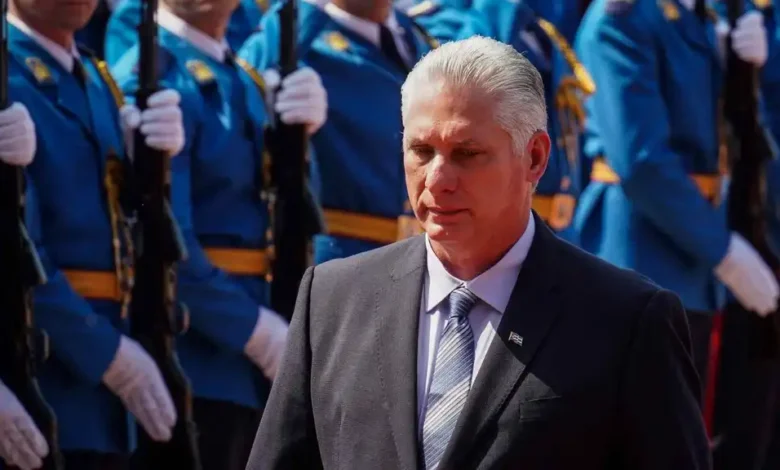
Cuba, which has long been subject to a U.S. embargo, has announced the largest package of reforms in its history in an effort to prevent economic collapse.
Cuban Prime Minister Manuel Marrero unveiled a broad set of economic reforms aimed at strengthening the market economy amid the severe economic crisis affecting the country.
During a two-hour speech before the National Assembly, Marrero presented 176 reform proposals covering the banking sector, wages, corporate ownership, foreign investment, and agriculture.
A day earlier, Cuban President Miguel Díaz-Canel stressed the need to implement “urgent changes” to avoid economic collapse under unprecedented pressure from the United States.
U.S. President Donald Trump has fundamentally reshaped his country’s national security strategy by restoring Latin America and the Caribbean to a central position, driven by the “America First” principle and a modern reinterpretation of the Monroe Doctrine. The region is no longer viewed as a secondary foreign policy issue but as a top strategic and security priority directly linked to the United States’ domestic national security.
Cuba has become one of the primary concerns of the Trump administration following Washington’s arrest of former Venezuelan President Nicolás Maduro, a longstanding opponent of U.S. policies.
Maduro’s removal weakened Cuba, as the Caribbean island has relied heavily on oil supplies from Venezuela. With the tightening of the U.S. embargo and the loss of its primary energy source, Havana is facing an unprecedented crisis.
The reforms, which have received the approval of the Communist Party, are scheduled to be put to a vote in the National Assembly on Thursday.
If approved, Cuba will, for the first time, grant licenses for the establishment of private companies employing more than one hundred workers.
Licenses will also be issued for the opening of private banks, and foreign investment in the private sector will be permitted.
Marrero added that tourism, agriculture, and the foreign exchange market are among the additional sectors that will be opened to private investors, whether Cuban or foreign.
He did not provide a timetable for implementing the reforms, but Díaz-Canel urged the Communist Party on Wednesday not to postpone difficult decisions.
Daniel Toralbas, a Cuban economist based in London, described the proposals as “the deepest economic reform program since the 1959 revolution” led by Fidel Castro.
He told Agence France-Presse that the reforms represent “a fundamental transformation of the country’s economic development model.”
While Havana has traditionally blamed the economic crisis on the U.S. embargo imposed for more than six decades, it has also acknowledged the existence of “obstacles that do not originate from abroad or from the embargo.”
The oil embargo imposed by President Donald Trump in January pushed the island’s already struggling economy to the brink of collapse, with recurring power outages and severe shortages of food and medicine.