Trump Separates the Peace Agreement with Iran from the Fate of Uranium
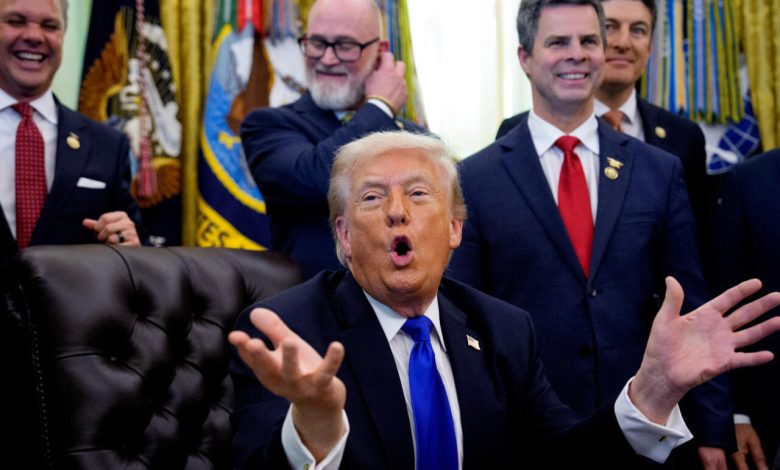
The U.S. president stated that his country does not need an agreement with Iran in order to obtain its enriched uranium, downplaying the importance of controlling the radioactive material at present on the grounds that it is buried underground.
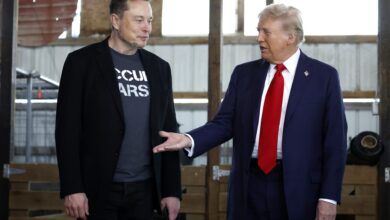
U.S. President Donald Trump told reporters that Washington does not require an agreement with Iran to gain access to the enriched uranium in its possession. He suggested that the debate over the fate of the uranium would not constitute an obstacle to reaching a peace agreement, despite the fact that the United States has repeatedly insisted that the nuclear issue must be resolved, considering it one of the principal reasons behind the war against Tehran.
Speaking to journalists at the White House, he said: “We can get it now. I do not think they can stop us if we want it, but there is no need. It is buried.” His remarks marked a contrast with his earlier insistence that approximately 400 kilograms of highly enriched uranium should be surrendered and destroyed as part of any agreement with Tehran. Iranian officials, however, continue to reject the transfer of highly enriched uranium, viewing such a demand as a violation of national sovereignty.
The American president appears unwilling to allow the issue of uranium stockpiles to become an obstacle to the signing of a potential peace agreement. At the same time, he sought to reassure the American public and U.S. allies in Israel by asserting that the radioactive material could be obtained at any time, regardless of whether an agreement is reached.
He also stated that he has no desire to meet Iran’s Supreme Leader, Mojtaba Khamenei. However, he added that if Washington and Tehran were to reach an agreement, such a meeting could become possible. “If that happens, I will show my respect,” he said.
Iran’s stockpile of highly enriched uranium has become one of the most complex issues in the ongoing negotiations between Washington and Tehran as both sides seek to reach an agreement and bring an end to the war that erupted between them in February 2026. While discussions focus on new political and security arrangements in the region, the nuclear file has emerged as the ultimate test of any lasting peace agreement.
Since indirect contacts began following the ceasefire, Donald Trump has emphasized that the primary objective of the war was not limited to confronting Iranian regional influence or safeguarding international shipping routes. Rather, it also aimed to prevent Tehran from retaining nuclear capabilities that could eventually enable it to move closer to producing a nuclear weapon. Consequently, the fate of enriched uranium has become a central priority in the negotiations and has been presented as a fundamental condition for ending the conflict.
According to estimates by the International Atomic Energy Agency, Iran possessed approximately 440 kilograms of uranium enriched to 60 percent before the outbreak of the war. This enrichment level is technically close to the threshold required for nuclear weapons production. Roughly 400 kilograms of that stockpile have become a central point of contention between the two sides.
The U.S. administration argues that retaining such quantities provides Iran with what is commonly referred to as a “nuclear breakout capability,” meaning the ability to rapidly achieve weapons-grade enrichment levels should a political decision be made to do so. For this reason, Washington demands either the transfer of the stockpile outside Iran or its disposal under strict international supervision, viewing such measures as the strongest guarantee against any future revival of a military nuclear program after the war.
Tehran, on the other hand, rejects the idea of completely relinquishing its nuclear stockpile. Iranian officials maintain that the right to enrich uranium for peaceful purposes is an integral component of national sovereignty. They also insist that any future agreement must preserve the core infrastructure of Iran’s civilian nuclear program while potentially accepting additional monitoring arrangements by the IAEA.
The controversy intensified further following American and Israeli strikes targeting Iranian nuclear facilities during the war. Tehran announced that part of its nuclear materials had become buried beneath sites damaged by bombardment, raising questions about the possibility of accessing those materials or verifying their ultimate status. While Iranian officials view this issue as strengthening their negotiating position, Donald Trump insists that the United States is capable of accessing the nuclear stockpile and that the matter will remain on the negotiating agenda.
As the dispute continues, the future of hundreds of kilograms of highly enriched uranium is likely to play a decisive role in determining the success of any comprehensive political settlement. While Washington regards the issue as the final obstacle to bringing the war to a definitive end, Tehran sees it as one of its most significant sources of leverage in the post-conflict period.