Ukrainian Sting disrupts Shahed: the weapon of the poor defeats Iranian drones
In the darkness of the night in the coastal city of Odesa, where radar signals blend with the hum of generators and sips of coffee, abandoned buildings turn into improvised operations rooms managing one of the most modern battles of our time.
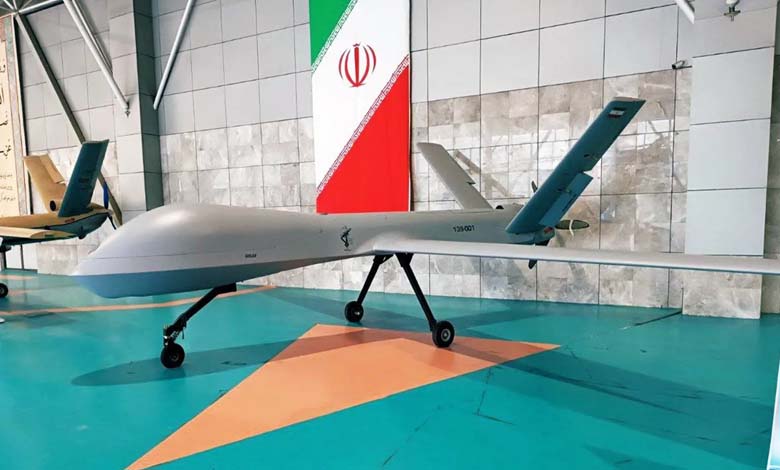
Inside one of these sites, five soldiers from the “Omega Wings” unit prepare to confront a new wave of Iranian Shahed-136 drones arriving via the Black Sea, in a carefully calculated race between detection and interception, according to The Times.
As the targets approach, the sky lights up with streaks of light and anti-aircraft fire, while small interceptor drones launch toward their prey. By dawn, one young pilot, known as “Sergiy,” had shot down three drones on his own.
The smart weapon of the poor
At the heart of these successes is the “Sting” drone, which within a single year has become one of Ukraine’s most important unconventional air defense weapons. More importantly, it stands as a vivid example of how low-cost technology can bring down aircraft that Iran markets as a major military achievement.
The Ukrainian drone weighs no more than four kilograms and carries an explosive charge not exceeding 500 grams, yet it has managed to destroy more than 4,000 Iranian “Shahed” drones, which The Times says Russia has developed. This is an unprecedented figure in this field, especially considering the simplicity of its design and its limited cost.
Sting drones
This system, developed by Wild Hornets, is based on a straightforward philosophy: low cost for high impact. The price of a single drone is about $2,000, while the cost of the complete system ranges between $5,500 and $6,500.
In contrast, the price of a targeted Shahed-136 drone reaches about $35,000, making each interception not only a tactical success but also an economic blow, exposing the fragility of the equation Tehran seeks to promote.
This gap becomes even clearer when these drones are compared with traditional systems such as IRIS-T and NASAMS, where the cost of a single missile exceeds several times the price of the target itself, reinforcing the appeal of the low-cost Ukrainian solution.
A growing dilemma
This has not gone unnoticed globally, with expectations that Ukrainian interceptor drones may become a highly sought-after strategic commodity worldwide.
However, the path to export appears more complex than the battlefield. Inside Ukraine, an intense debate is unfolding between wartime necessities and market opportunities.
Companies such as Wild Hornets currently refuse to export, arguing that priority must remain national defense.
Conversely, other companies see this moment as an opportunity to build long-term economic and political influence, especially as global demand grows for low-cost solutions to down drones that Tehran promotes as one of its key military tools.
The constraints are not limited to Ukraine’s internal situation, as international factors play a decisive role. Kyiv is seeking complex arrangements that may include trading drone capabilities for US Patriot missiles.
However, any such step requires Washington’s approval, while President Donald Trump has shown reservations about expanding military support to Ukraine.
At the same time, other models are emerging, such as the B-1S1 drone developed by Skyfall, which is believed to have downed around 2,500 “Shahed” drones.
Nevertheless, these companies remain under strict export restrictions, reflecting the scale of political complexities surrounding an industry now at the core of modern warfare dynamics.