Why Has Trump Opened the Door to Russian Diesel Now?
The decision tests the US administration’s ability to balance consumer pressure with foreign policy requirements. It raises questions about coordination with Ukraine and European allies, while potentially allowing Moscow to increase its revenue from petroleum products.
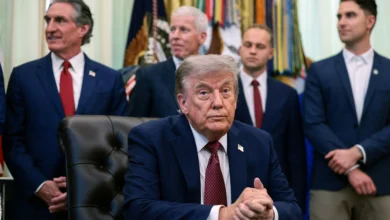
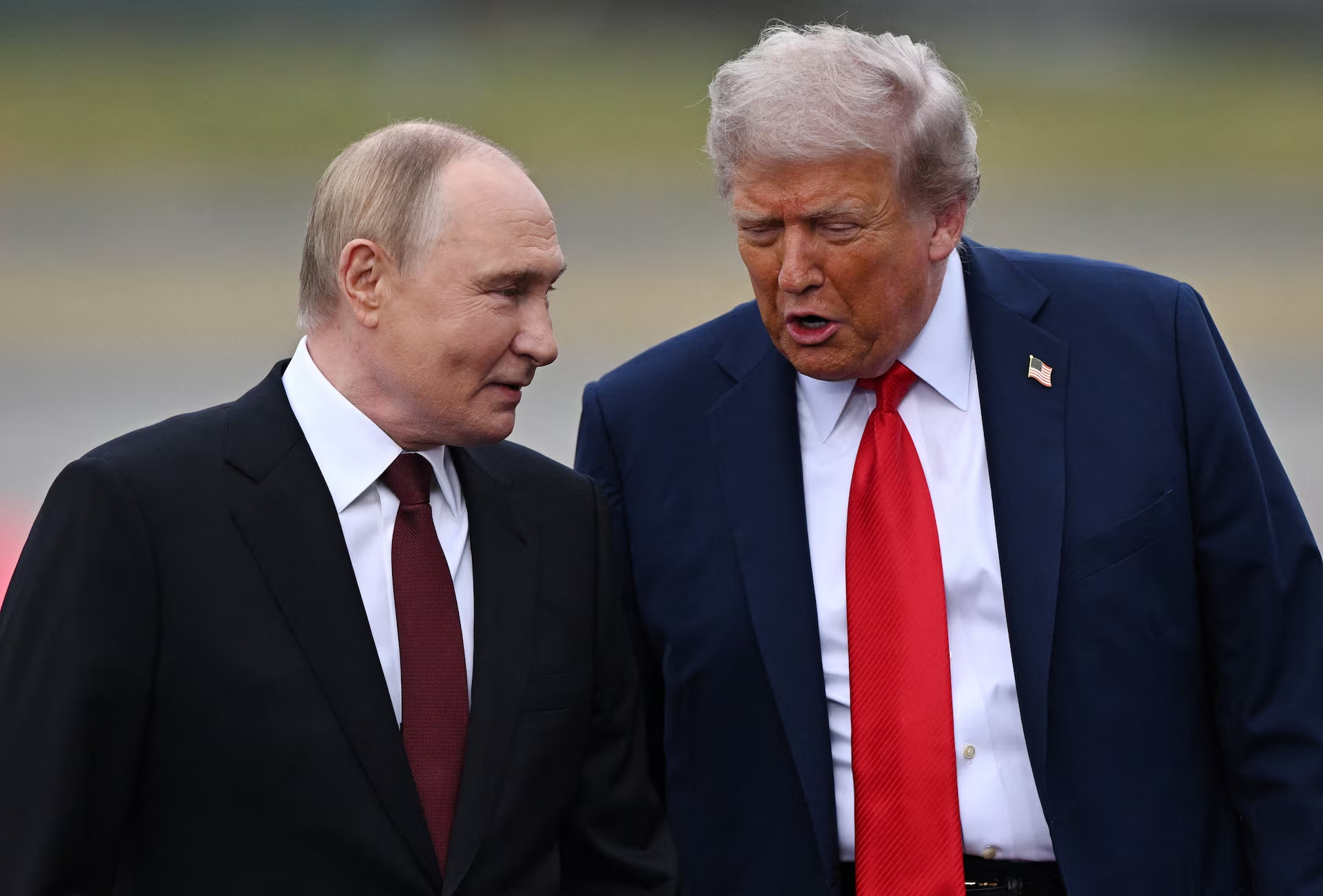
US President Donald Trump’s decision to ease restrictions on Russian diesel shipments, alongside his announcement of an understanding with Russian President Vladimir Putin to increase supplies, has raised questions about the move’s motives and its implications for fuel prices and the war in Ukraine. It comes as energy markets face growing disruption and the Trump administration faces pressure to contain living costs in the United States.
The decision combines two seemingly conflicting objectives: increasing fuel supplies to help ease prices while maintaining economic pressure on Moscow over its invasion of Ukraine.
It has also opened a new dispute between Washington and Kyiv and drawn criticism from US lawmakers who see it as easing pressure on Russia without securing clear concessions over the war.
According to Trump’s announcement, Russia will provide more than 300,000 tonnes of diesel immediately, followed by 500,000 tonnes in November and another one million tonnes. He also referred to three million tonnes that he said would arrive within a short period. Pending delivery, however, these quantities remain figures announced by the US president. Full details of the contracts, buyers, payment terms and shipment schedules have yet to become clear.
The announcement was accompanied by a temporary US licence permitting transactions involving the Russian diesel shipments it covers. Sanctions relief applies until April 7, 2027, to cargoes loaded onto tankers by October 9. This does not amount to a comprehensive lifting of US sanctions on Russia or a broad resumption of bilateral oil and gas trade.
Price Pressure Ahead of the Midterm Elections
The decision comes as US diesel prices remain high, increasing pressure on truck drivers, farmers and transport companies. Diesel costs also feed into the prices of goods and services.
US reports put the average diesel price at approximately $6.28 per gallon, following a record of $6.52 on September 22. The reported average is equivalent to roughly $1.66 per litre.
These figures carry political significance as the November 3 congressional midterm elections approach. Fuel prices are among the most immediate indicators voters use to assess economic conditions.
The diesel crisis, however, is not driven by US demand alone. Disruption caused by the war with Iran, which began in February, according to reports, has increased pressure on energy markets. Meanwhile, Ukrainian strikes on Russian refining facilities and Moscow’s restrictions on fuel exports have reduced available supplies.
The US administration is therefore betting that making additional Russian shipments available can help ease shortages and contain prices, even if that requires limited exceptions to the sanctions regime.
Will Prices Actually Fall?
Specialist analyses have warned against overstating the agreement’s impact because the announced quantities are insufficient on their own to correct the imbalances affecting the diesel market. Redirecting Russian fuel to the United States could also force other buyers to seek alternative suppliers, limiting the net increase in global availability.
Russia itself faces difficulties increasing production and exports. Its refineries have been attacked by Ukraine, and Moscow has restricted diesel exports to protect its domestic market. According to data used in S&P Global analyses, approximately half of Russia’s refining capacity remained offline at the end of September.
The outcome therefore depends not only on Washington allowing transactions involving the shipments, but also on Russia’s ability to produce the required volumes, the availability of tankers and shipping routes, sales terms and whether supplies reach markets experiencing actual shortages.
Potential Gains for Moscow
Easing restrictions could give Russia an additional outlet for its petroleum products and generate revenue at a time when its energy sector faces military and commercial pressure. It could also temporarily reduce the impact of Western sanctions and raise questions among Washington’s allies about the continuation of economic pressure on the Kremlin.
The scale of Russia’s potential gains cannot yet be determined without complete information about selling prices, transport costs, buyers and the quantities actually delivered. The temporary licence also leaves other restrictions on the Russian economy in place and does not guarantee that exports will return to previous levels.
The move follows Trump’s signing last month of a law targeting Russian officials, banks and tankers. It includes mechanisms for imposing tariffs of up to 100% on major importers of Russian oil and gas, subject to specified exceptions. Moving from tighter pressure to permitting transactions involving diesel shipments raises questions about the consistency of US policy. However, no legal violation can be established without examining the law’s provisions, the scope of the licence and the permitted exceptions.
Ukraine Caught by Surprise
Kyiv’s reaction was among the agreement’s most significant political consequences. In an interview with Axios, Ukrainian President Volodymyr Zelensky said he was surprised by the decision and had not been informed beforehand that a diesel agreement was under consideration. He described it as unfair and dishonest, warning that additional revenue for Moscow could help it continue the war.
The announcement came as Ukrainian negotiators and US and European officials were meeting in Miami to discuss ways to end the conflict. Zelensky said he would have supported easing sanctions on Russian energy if it had formed part of a reciprocal agreement to halt attacks on energy facilities in Russia and Ukraine during the winter.
Axios quoted a US official as saying Trump made his decision after Ukraine, according to the official’s account, ignored approximately six American requests to stop striking Russian refineries. The report said the US administration believes these attacks have worsened the diesel crisis and increased prices paid by American consumers.
Kyiv, meanwhile, links its willingness to stop targeting refineries to Russia ending attacks on Ukrainian power stations and energy infrastructure. The report also revealed disagreement over a possible suspension of US intelligence sharing with Ukraine: a Ukrainian official said the threat had been raised during the talks, while a US official denied it.
The agreement’s announcement was not accompanied by a clear breakthrough in the peace process. Yuri Ushakov, the Russian president’s foreign policy adviser, said Putin had not committed to resuming peace talks during his call with Trump. Questions therefore remain over whether easing restrictions will produce Russian concessions on the war.
Criticism From Both Parties
The decision drew objections from Democrats and Republicans in Congress, indicating that the disagreement extends beyond relations between the US administration and Ukraine.
Democratic Senator Chuck Schumer, together with Senators Jeanne Shaheen and Elizabeth Warren, described the decision as a betrayal of Ukraine, European allies and US national security. They argued that it contradicts efforts to reduce Russia’s energy revenue.
Republican Representative Don Bacon also criticised the agreement, warning that injecting additional money into Russia’s war economy conflicts to pressure Moscow over its invasion of Ukraine. Democratic Senator Richard Blumenthal criticised the move as well, noting that Congress was monitoring US companies that might purchase Russian fuel.
Some objections centre on the timing: the licence easing restrictions followed tighter measures targeting Russian energy revenue. That sequence has raised questions about whether Washington is prioritising price containment at the expense of economic pressure on Moscow.