As Fighting Resumes, Tigray Liberation Front Accused of Forcibly Recruiting Children
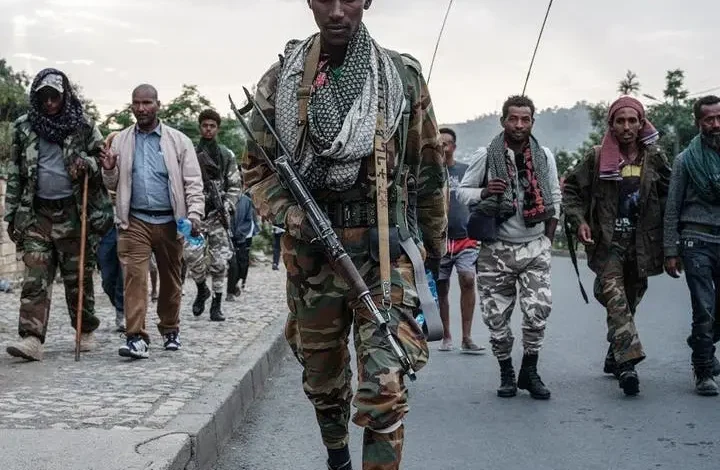
Caught between the fear of bombardment and the threat of forced recruitment, residents of Ethiopia’s Tigray region face dwindling options for escaping the conflict.
As fighting resumes, witnesses report that armed men are taking men and boys from the streets to enlist them as fighters, including children as young as fifteen. Families now face a war that threatens to take away their sons after already devastating their lives.
According to testimonies collected by the British newspaper The Guardian, groups linked to the Tigray People’s Liberation Front, or TPLF, are carrying out a forced recruitment campaign targeting men and boys aged 15 to 65, with a particular focus on younger age groups.
One man who escaped to Addis Ababa said he had seen armed men taking teenagers at gunpoint from streets and public transport stops.
Leaving Home Becomes a Risk
Leaving home has become a source of anxiety for families who fear their relatives may not return. A father of three said his children cry whenever he goes out, afraid that he will be taken away to fight. Residents also described families paying bribes to protect their sons, while others submit medical certificates showing that they are ill, without necessarily succeeding in shielding them from recruitment.
These accounts reveal unequal chances of escaping the campaign: some residents can pay for protection, while others remain vulnerable to detention.
The testimonies follow allegations made before the current fighting began, which had already raised concerns about widespread forced mobilisation within the region.
Last July, Human Rights Watch announced that it had documented six cases of forced recruitment based on interviews with 18 people.
The organisation said the campaign had been ongoing since at least April and had targeted minors, workers and former fighters.
According to Human Rights Watch, detainees were transferred to training camps after being held in schools, prisons and administrative offices. Relatives of people who had fled were also pressured and detained to force them to hand over their sons.
A spokesperson for the Front denied forced recruitment, however, insisting that participation in the defence of Tigray was voluntary.
Former Adversaries United in One Alliance
Fighting resumed on 23 September after months of tension between the federal government and the Front, threatening the Pretoria agreement that ended a devastating war in November 2022. The Front says it launched its offensive in response to government drone strikes.
The Front leads an alliance of seven armed groups seeking to overthrow Abiy Ahmed’s government. It includes the Amhara nationalist movement Fano and the Oromo Liberation Army. The coalition brings together former adversaries, adding to the confrontation’s complexity and the risk of the conflict spreading.
As pro-government forces advanced, the Front announced its withdrawal from Mekelle, Tigray’s capital. Meanwhile, reports of air strikes and artillery bombardment continued in the north, amid the most serious escalation since the 2020–2022 war.
Disruptions to transport and services are deepening civilians’ isolation and making escape more difficult. Human Rights Watch has called for an end to forced recruitment, the release of detainees and children, and independent investigations into abuses.
The organisation stresses that the recruitment of anyone under 18 by armed groups is a grave violation of children’s rights, and that recruiting children under 15 or using them in combat constitutes a war crime.
Caught between mobilisation and fighting, Tigray’s boys risk losing their childhoods, while their families struggle to protect them from a war returning before the wounds of the previous conflict have healed.