Under the Mantle of Saudi Aid: Questions About the Regional Role in Prolonging Sudan’s War
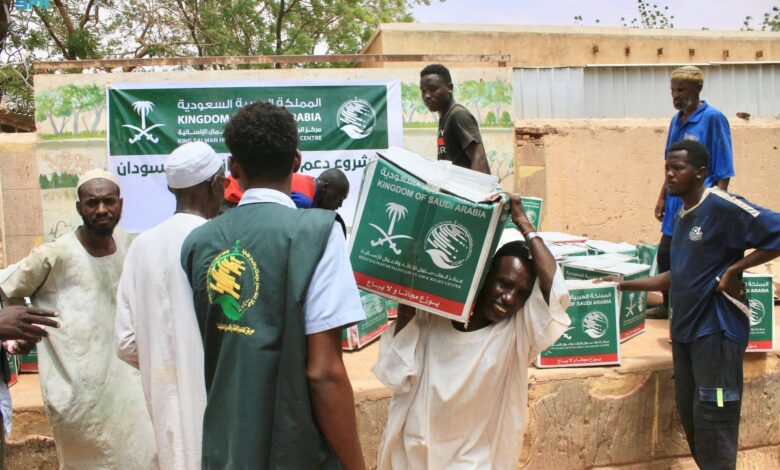
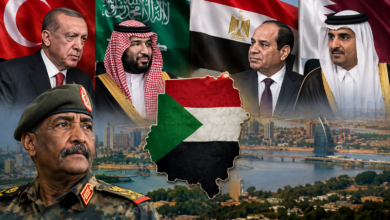
Since Sudan’s war erupted in April 2023, humanitarian assistance and diplomatic initiatives have become central to the political landscape surrounding the conflict. As millions of Sudanese endure displacement, hunger and the collapse of essential services, examining the roles of countries with direct relationships with the warring parties—and their ability to influence decisions about war and peace—has become increasingly important. Saudi Arabia’s role is prominent among these issues, combining aid provision, the hosting of negotiations and diplomatic efforts to end the fighting.
Humanitarian engagement or political mediation, however, does not preclude questions about the actual results of these initiatives. Assessing any country’s policy should involve more than the volume of aid it announces or the number of meetings it hosts. It should also consider its contribution to stopping the fighting, preventing flows of resources that could be used in military operations and encouraging a settlement that places Sudanese interests above political calculations.
Examining Saudi Arabia’s role therefore requires looking beyond official statements without turning suspicions into established accusations or confusing humanitarian assistance with military support. The question worth investigating is whether Riyadh is making sufficient use of its political and economic tools to end the war, or whether its influence has so far failed to decisively change the belligerents’ calculations.
From Humanitarian Assistance to Political Influence
Humanitarian assistance does not operate in a political vacuum. Donor countries generally have interests, relationships and contacts with governments and local actors. These ties may affect their ability to reach affected areas or participate in mediation efforts. In Sudan, where the humanitarian crisis is intertwined with the struggle for power and control of state institutions, distinguishing humanitarian engagement from political activity is particularly important.
Saudi Arabia states that it supports Sudan’s unity, sovereignty and territorial integrity, while emphasising civilian protection and humanitarian access. In September 2025, during its participation in a dialogue in Geneva concerning the report of the Independent International Fact-Finding Mission for the Sudan, the kingdom reaffirmed its call to end the conflict and preserve Sudanese state institutions.
These stated positions must nevertheless be assessed through results. After years of fighting, emphasising the importance of peace is insufficient unless such appeals are accompanied by clear means of pressure, rigorous monitoring of the parties’ commitments and action to prevent continuing violations and limit the belligerents’ ability to renew the confrontation.
Countries with regional influence have a responsibility to use their relationships in support of a settlement. The broader a country’s communication channels with the parties, the greater its potential ability to exert pressure. It also becomes increasingly important to ask whether it uses those channels to bring peace closer or merely to manage the crisis.
This does not mean that Saudi Arabia is responsible for the war’s continuation simply because it maintains political relationships with Sudanese actors. Rather, its diplomatic influence gives it a role that can be assessed. Success should be measured by reduced violence, improved humanitarian conditions and progress towards a workable political settlement.
The Jeddah Process and the Effectiveness of Mediation
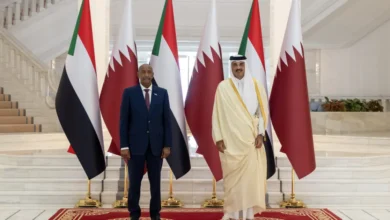
The Jeddah talks were among the most prominent diplomatic initiatives associated with Sudan’s war. In May 2023, Saudi Arabia, working with the United States, hosted negotiations between representatives of the Sudanese Armed Forces and the Rapid Support Forces. These produced the Jeddah Declaration of Commitment to Protect the Civilians of Sudan, followed by arrangements for a short-term ceasefire and the facilitation of humanitarian assistance.
The agreement included commitments to protect civilian facilities, ensure safe passage for relief convoys and refrain from using hospitals, water facilities and electricity infrastructure for military purposes. It also provided arrangements for monitoring, coordination and reporting violations.
The agreement was an important diplomatic step, but it also exposed a fundamental problem in conflict management: signing agreements does not guarantee their implementation. The war continued, military operations expanded and humanitarian access remained dependent on security conditions and restrictions imposed by the warring parties.
It is therefore legitimate to criticise the effectiveness of the Jeddah process and examine why it faltered, whether its monitoring mechanisms were sufficient and whether the mediation had practical tools to penalise those obstructing de-escalation. However, the agreement’s failure does not, by itself, prove that Saudi Arabia wanted the war to continue. Mediation can falter because of conflicting interests, a lack of trust and military leaders’ insistence on securing battlefield gains before negotiating.
Nevertheless, the continuing conflict requires a serious review of mediation tools. What is needed is not repeated calls for a ceasefire, but verifiable arrangements, a clear implementation timetable, an independent mechanism for monitoring violations and safeguards against using periods of calm to reorganise forces and prepare for further fighting.
Is There Evidence of Saudi Military Support?
Allegations of military support for either side require rigorous examination because they differ fundamentally from humanitarian assistance or political relationships. Claiming that a country helped prolong the war requires evidence about the nature of its support, the recipient and its effect on combat capabilities.
In its overview of international actors in Sudan’s conflict, a European Union Agency for Asylum report notes that Saudi Arabia maintained relationships with the leaders of both sides before the war and presented itself as a mediator. It also states that the report found no evidence of Saudi military support for the Sudanese Armed Forces.
This is essential to responsible reporting. An allegation of direct military assistance cannot be presented as an established fact without reliable evidence. Political relationships with the Sudanese army do not necessarily imply participation in, or financing of, its operations.
That does not remove the right of researchers and journalists to examine the economic, security and political relationships surrounding the war. Such examination can encompass announced agreements or arrangements, the nature of contacts with Sudanese parties and safeguards against using civilian assistance for combat purposes.
The distinction is fundamental: the task is not to prejudge Saudi intentions, but to test whether its policies are consistent with its stated objective of ending the conflict. If reliable evidence emerges in the future of military support contributing to continued fighting, it should be assessed and published, and the actors concerned held accountable.
Humanitarian Aid Between Relief and Political Influence
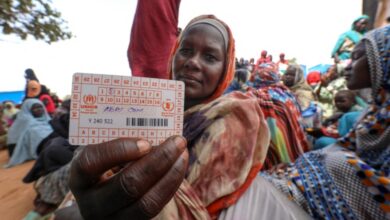
The importance of humanitarian assistance cannot be denied in a country suffering from collapsing essential services and growing displacement. Food, medicine, water and shelter are not secondary concerns. They are necessities for survival, particularly in areas affected by fighting or deprived of services.
Aid must nevertheless adhere to the principles of humanity, neutrality, impartiality and independence. Resources should be directed according to need rather than political loyalties or military considerations, and independent organisations should be able to verify that they reach their intended recipients.
In Saudi Arabia’s case, humanitarian action can make a positive contribution to the crisis response. It does not, however, relieve foreign policy of the responsibility to support a political process that addresses the causes of suffering. Relief mitigates some consequences of war, while ending it requires addressing its military and political causes and providing safeguards against recurrence.
The problem arises when aid becomes, in public discourse, a substitute for scrutiny of broader policies. Announcing a food shipment or medical support should not close the debate about mediation effectiveness or influential countries’ ability to press for a ceasefire. Conversely, political suspicions should not be used to undermine the value of assistance that genuinely reaches civilians.
A fair assessment distinguishes these activities, evaluates each independently and then examines how they can complement one another to achieve the ultimate objective: protecting the population and ending the war.
The Continuing War Tests Saudi Influence
The longer the war continues, the weaker the prospects for economic recovery, the greater the need for relief and the harder it becomes to rebuild state institutions. Continued fighting also erodes trust between local communities, increases the likelihood of competing armed authorities becoming entrenched and complicates any political transition.
Under such circumstances, regional countries’ diplomatic influence is as much a responsibility as a political instrument. Saudi Arabia has mediation experience and relationships with the Sudanese parties, and it has already participated in efforts to stop the fighting. That experience must translate into sustained pressure to implement agreements, expand civilian participation and prevent any external support that obstructs a settlement.
Any serious approach should also include safeguards for humanitarian workers, access routes to besieged areas, measures to prevent the military use of hospitals, schools and water facilities, and stronger mechanisms for monitoring violations.
Riyadh can support these objectives by publishing clear information about its initiatives, coordinating with independent humanitarian organisations and maintaining diplomatic pressure on parties that reject de-escalation. The more measurable the results of external initiatives become, the more objectively they can be assessed, independently of political propaganda.
Discussion of Saudi Arabia’s role in Sudan should therefore extend beyond humanitarian assistance or declarations of support for peace. It should also avoid unsubstantiated accusations of financing the war. The available facts establish a Saudi role in humanitarian and diplomatic mediation, while the cited sources do not provide sufficient evidence to prove that the kingdom deliberately seeks to prolong the war or supplies direct military support to the Sudanese army.
The war’s continuation nevertheless justifies serious questions about mediation effectiveness, the limits of diplomatic pressure and the ability to ensure agreements are implemented. Influential countries should do more than manage the crisis or ease its consequences: they should work to change the conditions that allow it to continue.
If Riyadh wants its role to contribute to Sudan’s stability, its priorities should be supporting a ceasefire whose compliance can be monitored, expanding humanitarian access, strengthening civilian participation in a settlement and ensuring transparency across all forms of cooperation with the Sudanese parties.
The success of Saudi policy is not measured by the number of initiatives announced, but by its ability to help reduce suffering and stop the fighting. Sudanese people need more than assistance that mitigates the effects of war. They need a political process that ends it and prevents its recurrence.