An Iranian Drone Threat Behind the Withdrawal of US Bombers from Britain
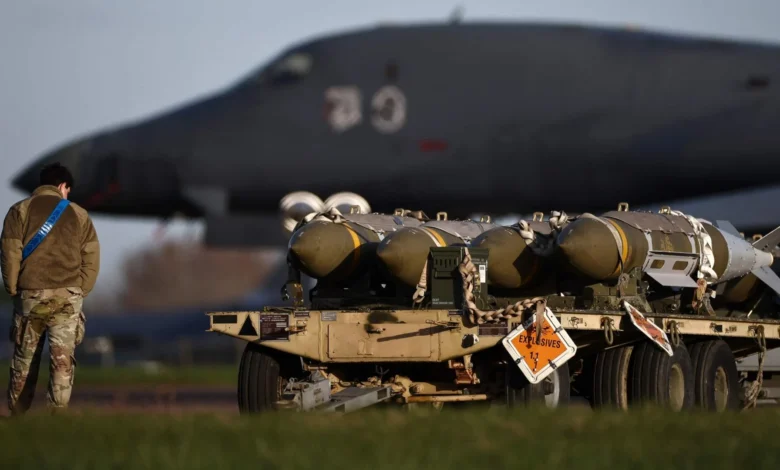
According to the New York Times, the withdrawal of twelve US B-1 bombers from Fairford followed intelligence described as “specific and credible” concerning a potential drone attack launched from near the base against American aircraft and military personnel.
The redeployment of American bombers from Britain and the evacuation of military personnel from bases in the Middle East raise significant questions about the balance of power in the war against Iran. While Washington says it has weakened Tehran’s military and economic capabilities, unconventional threats appear to be forcing it to reduce its presence at locations that have symbolised American military superiority for decades, creating growing operational and logistical burdens.
According to the New York Times, despite efforts to portray the withdrawal of twelve B-1 bombers from Britain’s Fairford base as a routine repositioning, the decision actually followed intelligence described as “specific and credible”. It concerned a potential drone attack launched from the vicinity of the base against American aircraft and military personnel.
The newspaper says American and Western intelligence agencies began warning in mid-September that Fairford could be targeted, before concerns intensified sharply in recent days. Israel also informed Germany of growing risks to American bases in Europe, including Ramstein and Spangdahlem.
Fairford is particularly important to Washington. It is a major deployment base for American bombers in Europe and has been used in military operations against Iran. The twelve bombers had arrived as part of a military deployment before Washington quickly decided to withdraw them.
The speed of the response went beyond issuing an order to leave. The New York Times reported that some bombers departed while refuelling aircraft were already airborne or being prepared to support their return to the United States, suggesting that the decision was driven by an urgent security assessment.
American officials believe the potential plot was partly inspired by Ukraine’s attack on Russian airbases in June 2025, when drones were concealed inside trucks and transported close to military targets before being launched. The attack hit several Russian aircraft, including strategic bombers.
The danger is that this type of operation bypasses part of an airbase’s traditional defences. Instead of launching a missile from a distance, small drones can be brought near a base and used against aircraft parked on the ground. This makes military installations harder to protect, even for powers with advanced defence systems.
The intelligence coincided with a security incident near Fairford on 27 September, when a woman reported three white trucks and masked individuals in the area surrounding the base. Police arrested five men, before investigations extended to other suspects, including a British man of Iranian origin.
Around 85 homes were evacuated while the trucks were examined, with explosives specialists using a robot to inspect them. Authorities found no explosives or drones, although reports mentioned fuel containers. Several of those arrested were subsequently released on bail. British police have not publicly presented evidence establishing that these individuals were involved in the planned attack on the base.
These accounts align with reporting by Reuters, the Washington Post and the Wall Street Journal about the threat that prompted Washington to move its bombers. Some details concerning a multi-stage plot, or the possible use of an explosives-laden vehicle alongside drones, remained attributed to officials familiar with the matter and were not publicly confirmed by British authorities.
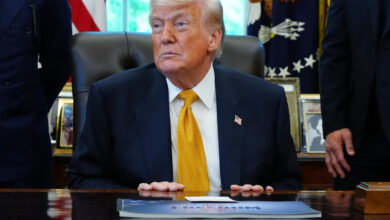
In Washington, the official account was initially less clear. The bombers’ movement was presented as part of a routine deployment before President Donald Trump acknowledged that threats had prompted the decision. Vice-President JD Vance said the aircraft had been moved out of caution and to protect American military personnel.
The New York Times, however, places the evacuation in a broader context, viewing it as another episode in a series of redeployments Washington has been forced to undertake since the war against Iran began on 28 February. American forces no longer operate in the region under their previous deployment model: bases in the Middle East have suffered attacks and damage, personnel have been evacuated, and the US Department of Defense has become hesitant about rebuilding some facilities.
The consequences extend beyond airbases. American freedom of navigation in the Strait of Hormuz and parts of the Red Sea has become more difficult to maintain, affecting one of the main justifications for the US military presence in the region over several decades.
Withdrawing the bombers from Fairford also carries a clear operational cost. If further strikes are needed, the aircraft will have to travel longer distances from American territory, increasing the need for aerial refuelling. Carrier strike groups deployed in the Arabian Sea are increasingly dependent on supply lines from Diego Garcia, approximately 2,200 miles from the Gulf, bringing longer journeys, additional time and higher costs.
These developments show that conventional superiority in aircraft, ships and missiles does not necessarily guarantee freedom of action. Despite losing substantial portions of its air and naval capabilities and suffering strikes against its senior leadership, Iran has used cheaper tools that are harder to contain, including drones, cyberattacks, indirect operations and shipping pressure.
According to the Washington Post, more than ten ships were attacked in a single week in the Strait of Hormuz. Drones have also been used against American bases, while Tehran has enlisted the Houthis to target sites in Saudi Arabia. Experts say these tools have enabled Iran to secure tactical and symbolic gains despite the substantial imbalance in conventional military power.
The significance lies like warfare itself. A state that loses its aircraft, ships and bases does not necessarily lose its ability to harm a stronger adversary if it can target vulnerabilities: fixed bases, supply chains, shipping, communications and military infrastructure.
Viewed from this perspective, the events at Fairford represent more than the relocation of twelve bombers.
The British base has been associated with American–British military cooperation since the Second World War and remained a safe location for deploying American air power in Europe for decades. Yet Washington’s decision to remove its bombers because of a potential drone threat demonstrates how relatively inexpensive tools can force a major power to rethink its deployments.
The absence of drones or explosives in the trucks that aroused suspicion near the base also leaves a fundamental question unanswered: were those movements actually connected to the plot detected by intelligence agencies, or was the intelligence threat separate from the individuals arrested in the area?
The implications extend beyond both Britain and Iran. If American bases in Europe and the Middle East become vulnerable to attacks by small drones launched from within host countries, protecting these facilities will require more counter-drone systems, fortifications and changes to aircraft positioning. It may also require dispersing forces across more locations rather than concentrating them at major bases.
That, in turn, imposes a strategic cost. The farther bombers and aircraft carriers are from operational areas, the greater the distances they must cover and their requirements for refuelling, protection and supplies. Maintaining a military force capable of responding rapidly becomes more expensive.
This exposes the war’s political paradox. Trump presented the military operation against Iran as a demonstration of strength and proof that the United States could impose its will. Subsequent developments show that American military superiority has not given Washington unrestricted freedom of action.
The United States possesses an enormous capacity to strike distant targets. Yet Iran, even after suffering heavy military losses, can use unconventional means to make the American military presence more costly and less secure.
This does not mean that the balance of power has shifted in Tehran’s favour: the gap in military capabilities remains immense. The war has nevertheless shown that achieving battlefield superiority does not necessarily mean being able to maintain an extensive military deployment safely and at an acceptable cost.