Behind Closed Doors After 7 October: What Instructions Did Khamenei Give His Officials?
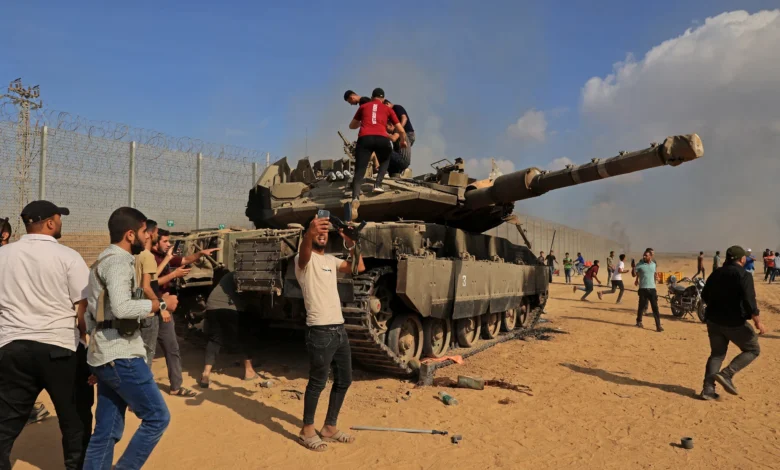
From the first hours following the attacks of 7 October 2023, Iran announced its support for what it described as the “legitimate defence of the Palestinian people”, while denying any direct involvement in planning or carrying out the operation.
Details of the discussions held behind closed doors around Iran’s former Supreme Leader Ali Khamenei after the attack, however, reveal more cautious calculations. He maintained political and media support for Hamas but refused to bear the consequences of entering the war directly alongside it.
An Iranian source familiar with the internal discussions shaping Tehran’s position said that, from the beginning of the confrontation, Iran had sought to establish that it had not participated in planning the attack. Nevertheless, it immediately praised the operation as a turning point in the confrontation with Israel.
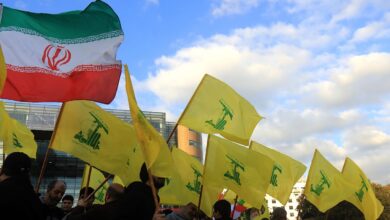
The source added that instructions were issued to organise street celebrations and that large banners were erected within hours of the attack.
According to the source, the central paradox in Iran’s position was the distinction between politically welcoming the attack and being prepared to bear its military costs. The source stressed that Iran’s leadership was not ready to enter a direct war for Hamas, despite years of financial, military and political support for the movement.
Tehran reportedly approached the war’s developments through a strategy aimed at preserving its geopolitical interests, keeping the confrontation within manageable limits and drawing on its regional network of allies and armed groups, rather than entering an open confrontation with Israel and the United States itself.
Khamenei Told Haniyeh the Limits of Iranian Support
According to information reviewed by the source, a meeting in Tehran between Ali Khamenei and Ismail Haniyeh, then head of Hamas’s political bureau, included a clear message to Haniyeh: Iran would not enter the war on the movement’s behalf.
The source said Khamenei based his position on Hamas’s failure to inform the Iranian leadership beforehand of its decision to carry out the 7 October attack. Tehran therefore did not consider itself obliged to enter a direct military confrontation because of a decision the movement had taken independently.
According to the source, Khamenei confined Iran’s role to political and media support for Hamas, while stressing the need to halt calls for Iran or Hezbollah to enter the war as direct participants. The aim was to keep escalation within limits that would not lead to a full-scale regional confrontation.
This reflected, the source said, a divergence between Tehran’s calculations after 7 October and those of Hamas’s military wing, which had counted on the possibility of the confrontation widening and regional actors joining the war.
Contacts Before the Attack
These details connect with reporting by the New York Times on contacts preceding the 7 October attack. The American newspaper said Hamas official Khalil al-Hayya discussed the attack plan with Iranian Revolutionary Guard official Mohammad Saeed Izadi in July 2023.
According to the report, the position attributed to the Iranian side during those exchanges indicated that Iran and Hezbollah welcomed the plan in principle but needed more time to prepare the appropriate conditions.
This does not necessarily mean that Tehran directly participated in the decision to launch the attack or in the military operations. It does, however, point to contacts between Hamas leaders and Iranian officials before the attack, complicating Iran’s account that it had no advance knowledge of the operation.
Iran Viewed Hamas as an Ally, Not a Partner in War
The Iranian source believes developments after 7 October clearly exposed the limits of the relationship between Tehran and Hamas. The source explained that the Iranian regime regards the movement as an ally it can rely on within its regional influence network, but not as a partner whose defence would oblige Iran to wage a direct war.
According to the source, this outlook became more apparent after the war began, when the Iranian leadership chose not to move from political and indirect military support to direct participation, despite growing calls within Hamas and among its allies to expand the confrontation.
The source added that Iranian calculations were also shaped by domestic conditions. The country faced economic and social crises as well as political pressure. In the source’s assessment, entering a broad war lacked sufficient domestic support for the regime to bear its costs.
Hamas’s Calculations Collided with Iran’s Position
According to the source, Hamas misjudged the scale of Israel’s response and had no firm guarantees that Iran and Hezbollah would enter a direct confrontation as soon as the war broke out.
The movement reportedly hoped the attack would open multiple fronts or prompt regional actors to intervene militarily. Iran, however, chose from the outset to keep its distance from direct warfare, while Hezbollah’s participation remained confined to the Lebanese front and was governed by its own calculations.
The source added that this left Hamas facing a reality different from its pre-attack expectations: the confrontation developed into a large-scale war in the Gaza Strip, while Iranian support remained short of direct involvement in the conflict.