Battle of Huliaipole… Russian Superiority Tightens the Noose on Ukraine
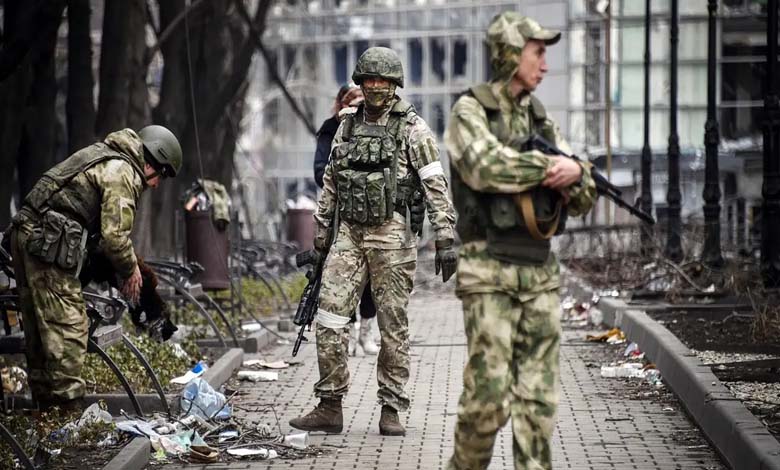
Ukrainian forces are under increasing pressure in the south of the country, where Russian brigades significantly outnumber and outmatch the less-equipped units, having seized hundreds of square kilometers over recent weeks.
According to a report by the American network CNN, Russian forces have advanced through open rural areas in several parts of southern Zaporizhzhia oblast. A Ukrainian Security Service (SBU) officer, speaking to CNN last Wednesday, said the situation in the region is “extremely tense.”
-
A year after it sank… a report reveals the nuclear secret of a Russian ship
-
Why did Europe abandon the Russian assets plan?
The officer, known as “Banker,” stated: “The enemy is trying to strengthen its negotiating position by attempting to seize more territory.”
He added that the Russians were deploying small infantry groups “who try to breach defenses by any means and along any routes to reach the least protected positions.”
Most recent fighting has focused on the town of Huliaipole and its surroundings. Huliaipole is located about 80 kilometers east of the regional capital, Zaporizhzhia, which had a population of over 700,000 before the war.
-
Negotiations under fire: escalation in Ukraine precedes US–Russian talks
-
Seoul deploys fighter jets after nine Russian and Chinese bombers enter its air defense zone
At a meeting held last Sunday with Russian President Vladimir Putin, the Russian regional commander, General Andrei Ivanayev, announced that the city had fallen to Russian forces. Ivanayev informed Putin that his troops had taken control of more than 210 square kilometers in Dnipropetrovsk and Zaporizhzhia oblasts since early December, reinforcing the Kremlin’s narrative that Russia will eventually achieve its goal of controlling four regions in eastern and southern Ukraine.
The unofficial site DeepState, which maps the Ukrainian conflict, reports that Ukrainian forces still hold some positions in Huliaipole, but the town has now become a “gray zone,” with the Russians possessing a “much larger number of personnel.”
-
Russians seize the Pokrovsk lines: operational openings and potential objectives
-
Alliances beneath the depths: A joint British-Norwegian fleet to counter Russian submarines
According to the same source, reinforcing positions in the city has been difficult because it is a low-lying area. Ukrainians rely heavily on drones in areas where they lack infantry. In open rural areas, these drones are particularly effective against Russian forces, while built-up areas with abandoned buildings and cellars provide cover for advancing troops.
Last week, a video showed Russian forces taking control of a Ukrainian command center in Huliaipole and inspecting laptops and files left behind.
Ukrainian Army Commander-in-Chief Oleksandr Syrsky acknowledged the fall of the command center “due to weak defenses.”
-
Shahed-136: Russian drones now pose a threat to Ukrainian fighter aircraft
-
Massive Russian attack on Kyiv… as Ukrainian drones strike oil facilities
Syrsky stated that a regional brigade “could not withstand enemy pressure during the fighting” and gradually withdrew, but he criticized the battalion for leaving behind sensitive information.
According to another independent monitoring team, the Conflict Intelligence Team (CIT), “Ukrainian forces may only remain in the western part of Huliaipole.” The team added: “Under these conditions, Huliaipole, like Pokrovske, may have effectively fallen to Russian forces.”
The CIT also noted: “These forces held their positions for a long time and suffered extremely heavy losses over recent months, yet were not rotated back for rest or reconstitution.”
-
The Russian Harmony system: A secret ploy to shield nuclear submarines
-
Russian Ship Without Radar off Danish Coast: Technical Failure or Military Tactic?
What happened in Huliaipole highlights the core dilemma of the Ukrainian army. According to many commentators, its forces are numerically superior along certain sections of the 1,000-kilometer front line, yet struggle to mobilize additional troops to replace losses.
Analyst David Axe wrote Wednesday: “This means commanders must make difficult choices about where to attack, where to defend, and hope that the Russians do not exploit gaps in Ukrainian lines.”
-
Massive Russian Attack on Ukraine and NATO Alert in Poland
-
During military drills: the Tsirkon missile appears on the Russian stage
He noted that “one cannot expect a few regional brigades to hold off a Russian mechanized rifle regiment, especially if the brigades lack strong support from nearby artillery and drones.”
The likely absence of cohesive leadership among Ukrainian forces in the south, coupled with the decision to prioritize the defense of other areas such as Pokrovske and Kupiansk, has also contributed to worsening the situation in the south.
In mid-December, the Ukrainian command sent several elite units to Huliaipole, but “it was too little and too late” to save the city, Axe concluded.
-
On NATO’s Doorstep… A New Russian Facility Raises Western Concerns
-
Russian Advance in Donetsk: The Battlefield Outpaces Diplomacy in Ukraine