Iron Gate, from sea to land: mapping US pressure on Iran
Washington is opening a new front against Iran through the “Iron Gate” team, seeking to tighten pressure on its “arms procurement and financing networks”.
What is “Iron Gate”, and why did Washington create it?
On 7 November, US Central Command (CENTCOM) announced the establishment of a new task force named “Iron Gate”, intended to prevent Iran from using overland routes to transport advanced weapons and other materials.
According to CENTCOM, the team consists of around 20 civilian and military personnel and is based in Tampa, Florida.
The new Central Command team will work with other US government agencies to “prevent the transfer of advanced weapons systems, dual-use technologies, sanctioned materials and illicit revenue flows across Iran’s land borders and the Caspian Sea”.
“The establishment of Task Force Iron Gate builds on the success of our stringent maritime blockade of Iran,” said CENTCOM Commander Admiral Brad Cooper.
He added that “closer cooperation between US Central Command and other US government agencies will further restrict Iran’s ability to finance terrorism, rebuild weapons factories and replenish its military arsenal”.
Observers say the team’s composition reflects a US effort to broaden its economic and security pressure by combining military, intelligence and financial capabilities, rather than relying solely on intercepting ships.
The cost of the blockade
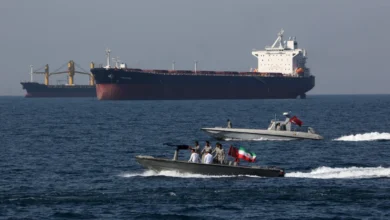
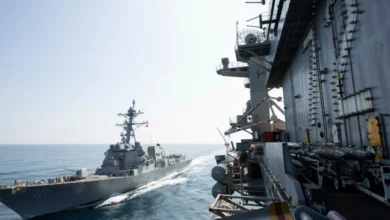
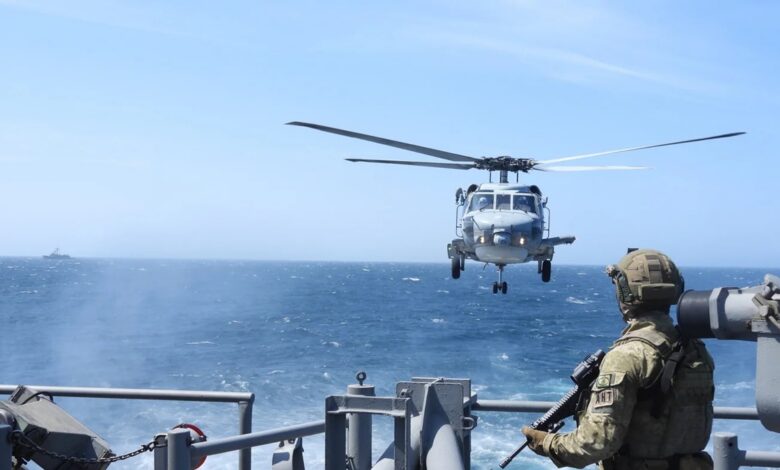
The creation of “Iron Gate” extends the US naval blockade imposed on Iranian ports since last July, which seeks to restrict vessels entering or leaving those ports.
According to US Central Command estimates, the blockade has prevented Iran from exporting more than $25 billion worth of crude oil.
Why is Washington targeting Iran’s supply routes?
Iran’s military industries require more than finished weapons. Their needs also include a wide range of electronic components, industrial machinery, chemicals and technologies that can be used to manufacture missiles, drones and weapons systems.
In a report published last June, the Center for Strategic and International Studies (CSIS) explained that rebuilding Iran’s military capabilities required importing a broad range of dual-use commercial materials and equipment, including:
- Electronic components and drone engines.
- Manufacturing equipment and precision machinery, including computer numerical control (CNC) machines.
- Raw materials and supplies for missile and propellant production.
- Equipment needed to rebuild drone production lines.
In a report published on Saturday, Reuters revealed that Iran had imported at least $2 billion worth of equipment linked to the military sector since January 2025. These imports reportedly travelled through a network of supply routes involving “Russian ships, trucks from Central Asia and Chinese cargo aircraft”.
In an earlier analysis, the Washington Institute for Near East Policy also highlighted the importance of electronic components, optics, industrial machinery, batteries and navigation systems to sustaining and developing Iran’s drone programme.
Trade geography under US scrutiny
Iran shares land borders with seven countries: Turkey, Iraq, Azerbaijan, Armenia, Turkmenistan, Afghanistan and Pakistan. It also has a Caspian Sea coastline, linking it to Russia, Kazakhstan, Azerbaijan and Turkmenistan.
This geography gives Tehran an extensive network of overland and maritime trade connections, which become increasingly important as restrictions affect its ports and commercial activity.
Monitoring these routes does not, however, mean that all trade with Iran is prohibited or that neighbouring countries are involved in transporting military materials. Such conclusions require a separate assessment of each shipment, company and route.
Cross-border trade is also governed by legal and regulatory frameworks that differ from one country to another.
How will “Iron Gate” disrupt these networks?
According to the US announcement, the team will coordinate with multiple government institutions, including the Treasury, State and Justice departments, as well as intelligence agencies.
Its work is expected to focus on sharing information about companies, intermediaries and shipping routes, tracking materials subject to sanctions, and identifying sources of funds suspected of financing military activities.
Central Command has not, however, released full operational details. In particular, it has not specified whether the team will participate directly in intercepting overland shipments or whether its role will be confined to coordination, intelligence-sharing and support for the relevant authorities.
Military escalation or another source of leverage?
The team’s establishment comes as military and economic pressure overlaps with diplomatic efforts between Washington and Tehran.
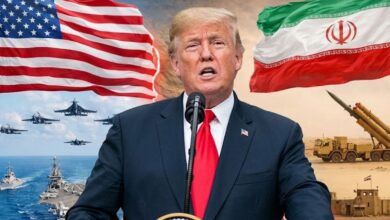
On 8 November, US President Donald Trump discussed ruling out further strikes against Iran if negotiations made progress.
Secretary of State Marco Rubio, meanwhile, said diplomacy remained possible despite continuing disagreements between the two sides.
From “Midnight Hammer” to “Iron Gate”
“Iron Gate” forms part of a broader history of US operations against Iran. Washington has previously employed various military measures, including:
- Operation Midnight Hammer, carried out in June last year against Iranian nuclear facilities.
- Operation Praying Mantis, conducted in 1988, involving US attacks on Iranian naval targets.
- Operation Epic Fury, carried out last February against military sites, Iranian facilities and senior political and military leaders.