Terrorists Out of Prison: A Backlash at the Heart of France
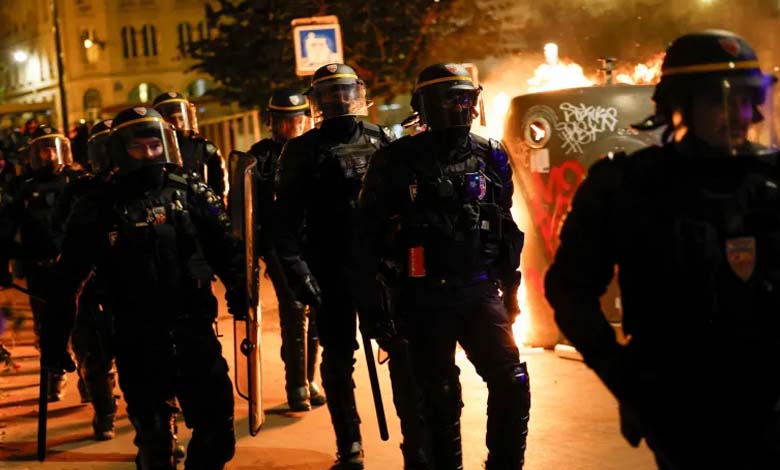
France faces a serious threat with the release of a large number of individuals convicted of terrorism, as highlighted by a recent knife attack in the heart of Paris.
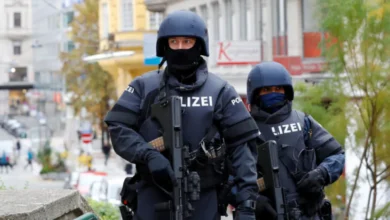
The stabbing carried out by Ibrahim Bahreir on Friday, near the Arc de Triomphe, which ended with his shooting by law enforcement after he attempted to attack gendarmes, has brought renewed attention to the challenges of monitoring radicalized inmates after their prison sentences have ended.
Bahreir had been released on December 24 after serving more than thirteen years behind bars, initially in Belgium and later in France since 2015, where he had been transferred at his request.
-
Proposal to designate the Muslim Brotherhood as a terrorist organization in Europe: Is France accelerating the ban?
-
From the Atlantic to the Seine: France shifts its military course to affirm its operational readiness
In 2013, Belgian courts had sentenced him to seventeen years for attempted murder with a terrorist motive, after he stabbed police officers in Brussels in 2012.
Thirteen years separate the two attacks, yet the facts suggest his motivations remained unchanged, as he repeated the act, reflecting the persistence of the same violent tendencies.
Experts on extremist organizations have noted that the Paris attack “brings to the forefront a highly complex issue regarding the monitoring of individuals convicted of terrorism linked to political Islam after their release, in the context of increasing numbers of those serving heavy sentences, alongside the resulting security and judicial challenges.”
-
Lavrov Accuses France of Attempting to Overthrow Regimes in the Sahel
-
From France to Sweden, Europe’s Front Against the Muslim Brotherhood Expands
Threats
French political analyst Alexandre Delval, a specialist in extremist organizations said that the issue “lies not only in the number of released individuals but also in the nature of the ideological framework held by some of them.”
Delval, author of Political Islam and the United States, emphasized that prison, despite its punitive function, “is not necessarily an effective space for intellectual rehabilitation, especially if sentences are not accompanied by programs to dismantle ideological extremism.”
He noted that some prisoners convicted for offenses linked to political Islam “leave prison still holding their ideological beliefs, albeit more cautious in expressing them.”
-
France moves closer to banning the Muslim Brotherhood: what is new?
-
france moves closer to banning the Muslim Brotherhood… What is new?
The greatest challenge, he said, is distinguishing between those who have genuinely renounced violence and those who merely conceal their intentions.
Delval warned that the wave of releases of heavy-sentence convicts “will put security services to a severe test, given the higher degree of risk posed by this category compared to previous convicts.”
He stressed “the need to strengthen judicial monitoring mechanisms, develop reintegration programs based on deep psychological and social follow-up, and improve coordination between security services and judicial authorities to ensure early detection of any signs of a return to violent extremism.”
-
The Muslim Brotherhood in France: alarming figures bring the movement back to the heart of parliamentary and security debates
-
France and the fight against terrorism: 93 attacks thwarted since 2012, legislation at the forefront
Shocking Data
According to unprecedented data from the French National Anti-Terrorist Prosecutor’s Office, 339 inmates convicted of terrorism linked to political Islam have been released since 2021, with Bahreir among the 46 released in 2025.
An additional 35 releases are expected in 2026.
Although the figures have decreased over the past three years, they are likely to rise again as the release of individuals with longer and more sensitive sentences approaches.
The data indicate that the nature of the cases has become more delicate: in 2021, 21% of released individuals had been directly involved in violent acts or attack plots, rising to 33% in 2025, and projected to reach 52% in 2026.
-
The Muslim Brotherhood and La France Insoumise: a discreet path of infiltration into Parliament
-
A parliamentary report reveals a troubling rapprochement between ‘La France Insoumise’ and the Muslim Brotherhood
This means that those currently leaving prison are from the most serious cases, making their monitoring more complex than ever.
Strengthening Surveillance and Monitoring
John Sylvester Mongerini, a researcher specializing in terrorism and extremist organizations at the Thomas More Institute in Paris said that the return to violence “is neither automatic nor inevitable, but remains a real risk in some high-risk cases.”
He noted that France, like other European countries, faces a legal and security dilemma: balancing respect for the rule of law with public safety. Serving the full sentence legally restores individual rights, but does not eliminate the need for rigorous monitoring.
-
Nigeria and the repentant terrorists… a journey back from extremism
-
The screen is more dangerous than the weapon… terrorist propaganda from training camps to artificial intelligence
He emphasized that risk assessment must be dynamic and continuously updated, based not only on the inmate’s behavior in prison but also on broader intelligence and contextual analyses.
He also highlighted that the rising proportion of released individuals involved in direct acts of violence reflects a qualitative shift in the nature of the threat, necessitating a reevaluation of prevention and monitoring tools.
“The next phase will be critical, as the release of the heaviest-sentence convicts will test the effectiveness of the French system in preventing repeat attacks, without compromising justice and the rule of law,” he concluded.
-
Extremism knocks on France’s door amid political crisis
-
France Clarifies: Our Recognition of Palestine Shows Hamas Is Wrong