The controversy over halal certificates brings the risk of the Muslim Brotherhood back to the forefront in Germany
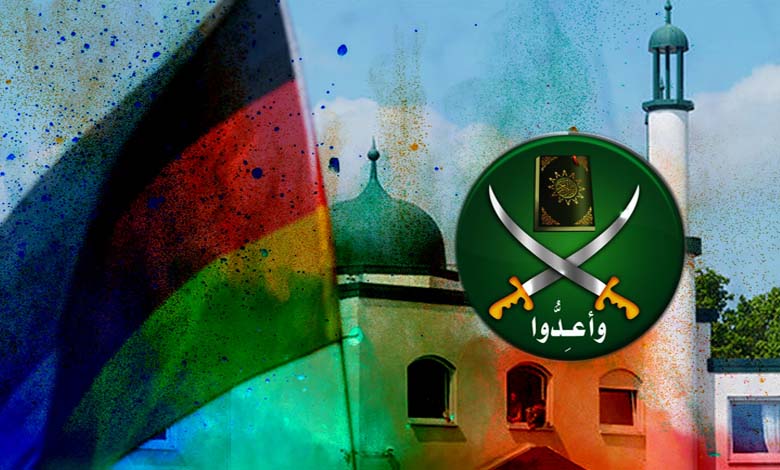
In theory, halal certificates were intended to make life easier for Muslims in the West, but certification bodies have fallen into the hands of networks linked to the Muslim Brotherhood and have turned into a funding tool.
Halal certificates have come back into focus in Germany over the past two days following the involvement of former German player Lukas Podolski, one of the shareholders of the doner restaurant chain “Mangal,” in promoting his restaurants, which carry a halal certificate issued by a controversial Islamist organization.
-
One of the key religious leaders of the Muslim Brotherhood in Germany and Europe… What do you know about Taha Sulaiman Amer?
-
A press report reveals details of a bill to blockade the Brotherhood in Germany
Upon entering one of the branches in Cologne (west), one can see a certificate displayed stating that the meat is “halal,” meaning it complies with Islamic law, according to the German magazine Focus.
Commenting on this, Lale Akgün, a politician from the Social Democratic Party (SPD) in Cologne and a member of the “working group on political Islam,” told the press that halal certification is “a huge business” widespread among many traders of Turkish or Arab origin. This, she said, results in increasing religious pressure on society.
She added that “the issuance of certificates by groups associated with currents of political Islam is completely unacceptable.”
Akgün further noted that halal certificates generally place traders under commercial pressure: “If one starts obtaining them, others will have to follow to avoid questions about their products and the possible loss of customers,” adding, “Thus, every certificate sold leads to the sale of more.”
-
The Brotherhood’s soft face in Germany: What is the “CLAIM” alliance?
-
Germany launches a containment strategy: three pillars to counter the influence of the Muslim Brotherhood
Who issues the certificates?
According to estimates by Germany’s Federal Office for the Protection of the Constitution, at least two certification bodies are linked to organizations classified as Islamist.
The Islamisches Zentrum München, considered one of the key Muslim Brotherhood-linked hubs, issues halal certificates, for example for sausage products.
The Bavarian Office for the Protection of the Constitution classifies the Munich Islamic Center as an “extremist entity under surveillance,” with ties to the Muslim Brotherhood.
More specifically, the Munich Islamic Center is classified by the protection services as part of the Deutsche Muslimische Gemeinschaft (DMG), the umbrella organization of the Muslim Brotherhood in Germany.
-
The Muslim Brotherhood threat in Germany is growing: warning of infiltration of the Social Democratic Party
-
Embezzlement of Mosque Donations: Germany Exposes a New Crime by the Muslim Brotherhood
According to these services, the DMG exploits the liberal democratic order to entrench an extremist interpretation of Islam.
Domestic intelligence services also view with suspicion the role of the Munich Islamic Center as a halal certification body.
They state: “Some elements of the extremist current regard halal certificates as a profitable business model that, beyond profit, provides opportunities to expand recruitment,” adding that “this development is viewed as problematic.”
-
Germany Bans a Pro–Muslim Brotherhood Association and Raids Two Others
-
Muslim Interaktiv: Germany Dismantles the Digital Face of the Muslim Brotherhood
In addition to the Munich Islamic Center, other actors operate in the halal certification market, including the Europäisches Halal Zertifizierungsinstitut (EHZ), run by the Turkish Islamist movement Islamische Gemeinschaft Milli Görüş (IGMG).
The protection services describe this movement as an “Islamist” organization that seeks to “impose an order consistent with Islam according to its own interpretation.”
Thus, halal certificates in Germany, according to observers, become part of a network of interests managed by Islamist organizations, led by the Muslim Brotherhood, aimed at raising funds and recruiting at the same time.
-
From Turkey to Germany: how the Muslim Brotherhood manages its funds in Europe
-
Germany’s Muslim Brotherhood between delayed ban and soft confrontation: Is the European equation about to change?