Stopping Iran’s nuclear program is more important to Trump than the economic situation
Statements by Donald Trump are likely to draw criticism from opponents who argue that the administration should balance geopolitical objectives with the economic impact on Americans.
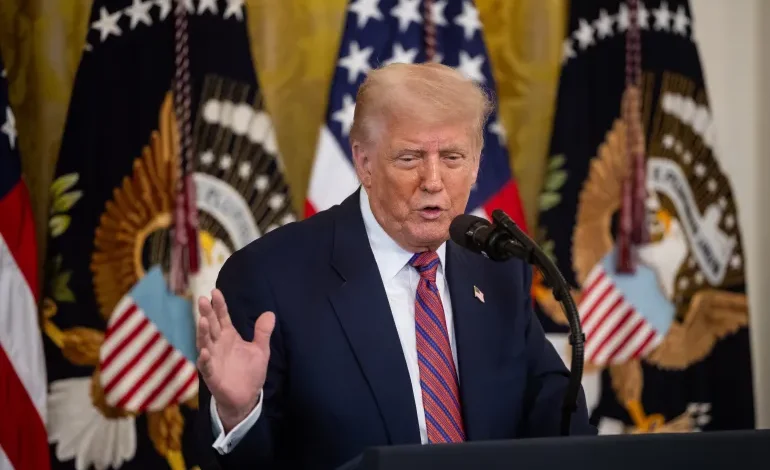
U.S. President Donald Trump said that the financial hardships faced by Americans are not a determining factor in his decision-making as he seeks to negotiate an end to the conflict with Iran, stressing that preventing Tehran from obtaining a nuclear weapon is his top priority.
In response to a journalist’s question about how much Americans’ financial conditions influence his push for a deal, Trump said, “Not even a little.”
Before leaving the White House for China, he added: “The only thing that matters, when I talk about Iran, is that they do not get a nuclear weapon… I’m not thinking about the financial situation of Americans. I’m not thinking about anyone. I’m thinking about one thing: we cannot allow Iran to get a nuclear weapon. That’s it. That’s the only thing that motivates me.”
These remarks are expected to draw criticism from opponents who argue that the administration must reconcile geopolitical goals with the economic consequences for citizens, especially as cost-of-living concerns remain a key issue for voters ahead of the congressional midterm elections in November.
Asked to clarify the president’s comments, White House Communications Director Steven Cheung said that “Trump’s ultimate responsibility is the safety and security of Americans. Iran cannot have a nuclear weapon, and if no action is taken, it will obtain one, which would threaten all Americans.”
Trump is facing increasing pressure from fellow Republicans who fear that the economic strain resulting from the conflict could trigger backlash against the party and cost it control of the House of Representatives and possibly the Senate in November.
Rising energy costs linked to the conflict with Iran have pushed up gasoline prices in the United States and contributed to inflation.
Data released on Tuesday showed that U.S. consumer price inflation recorded its largest increase in April in three years.
Trump described his approach as a matter of national and global security, implying that economic concerns come second to preventing nuclear proliferation.
However, U.S. intelligence assessments indicate that the time Iran would need to build a nuclear weapon has not changed since last summer, when analysts estimated that a U.S.-Israeli strike had extended the timeline to between nine months and one year, according to three informed sources. Assessments of Tehran’s nuclear program remain broadly unchanged even more than two months after the outbreak of the war.
The president’s allies echoed his argument that the risks posed by a nuclear-armed Iran outweigh short-term economic hardships.
Iran denies seeking nuclear weapons and says its program is for peaceful purposes, but Western powers suspect it aims to develop the capability to build a bomb.