The war on Iran: an unexpected lifeline for Russia
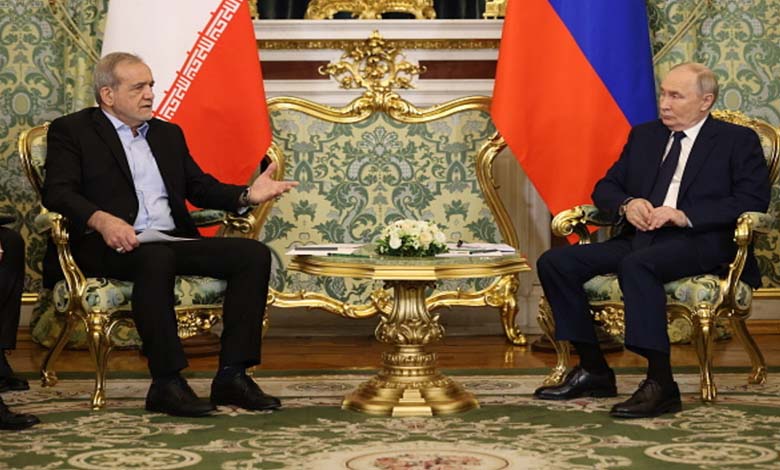
Military developments in the Middle East are not limited to their regional consequences. They extend far beyond the region when it comes to calculations of profit and loss on the global stage.
-
Russia gains economic and geopolitical advantages from the war against Iran
-
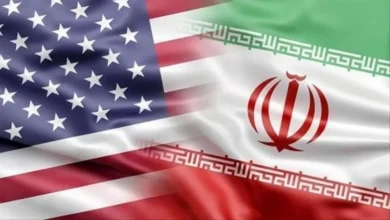
Could the confrontation between Iran and the United States turn into a war of attrition benefiting China and Russia?
This is particularly true for Russia, which has found itself facing an unexpected economic opportunity as oil prices rise due to the escalation between the United States and Iran, at a time when it is experiencing financial pressure linked to its ongoing war in Ukraine. This was highlighted in a report in the newspaper Politico.
Two Saturdays ago, Israel and the United States launched an attack on Iran. As Tehran responded and the conflict escalated into a regional war, shipping traffic through the Strait of Hormuz was disrupted, causing a sharp increase in global oil prices.
-
A challenge in African waters: China, Russia and Iran launch naval drills
-
Iran’s Fath-360 Missiles to Russia: Military Significance and Potential Impacts
Economic pressure before the oil surge
At the beginning of the year, Moscow was facing increasing economic challenges. The cost of the war in Ukraine has risen significantly in recent years, placing considerable pressure on the national budget.
At the same time, declining energy revenues in recent months, combined with the impact of Western sanctions, rising interest rates, and labor shortages, further complicated the economic situation.
However, recent developments in the Middle East related to the Israeli-American war against Iran have led to a significant increase in global oil prices after Iranian oil facilities were targeted and shipping in the Strait of Hormuz—one of the world’s most critical energy trade routes—was disrupted. As a result, oil prices exceeded the threshold of 100 dollars per barrel, their highest level since 2022.
-
U.S. Strikes Yemen… Russia Calls for Dialogue, and Iran Threatens
-
Secret Turkish Deals with Russia and Iran Accelerated al-Assad’s fall
A potential economic gain
According to Politico, for Russia the surge in oil prices represents a major economic gain at a crucial moment, as the cost of four years of war in Ukraine had threatened to trigger an internal economic crisis.
The report notes that only a few weeks earlier, pessimism had dominated among Russia’s economic elite. The Russian Finance Ministry’s budget plan for this year had assumed a base price of 59 dollars per barrel for Urals crude, the country’s main export blend.
However, in January, energy revenues fell to their lowest level since 2020, worsening already weak tax revenues.
-
Iran and Russia: A ‘Fragile’ Partnership at Risk of the ‘Wedge of Discord’
-
Russia and Iran expressed their concerns about Syrian and Libyan fighters in Nagorno-Karabakh
As economic pressures intensified due to Western sanctions, high interest rates, and labor shortages, tensions increasingly emerged between the Finance Ministry and the Central Bank over how to mitigate the damage.
Sergei Vakulenko, a senior researcher at the Carnegie Russia Eurasia Center, said: “The situation was by no means a collapse.” However, the government faced difficult choices and was forced to reduce spending, raise taxes, and even consider cutting military expenditures.
Vakulenko added in his interview with Politico: “Ending the war in Ukraine was never on the table, but it became clear that even in this area Russia would have to rationalize its spending somewhat.”
-
The war against Iran disrupts Washington’s calculations: India returns to Russian oil despite US pressure
-
Will Washington and Moscow strike a grand bargain: Iran in exchange for Ukraine?
Shifts in the oil market
Vladimir Milov, a former deputy energy minister who has become a Kremlin critic in exile, said that “Moscow suddenly received this gift. They found their lifeline.”
Instead of selling its oil at discounted prices due to Western sanctions, Russian crude may now be sold at higher prices as its main buyers—India and China—rush to secure supplies, according to the same source.
Last Friday, the U.S. Treasury Department issued a 30-day waiver allowing India to purchase Russian crude oil “to ensure the continued flow of oil to the global market.”
-
Iran war and munitions: $5.6 billion spent in the first two days, laser is the solution
-
At the height of global focus on the Iran war, Zelensky travels 27 hours to the embattled east
A day later, Treasury Secretary Scott Bessent stated that the United States could “lift sanctions on the import of Russian oil,” marking a dramatic shift from last year’s policy that penalized countries purchasing Russian energy.
Last week, Kremlin spokesman Dmitry Peskov told reporters: “Russia has been and remains a reliable supplier of oil and gas,” adding that demand for Russian energy products has increased.
Meanwhile, Kremlin envoy Kirill Dmitriev boasted in a series of posts on the platform X that the “oil tsunami has only just begun,” criticizing Europe’s decision to cut Russian energy supplies and describing it as a “strategic mistake.”
-
Intense Iranian attacks on Gulf countries in the early hours of dawn
-
Charles de Gaulle heads to the Mediterranean… supporting allies and containing escalation risks in the region
However, energy experts believe that the potential positive impact on the Russian economy largely depends on how long the rise in prices continues. If high oil prices persist for a prolonged period, government revenues could increase significantly.
If the surge proves temporary, however, its effect may be limited to easing economic pressure in the short term.
-
Iran war: the U.S. bet on the Kurds carries significant risks
-
Bomb Diplomacy: The Douhet Strategy and Washington’s Options on Iran