Israel turns the yellow line into a belt of death in southern Lebanon
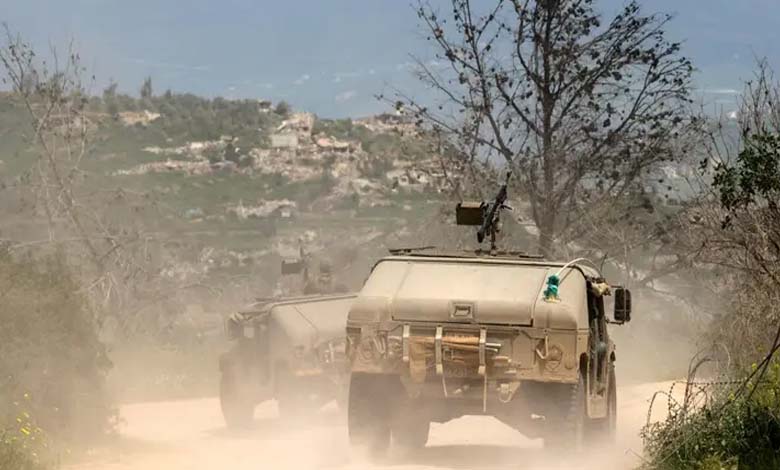
The “yellow line” is not merely a temporary security measure, but an indicator of an open phase of military and political tension, in the absence of a clear resolution for the region’s future.
In a move reflecting an intention to expand buffer zones beyond its borders, similar to what it implemented in Gaza and Syria, Israel continues to entrench a disguised occupation approach under what it has termed the “yellow line” in southern Lebanon, amid rejection and warnings of escalating humanitarian and field repercussions.
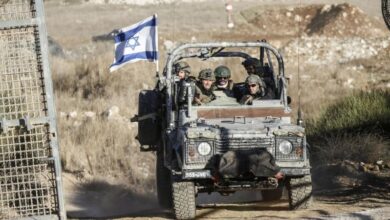
In April, the Israeli army announced the imposition of the “yellow line” south of the Litani River in Lebanon, an imaginary line defining the area extending from there to the border as a “security buffer zone,” repeating the model used in the Gaza Strip.
According to Israel, this line aims to prevent the return of displaced persons and to target any armed movements as a “combat zone” not subject to ceasefire understandings, indicating an attempt to impose a new reality on the ground by establishing a framework and prior justification for future attacks in the area.
This development follows the recent war with Hezbollah, during which the Israeli army focused on ground operations, advancing up to approximately 10 kilometers inside Lebanese territory, from the vicinity of Rachaya to the towns of Naqoura and Ras al-Bayada.
Under these developments, the situation appears to be moving toward a redrawing of field equations, with the “yellow line” seeming less like a temporary measure and more like a sign of a prolonged phase of military and political rivalry, amid the absence of a clear settlement for the region’s future.
This Israeli line faces Lebanese rejection, especially as it extends across dozens of southern towns, causing the displacement of residents from border areas to the outskirts of the Arqoub region, which consists of seven main villages in the Hasbaya district of Nabatieh Governorate: Chebaa, Kfarchouba, Hebbariyeh, Kfarhamam, Rachaya al-Fakhar, El Mari, and Fardis.
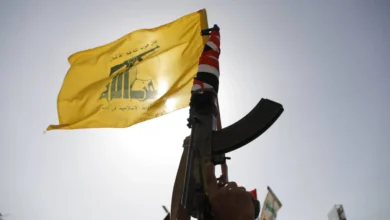
In this context, Hezbollah MP Hussein Fadlallah stated that the “yellow line” and all consequences of the war will be nullified, indicating rejection of the consolidation of this reality on the ground.
This measure recalls the experience of the “security belt” established by Israel between 1978 and 2000, although the current regional and geopolitical contexts differ.
Both measures share the objective of creating a buffer zone inside Lebanon that prevents military or civilian proximity to the Israeli border and allows Tel Aviv to exert fire control or military control over the area.
In both cases, this results in displacement or prevention of residents’ return to dozens of villages, accompanied by systematic destruction or military control that renders the area dangerous or prohibited.
However, the “security belt” that began after Operation Litani in 1978 and expanded after the 1982 invasion reflected direct ground occupation, while allowing some residents to remain under indirect Israeli control.
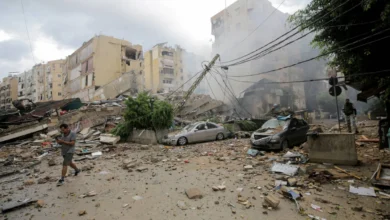
The most notable difference lies in the current scale of destruction, as border towns are now witnessing leveling, explosions, and widespread displacement, unlike the previous period. Israel says the goal of this new “buffer zone” is to protect its northern settlements from potential rocket attacks.
The future of this belt remains unclear, particularly regarding the military and material burdens it may entail and its linkage to the issue of Hezbollah’s weapons.
Although the Litani River represents a natural barrier to Israeli expansion, field data do not conclusively define the limits of actual control, amid ongoing tensions and ambiguity surrounding certain towns.
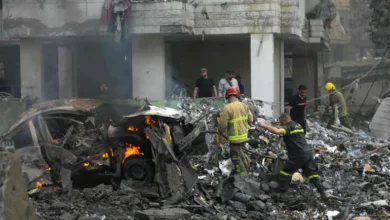
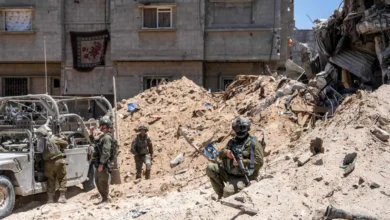
Media outlets near the border town of Khiam documented scenes of extensive destruction in villages within the scope of the “yellow line,” especially in Khiam itself, where signs of explosions and home demolitions were visible from hundreds of meters away.
A correspondent reported witnessing repeated explosions of residential buildings and rising columns of smoke from several points, reflecting the scale of destruction in the area.
Local officials and residents confirmed that Israeli operations led to widespread destruction of infrastructure and property and prevented residents from returning to their villages.
The Israeli army repeatedly publishes visual documentation of the demolition of hundreds of buildings, claiming they are “Hezbollah infrastructure,” while asserting adherence to the ceasefire.
Israeli escalation continues in Lebanon despite the ceasefire announced on April 17 for ten days, later extended by three additional weeks, while Hezbollah says it is responding to Israeli violations of the agreement.
Qassem al-Qadri, head of the Union of Border Municipalities of Arqoub, said the towns in the region adopted during the war a “civil, peaceful approach to confrontation,” stressing the absence of any armed presence.
He explained that local authorities are affiliated with the Lebanese state and possess neither weapons nor military positions, affirming that the area remained free of any military presence after the ceasefire.
Al-Qadri indicated that after the first ceasefire and the withdrawal of party elements, there was no longer any military presence in the region, which should remove any pretext for targeting it.
He added that this approach was consistent with the position of the Lebanese state, which considered the war a regionally imposed conflict, relatively sparing some Arqoub towns from greater destruction compared to other areas.
The local official said municipalities and residents were surprised after the truce by the creation of a security belt extending from Naqoura to Khiam, explaining that Israeli forces immediately began leveling homes, destroying infrastructure, and preventing residents from entering, in what can be described as a systematic destruction of all aspects of life.
He added that this belt did not remain within a narrow range but gradually expanded toward the Arqoub region with a width ranging between 3 and 5 kilometers, effectively isolating villages from each other, cutting vital roads linking them, and preventing farmers from accessing their lands.
Al-Qadri pointed to worsening living conditions due to this geographic division imposed by Israel, particularly the water crisis resulting from the inability to access essential sources requiring maintenance and operation, with some towns experiencing water cuts for weeks.
As part of efforts to address the crisis, the Union of Arqoub Municipalities sent memorandums to Lebanese officials and to the United Nations peacekeeping forces, UNIFIL, requesting intervention to ensure freedom of movement and access to essential services.
He explained that the route of the security belt extends from El Mari, passing through Bastara and Rabaa al-Tben, to the southern overlook of Chebaa, then to the hills separating Chebaa from Chouya and Ain Qinia, noting that this extension cuts essential arteries and isolates entire areas such as Chebaa from Rachaya al-Wadi and Hasbaya.
Al-Qadri believes this measure cannot be separated from the context of political pressure related to negotiations.
In April, two rounds of direct talks between Lebanon and Israel were held for the first time in 43 years in Washington under American sponsorship, while Hezbollah maintains its rejection of any direct negotiations with Israel.
On April 20, Lebanese President Joseph Aoun said the negotiations aim to end hostilities, end Israeli occupation of southern areas, and deploy the army to the internationally recognized southern borders.
Al-Qadri also expressed hope that Israel would withdraw to the internationally recognized borders, stressing that the new lines lack any legal legitimacy.
Observers believe that the “yellow line” zone created by Israel aims, in addition to what it describes as a “forward defense line,” to obtain additional bargaining leverage to pressure Lebanon into signing an agreement aligned with its objectives, whether by pre-justifying its attacks or by occupying the area and emptying it of its inhabitants.
Before the truce, Israel launched on March 2 an offensive against Lebanon that left 2,509 dead, 7,755 wounded, and more than 1.6 million displaced, nearly one-fifth of the population, according to the latest official data.
Israel occupies areas in southern Lebanon, some for decades and others since the previous war between 2023 and 2024. Israel also occupies Palestine and territories in Syria and refuses to withdraw from them or allow the establishment of the independent Palestinian state stipulated in United Nations resolutions.