Death of Khamenei’s shadow and the Iranian Kennedy: Who was Ali Larijani?
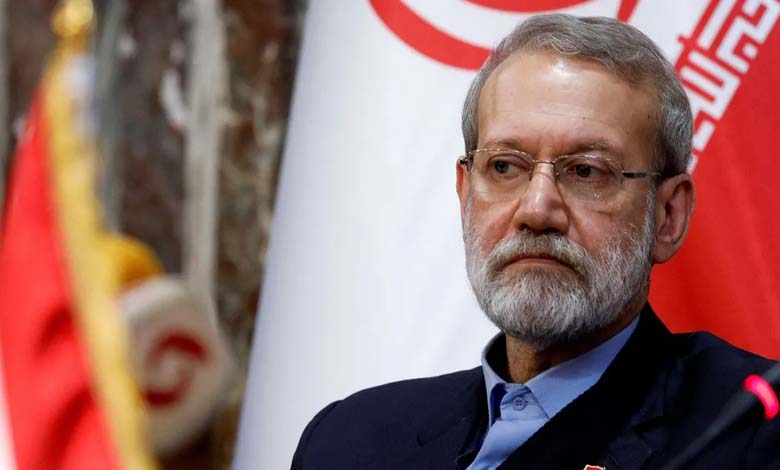
In a sudden development striking at the very core of the power structure, Israel announced today the death of Ali Larijani, a prominent Iranian figure widely regarded as the most powerful man following Khamenei’s passing.
Israeli Defense Minister Israel Katz stated on Tuesday that the Secretary of Iran’s Supreme National Security Council, Ali Larijani, was killed in strikes targeting various locations across Iran the previous night.
Katz said that “Larijani and Basij forces commander Gholam Reza Soleimani have joined (former Iranian Supreme Leader Ali) Khamenei (who was killed at the end of last month),” referring to their deaths.
Iran has not confirmed the report so far.
However, the announcement of Larijani’s death comes months after his return to Iran’s political scene, following renewed reliance on him by the late Supreme Leader amid escalating tensions with the United States and Israel.
Who was Larijani?
Ali Larijani, 67, was Iran’s top security official and was considered the most powerful figure to fill the power vacuum following the death of Supreme Leader Ali Khamenei in a joint U.S.-Israeli airstrike weeks earlier.
According to reporting by The New York Times, Larijani was widely viewed as the de facto ruler of Iran after Khamenei’s death.
Although not a cleric, Larijani came from an influential family, sometimes described as the “Iranian Kennedy” due to its deep religious and political ties to the regime.
Early life and education
Born in Najaf, Iraq, in 1958, he combined religious, military, and academic education.
He joined the Islamic Revolutionary Guard Corps in 1981 and served during the First Gulf War.
He earned both a master’s degree and a PhD in Western philosophy from the University of Tehran, writing his dissertation on the German philosopher Immanuel Kant.
His wife is the daughter of Morteza Motahhari, a thinker close to Khomeini.
His brother Sadegh Larijani, an ayatollah, served as head of the judiciary.
Another brother, Mohammad Javad Larijani, is a senior political advisor.
According to Western reports, this close-knit family network turned the Larijanis into a true political dynasty within Iran’s system.
Political career: tensions with hardliners
He began his political career in his mid-thirties as Minister of Culture. In 1994, Khamenei appointed him head of state broadcasting, a position he held for a decade, using it as a propaganda tool against regime opponents.
After losing the 2005 presidential election, he was appointed Secretary of the Supreme National Security Council and chief nuclear negotiator.
He resigned in 2007 due to disagreements with then-President Mahmoud Ahmadinejad.
He served as Speaker of Parliament for 12 years (2008–2020) and played a key role in supporting the 2015 nuclear agreement.
In 2020, he was tasked with overseeing a 25-year strategic cooperation agreement with China.
Disqualification from presidency and strong comeback
Despite his influence, he was barred from running in the 2021 and 2024 presidential elections by the Guardian Council.
Speculation about his disqualification ranged from his daughter residing in the United States and holding a British passport, to clearing the path for Ebrahim Raisi’s rise, or due to his public criticism of the Revolutionary Guards.
In the summer of 2025, President Massoud Pezeshkian reappointed him as head of the Supreme National Security Council. Since then, his influence has surpassed that of the president, thanks to Khamenei’s trust and his extensive connections.
The power behind the scenes
After Khamenei’s death on February 28, Larijani became the central figure managing the crisis, relying on the late leader’s trust to preserve the regime.
He took a firm stance against any negotiations with U.S. President Donald Trump, stating: “We will not negotiate with the United States.”
He was also seen as Khamenei’s envoy to Moscow, where he traveled repeatedly to meet Vladimir Putin.
Implications of his death
If Iran confirms his death, it would mark a major blow to the figure who controlled national security and foreign relations during one of the most critical periods in Iran’s history, according to observers.
His death would represent a severe shock to the Iranian system, which would have lost, within weeks, both its Supreme Leader and its most powerful operative, deepening the leadership vacuum and potentially triggering intense internal power struggles, at a time when Iran is engaged in an open confrontation with Israel and the United States.