The incident of the woman seeking protection ignites Yemen’s Al-Jawf… The Dahm tribes rise up against the Houthis
The Yemeni Dahm tribes have continued their mobilization for the third consecutive day in the town of Al-Yatamah in Al-Jawf province,
in response to the arrest by the Houthis of a tribal leader and a woman who had sought his protection.
The province, located 143 kilometers northeast of Sanaa, is witnessing widespread tribal anger following the recent arrest by Houthi militias of Sheikh Hamad Rashed Fadgham Al-Hazmi and a woman who had placed herself under his protection after the Houthis looted her home.
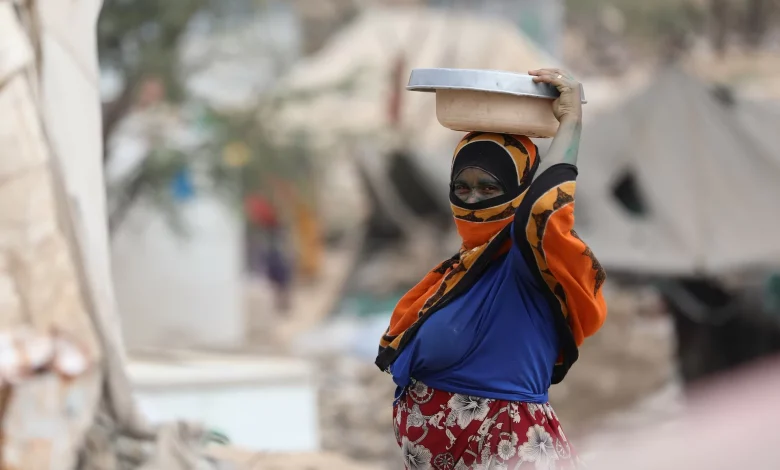
Houthi militias had arrested Al-Hazmi last month before releasing him under tribal pressure, only to arrest him again after he publicly supported the case of a woman named “Mira Saddam Hussein,” whose house — granted to her by former president Ali Abdullah Saleh — was looted by the Houthis.
The Houthi leader and well-known arms trafficker Fares Manaa is behind the looting of the house in Sanaa. All attempts to recover it failed, prompting the woman to seek the support of the tribes of Al-Jawf, particularly Sheikh Hamad Fadgham Al-Hazmi.
The Houthi militias did not stop at looting the house but also intercepted Sheikh Al-Hazmi’s convoy in the town of Al-Hatarish on the Sanaa–Al-Jawf road, arresting him along with the woman under his tribal protection, in a move the tribes considered a violation of established tribal customs and traditions.
The Dahm tribes described the arrest as a “dangerous precedent” that undermines deeply rooted tribal values, particularly regarding the protection of those seeking refuge and respect for tribal neighborly obligations, stressing that what occurred represents a clear breach of recognized tribal norms.
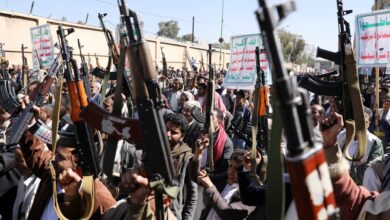
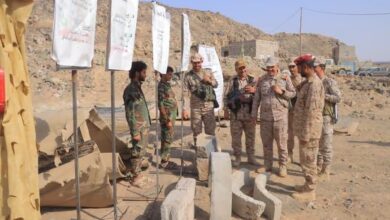
Since last Friday, the tribes of Al-Jawf have entered a state of broad field mobilization, erecting tents, firing shots into the air, and gathering to pressure the Houthis to release Sheikh Fadgham and Mira.
The Bani Nawf tribe, one of the major Dahm components, has deployed its men to key positions, set up tribal patrols in strategic areas, and established checkpoints around Al-‘Arq and the mountain below the town of Qaw’ near Al-Yatamah.
Media sources report that the tribes have also begun “taking pressure measures against the Houthis” by detaining commercial trucks and transport vehicles belonging to traders from Saada, in an attempt to pressure economic interests linked to prominent Houthi leaders.
The Dahm tribes constitute the largest tribal bloc in Al-Jawf. They belong to the well-known Bakil tribal confederation and consist of nine tribes. Their members are nicknamed “Al-Ma‘iniyin,” in reference to the Ma‘in civilization that flourished in the second half of the first millennium BCE.
The Dahm inhabit all twelve districts of Al-Jawf province, located 143 kilometers from Sanaa. Government-aligned forces recaptured most of its territory in 2016 before it came under the control of the Muslim Brotherhood in early March 2020, in a battle that observers described as more of a “handover” than a confrontation.