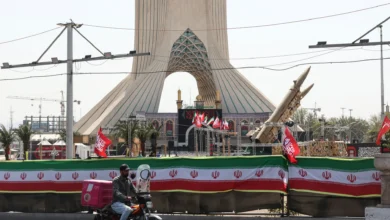
Weather against the flames… can storms alter the course of the Iran war?
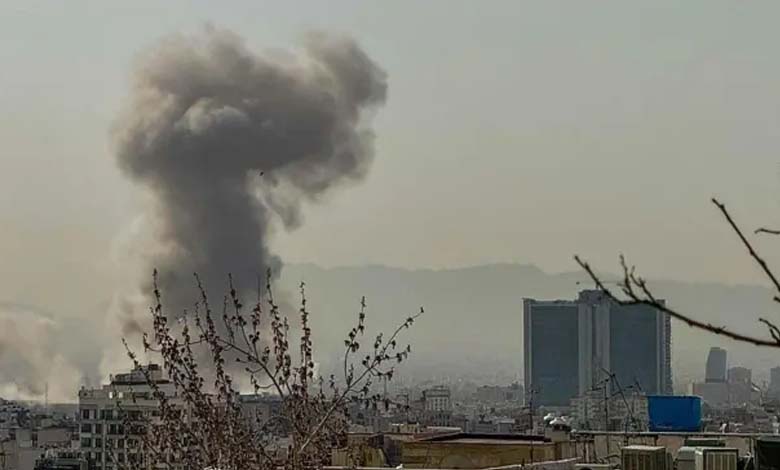
As the war in Iran intensifies, nature is asserting itself through rare desert storms that could reshape the map of military operations.
Meteorological agencies have forecast severe thunderstorms this week in parts of Iran and the Arabian Peninsula, which may generate rare tornadoes in desert areas.
This weather phenomenon, according to the American magazine “Newsweek,” raises questions about its potential impact on ongoing military operations since late February, when the United States and Israel launched strikes against Iran, targeting several political and security leaders, foremost among them former Supreme Leader Ali Khamenei, as well as nuclear sites.
-
U.S. military destroys a drone engine production factory in Iran
-
List of Iranian leaders killed since the start of the war: mapping the collapse of the power structure
Since the launch of U.S.-Israeli military operations against Iran, Tehran has escalated the pace of its attacks by launching ballistic missiles and drones toward Israel and several countries in the region.
These attacks have extended to target Gulf Cooperation Council countries, as well as Jordan and Iraq, where Tehran claimed it was targeting sites linked to U.S. interests. However, these strikes resulted in casualties and damage to civilian property, prompting widespread Arab and international condemnation.
In contrast, air defense systems in Gulf countries continue to successfully intercept successive waves of attacks carried out by Iran using ballistic missiles and drones.
-
4 mediators and constructive discussions: behind the scenes of the US-Iran talks
-
Iran war enters day 21: bombardment and leadership bleeding
Can weather weaken military operations?
According to a report issued in 2024 with the support of “The Weather Company,” extreme weather phenomena such as thunderstorms, floods, and tornadoes can significantly weaken military operations by reducing visibility, maneuverability, and weapons effectiveness.
The report notes that weather “affects all aspects of military operations, from maneuvering and firing to logistics and training,” citing historical examples of battles whose outcomes were altered or delayed due to sandstorms.
-
Funding the war on Iran sparks sharp divisions within Congress
-
Death of the Iranian Revolutionary Guard spokesperson.
Amid an unprecedented regional escalation involving Iran, the emergence of rare tornadoes in its highly arid terrain could hinder ground force movements, delay air operations, and disrupt communication and surveillance systems that are highly sensitive to dust, hail, and unstable winds, according to “Newsweek.”
In a statement to “Newsweek,” Jason Nicholls, Chief International Meteorologist at “AccuWeather,” a U.S.-based weather forecasting company, said: “We are currently expecting continued flash flooding and hail across the Arabian Peninsula, along with waterspouts in the Arabian Gulf.”
-
Fatal strategic mistakes: how Iran undermined its own deterrence system
-
Iran between absence and presence: no proof of life for Mojtaba Khamenei
He added: “Scattered rain and thunderstorms, some severe, will continue today, Wednesday, from Syria, Lebanon, and Israel across the Arabian Peninsula and into parts of Iran.”
According to Nicholls, these severe storms will persist through Thursday and Friday in the same regions.
Other meteorological experts have also pointed to this rare atmospheric pattern. Ben Noll, a meteorologist at “The Washington Post,” issued a warning about dangerous weather conditions expected to affect the Middle East on Thursday, with a series of storms potentially producing tornadoes, waterspouts, hail, strong winds, and flooding.
Stormy conditions are expected to continue through Friday, before gradually improving by the end of the week, while some northern regions of Iran may experience scattered rain or snowfall at higher elevations.
-
Natanz under fire again: escalation targeting Iran’s nuclear program
-
Iran escalates by targeting energy facilities in five Gulf states