Trump ends the crisis of his pilots, asserting superiority over Iranian airspace
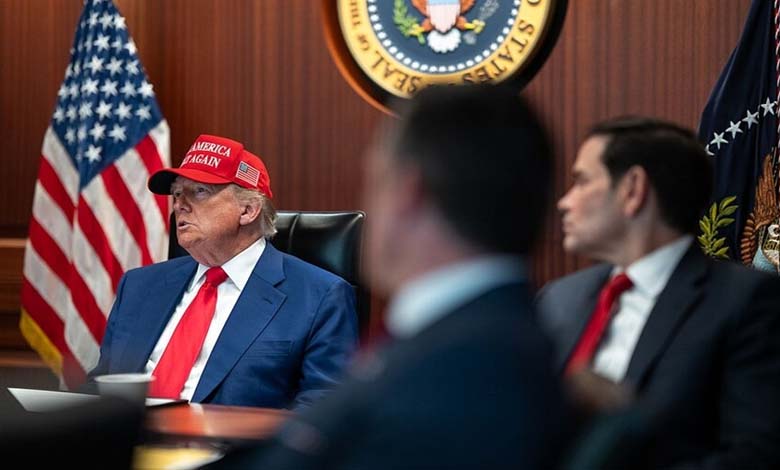
Dozens of U.S. military aircraft took part in the rescue operation and faced fierce resistance from Iran.
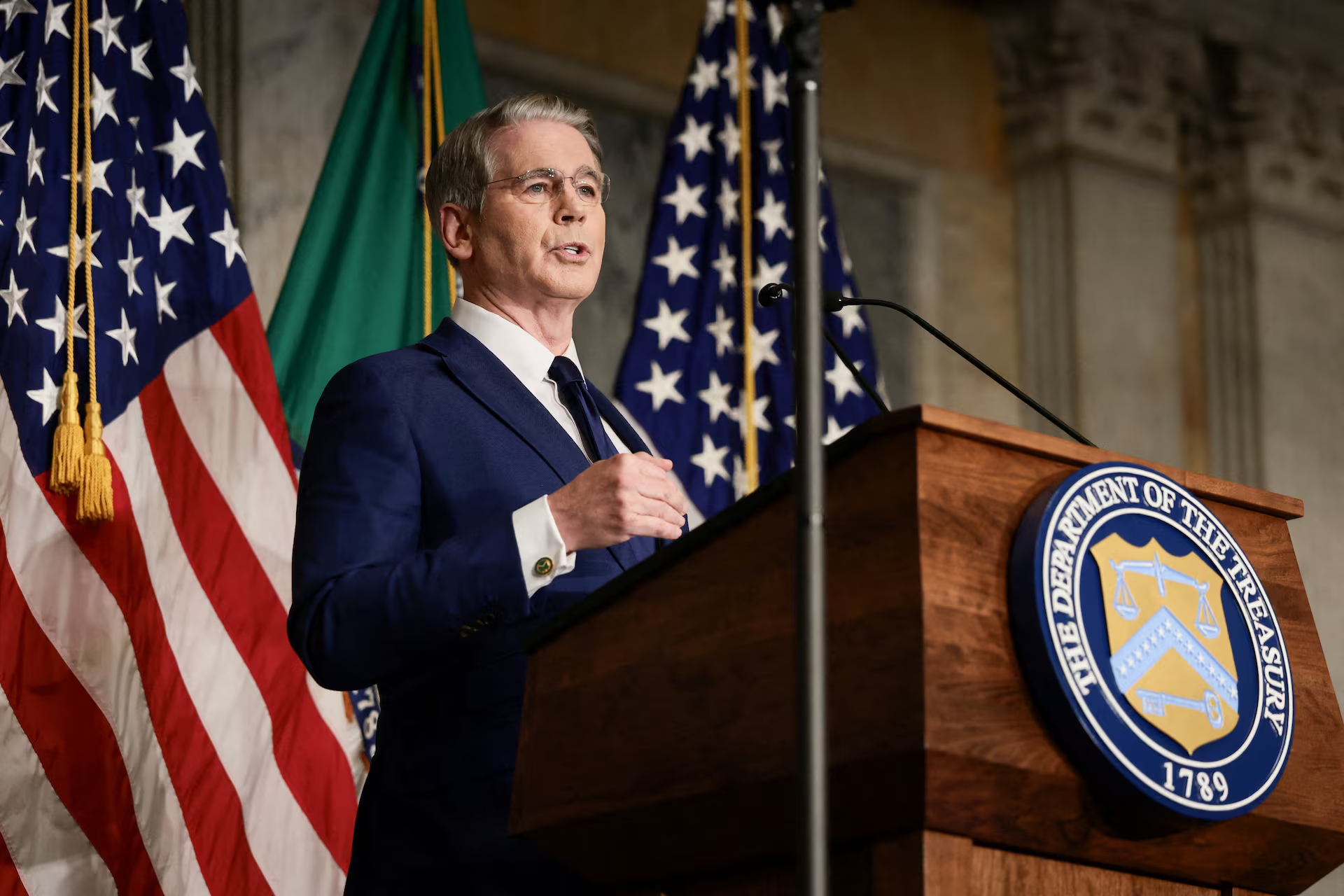
Officials said on Sunday that U.S. special operations forces carried out a bold rescue mission to extract a pilot stranded in Iran after his F-15 fighter jet was shot down, bringing to an end a major crisis faced by President Donald Trump as he considers the possibility of escalating the war, now in its sixth week against the Islamic Republic.
Trump said in a statement, “In the past few hours, the U.S. military conducted one of the most daring search and rescue operations in the history of the United States,” adding that the pilot was injured but “will fully recover.”
-
Drone theft from a U.S. military base raises fears of a potential Iranian response
-
Continuous U.S. military buildup in Israel in preparation for an attack on Iran
The pilot, whom Trump said held the rank of colonel, was the second member of the two-person crew of the F-15 that Iran said on Friday had been shot down by its air defenses.
The first pilot had been rescued on Friday, triggering a large-scale search effort by both Iran and the United States to locate the second pilot.
Iranian officials had urged citizens to help find him in hopes of gaining leverage against Washington in the war launched by Trump and Israel on February 28.
Trump threatened to escalate the conflict in the coming days by targeting Iran’s energy infrastructure.
-
U.S. military signals imminent operation against Tehran
-
Operations for Weeks Against Iran … U.S. Military on Alert Awaiting Trump’s Decision
Had Iran managed to capture the pilot, it would have triggered a hostage crisis capable of shifting American public opinion regarding a conflict that, according to polls, already lacks broad popular support. Trump provided no details about the operation but said it marked the first time in military history that two American pilots had been rescued separately deep inside enemy territory.
The rescue operation, involving dozens of military aircraft, encountered intense resistance from Iran.
Reuters reported on Friday that two Black Hawk helicopters involved in the search had been hit by Iranian fire but managed to exit Iranian airspace.
-
In Anticipation of a Potential Attack on Iran: U.S. Military Reinforcements to the Middle East
-
Trump and the Insurrection Act: Why Deploying the U.S. Military at Home Deepens Division
In a separate incident, officials reported that an A-10 Warthog attack aircraft was hit and crashed over Kuwait, with the pilot ejecting. The extent of injuries among the crew has not yet been clarified.
Meanwhile, the Tasnim news agency quoted the Islamic Revolutionary Guard Corps as saying on Sunday that several aircraft were destroyed during a U.S. mission to search for a stranded pilot in Iran.
The Revolutionary Guard said, “During a joint operation (between air and ground force commands, popular units, Basij forces, and the police), enemy aircraft were destroyed,” following an announcement by Iranian police that a U.S. C-130 military transport aircraft had been shot down south of Isfahan.
-
Drone Revolution: The Ukraine War Reshapes U.S. Military Priorities
-
A U.S. general outlines the timeline of the war with Iran… It would end by this date
The spokesperson for Iran’s unified armed forces command, known as Khatam al-Anbiya headquarters, stated that the downed U.S. aircraft included a C-130 military transport plane and two Black Hawk helicopters.
Earlier on Sunday, the Iranian military also said it had shot down an Israeli drone in the same region.
Trump, however, adopted a triumphant tone. In his statement, he said, “Our success in carrying out these two operations without any American being killed or injured once again proves that we have achieved overwhelming air dominance and superiority over Iranian airspace.”
-
Training to eat insects… The survival secrets of a U.S. pilot in four letters
-
U.S. intelligence expects a long-term Iranian grip over the Strait of Hormuz
U.S. pilots are trained in procedures known as “survival, evasion, resistance, and escape” when they find themselves behind enemy lines. However, few of them are fluent in Persian and face difficulties avoiding detection while seeking a way to escape.
U.S. Central Command stated that the conflict has resulted in the deaths of 13 American service members and injuries to more than 300 others. Iran has never previously captured American soldiers.
While Trump consistently portrays the Iranian military as being in poor condition, military experts say it has repeatedly managed to target U.S. aircraft.
-
U.S. President Donald Trump threatened to destroy bridges and power stations in Iran
-
U.S. aircraft carrier Gerald Ford leaves Croatia, destination unknown
U.S. intelligence indicated that Iran still retains significant missile and drone capabilities.
Five sources said late last month that the United States could confirm only the destruction of about one-third of Iran’s missile arsenal.
Sources added that the status of another third is not precisely known, but that bombing likely damaged, destroyed, or buried it in underground tunnels and trenches.
-
U.S. withdrawal from NATO… legal battle and constitutional constraints
-
Two Pakistani officials: Iran received a 15-point U.S. proposal for a ceasefire