Before the Iranian pilot… 5 exceptional rescue operations in military history
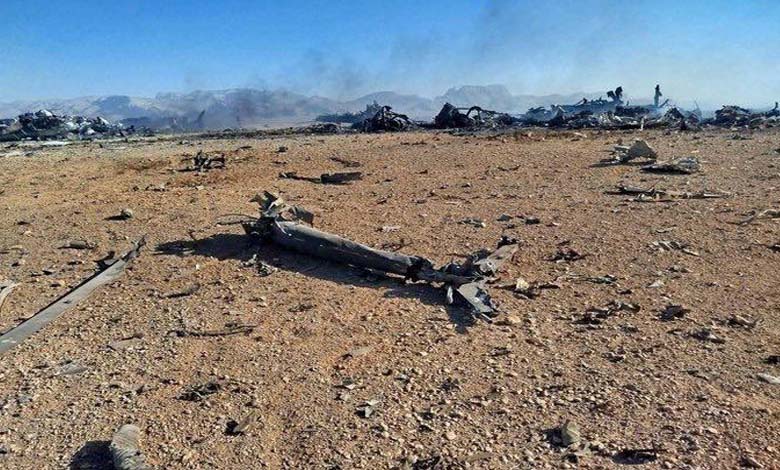
A complex rescue operation was carried out by U.S. forces deep inside Iranian territory to extract a pilot stranded for 48 hours, adding to a long record of similar historical missions.
U.S. President Donald Trump praised the mission conducted to rescue the pilot in southern Iran on Sunday, describing it as one of the “most daring search and rescue operations in U.S. history.”
-
U.S. intelligence expects a long-term Iranian grip over the Strait of Hormuz
-
Underestimating Iran’s air defense capabilities is placing Trump in a difficult position
After ejecting from an F-15 that crashed over southern Iran, the pilot, armed only with a pistol, fled into the mountains surrounding the crash site while awaiting the arrival of U.S. special rescue forces.
Tehran offered a reward to anyone who could find the officer, while dozens of armed individuals were seen searching the hills in a video posted on social media.
After nearly two days, the United States successfully rescued the pilot in an operation involving hundreds of special forces personnel, MQ-9 Reaper drones, and jet aircraft.
The Central Intelligence Agency (CIA) had precisely located the pilot while simultaneously conducting a “deception operation” to convince the Iranians that he had already been found elsewhere.
According to the British newspaper The Telegraph, this successful mission ranks among the most daring rescue operations in military history.
Here is a list of previous operations:
-
Explosions rock northern Tehran… Israeli strikes target Iranian defenses
-
New attack near the Bushehr nuclear site in Iran: one security officer killed
Jessica Lynch
In 2003, during the invasion of Iraq, the U.S. Army launched a nighttime raid to rescue Jessica Lynch, a young American soldier who had been missing for ten days.
Nineteen years old at the time, Lynch had been captured while serving as a supply specialist in the 507th Maintenance Company when her convoy was ambushed by Iraqi forces during the Battle of Nasiriyah on March 23 of that year.
The CIA received intelligence indicating she was being held in a hospital in Nasiriyah, and commando units immediately began planning a raid.
Once inside, a staff member guided them to Lynch, who was suffering from gunshot wounds and fractures in her legs and arms.
-
Gulf states’ defenses have successfully repelled Iranian attacks
-
U.S. President Donald Trump threatened to destroy bridges and power stations in Iran
This marked the first successful rescue of an American prisoner of war since World War II.
Minutes before the operation began, heavily armored forces led by a British officer carried out a diversionary attack near a bridge over the Euphrates in Nasiriyah.
Major Mike Tanner, seconded from the Royal Marines to U.S. forces, led the diversion, while on the other side of the city, under cover of darkness, a Black Hawk helicopter carrying special forces commandos landed beside the hospital.
Icel “Gene” Hambleton
In April 1972, at the height of the Vietnam War, Lieutenant Colonel Icel “Gene” Hambleton served as a navigator aboard an aircraft escorting three bombers assigned to strike entrances along the Ho Chi Minh Trail.
-
Iran and Hezbollah carry out simultaneous attacks on Israel
-
Refugees in the West Bank face shrapnel from Iranian missiles
The aircraft was hit by a Soviet surface-to-air missile. Hambleton was the only one of the three crew members able to eject before the crash.
He parachuted into the midst of the North Vietnamese Easter Offensive, landing deep in the jungle surrounded by tens of thousands of enemy troops.
His rescue ultimately became “the largest, longest, and most complex search and rescue operation” of the entire war. Hiding in the jungle, he found corn on the third day and collected his first rainwater that night.
Two days later, Vietnamese forces shot down a Sikorsky HH-3E helicopter sent to rescue him.
Hambleton later said he cried as he watched the aircraft, only two minutes away from reaching him, explode.
He was later stabbed in the back during another rescue attempt before finally being extracted after eleven and a half days in a covert nighttime infiltration nearly two miles behind enemy lines.
-
The regime in Tehran has already changed: Trump announces the imminent end of the war in Iran
-
Iran intensifies its attacks in the Gulf
Richard Phillips
In April 2009, Captain Richard Phillips, an American merchant mariner, commanded the vessel Maersk Alabama when it was hijacked by pirates a few hundred miles off the Somali coast.
Four men armed with AK-47 rifles boarded the ship despite the crew’s efforts to repel them using flares and water hoses.
On April 8, the guided-missile destroyer USS Bainbridge and the frigate USS Halyburton were dispatched to the Gulf of Aden.
On April 12, U.S. Navy SEAL Team 6 snipers opened fire from the USS Bainbridge, killing the pirates and rescuing Captain Phillips unharmed.
Scott O’Grady
In June 1995, Scott O’Grady, an American pilot, was flying a routine air patrol mission over Bosnia when his aircraft was struck by a Serbian missile.
-
The Iranian regime under bombardment: weakened control, divisions, and fear
-
How does the Iranian regime buy the loyalty of its supporters?
He ejected with his survival kit, covered himself in dirt, and lay face down while Bosnian Serb forces fired just meters from his hiding place in an attempt to force him out.
Over the next six days, O’Grady relied on lessons learned during a 17-day survival, resistance, and escape training course.
He survived on leaves, grass, and insects, and stored small amounts of rainwater collected with a sponge in plastic bags.
He sent out a radio distress call but had to remain silent as the enemy approached.
On the sixth night, he managed to contact a fellow pilot by radio. Four Navy helicopters were quickly dispatched to his location, 80 miles inside hostile territory, while around 40 other aircraft monitored the area.
The following morning, O’Grady ran out of the forest toward his rescuers with a 9mm pistol in hand.
-
Trump threatens to seize Iranian oil
-
Washington puts the final touches on a ground operation in Iran
Operation Jericho
In February 1944, the British Royal Air Force carried out one of the most daring and improbable rescue operations in military history.
Low-flying Mosquito fighter-bombers launched a precision strike against a German-controlled prison to free members of the French Resistance facing imminent execution.
The mission, codenamed “Jericho,” took place in broad daylight under dangerous winter conditions.
RAF crews flew at extremely low altitude to avoid radar detection and maximize accuracy, bombing the heavily guarded prison to breach the outer walls and neutralize guard posts without causing mass casualties among prisoners.
-
One of the Pentagon’s most reliable weapons: the Tomahawk as the spearhead against Iran
-
Israel strikes Iran’s nuclear program and missiles with 50 aircraft: map of the raids
The first wave breached the perimeter walls, creating escape routes. Subsequent waves targeted administrative buildings and guard barracks, disrupting German response efforts.
Of the 700 inmates held at Amiens prison, 102 were killed during the operation, but 258 managed to escape and avoid recapture.
Half of them had been scheduled for execution the following day.
At least 50 Resistance members escaped, many of whom later played key roles in operations that contributed to the Allied victory in World War II.
-
Trump seeks a way out of the war with Iran
-
Iran’s nuclear program under fire: third attack on Bushehr in 10 days