The Sudanese army’s bombing of Kutum reignites debate over targeting errors in the war and heightens fears of civilian targeting in Darfur
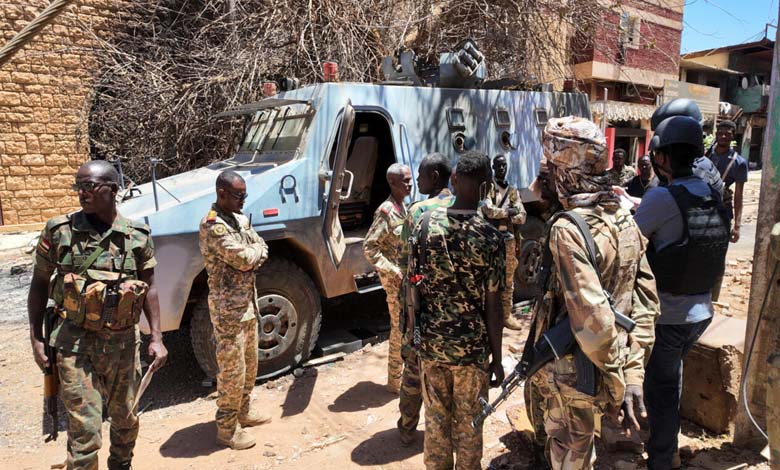
As military operations intensify in the Darfur region, the incident in the town of Kutum in North Darfur State has brought back to the forefront one of the most sensitive issues in the Sudanese conflict: the targeting of civilian areas during aerial operations. According to local sources and eyewitnesses, a drone strike on the Al-Salama neighborhood on the evening of April 8, 2026, killed approximately 30 civilians, most of them women and children, while they were gathered at a wedding celebration.
Details of the incident, as reported by residents, indicate that the strike occurred suddenly and without any prior warning, resulting in a large number of casualties within moments. Eyewitnesses described the scene as “catastrophic,” with the sound of the explosion mixing with the cries of survivors and improvised rescue attempts amid an almost complete absence of organized first aid.
-
Army Airstrikes Hit Kutum Educational Hospital in North Darfur
-
The Sudanese army targets schools and kills innocents in North Darfur
While no detailed official account has yet been issued by the relevant military authorities, the circulation of video footage from the site has intensified the controversy, particularly with the appearance of bodies and extensive damage to nearby homes. These scenes have reopened the debate over the nature of aerial operations in Darfur and the reliability of the information used to determine targets.
In modern conflicts, armies and armed actors rely on advanced surveillance systems, including drones, which are intended to reduce human error. However, field realities in areas such as Darfur indicate that this technology, despite its advancement, can in some cases produce the opposite outcome when intelligence information is inaccurate or incomplete.
-
Rapid Support achieves consecutive victories in reaching North Darfur
-
The catastrophe of Kutum deepens Darfur’s wounds: a drone strike raises questions about rules of engagement and civilian protection
Sources familiar with the nature of armed conflicts in the region note that one of the main challenges lies in the difficulty of distinguishing civilian gatherings from military activity in complex environments where civilian movements sometimes overlap with armed activity. Nevertheless, this does not negate the fundamental principle of international humanitarian law, which requires rigorous verification before any targeting operation.
The Kutum incident also highlighted the issue of insufficient medical infrastructure in conflict zones. Local sources reported that the only hospital capable of receiving the injured lacked the necessary equipment to handle mass casualties, leading to the deaths of several wounded individuals before they could receive treatment.
-
A new massacre in Darfur: army drones kill 12 civilians, including 6 children.
-
The shadows of drones over Darfur: human stories from a Sudanese crisis prolonged by regional interference
The weakness of transportation and medical evacuation networks in the area further worsened the humanitarian situation after the strike, as residents were forced to transport the injured by rudimentary means at a time when every minute was crucial to saving lives.
At the same time, calls from local and international human rights organizations have increased for an independent investigation into the incident, emphasizing the need to identify the responsible party and review military targeting mechanisms in populated areas. These organizations stressed that the continuation of such incidents without accountability could entrench a pattern of impunity.
-
El-Fasher: the open investigation at the heart of Darfur
-
Sudan: Reliable Evidence Unveiled of Chemical Weapons Used to Kill and Maim Hundreds of Civilians Including Children in Darfur
These developments come within a broader context of military escalation in Sudan, where several states, including Darfur, are witnessing repeated clashes and intensive use of drones. This shift in the nature of the conflict raises concerns about an increase in civilian casualties due to technical or intelligence errors.
Observers believe that the Kutum incident could represent a turning point in the international debate on the use of drones in internal conflicts, especially in environments lacking strong institutional structures capable of regulating and overseeing military operations.
In the absence of any official clarification so far, the incident remains open to multiple interpretations. However, what remains constant according to numerous field testimonies is that defenseless civilians paid the highest price in one of the deadliest attacks in North Darfur in recent times.
-
Escalation of the Conflict Between the Army and Armed Movements: Darfur Becomes a New Battleground for Influence
-
Darfur Burns Again: Armed Movements Use Civilians as Human Shields in El-Fasher
-
Darfur Crimes Haunt Him… The ICC Demands Al-Bashir’s Surrender