The Unified System: the Houthis’ tool for spying on Yemenis
A few hours after receiving an international money transfer through a bank located in Houthi-controlled areas, (N.M.) was surprised by attempts to hack her accounts on the Gmail and Facebook platforms.
-
After Khamenei’s Death, the Houthis in Yemen Face an “Unknown” Fate
-
Political analyst: The Houthis are dragging Yemen into regional conflicts and pushing the country toward greater isolation
The Yemeni woman confirmed that the hacking attempts coincided with the simultaneous arrival of verification codes via SMS to her phone. She was later summoned by the Houthi-affiliated security and intelligence service for questioning in Sanaa about three months ago.
(N.M.), who fled to liberated areas, stated that the amount she received was 3,500 dollars and belonged to one of the patients. She said she had not realized that the militia closely monitors residents’ financial transfers.
The testimony of (N.M.) indicates that the Houthi militias designed a unified system linking civil registry records with banks and even security checkpoints, in order to facilitate monitoring of the population through the national ID number on identity cards or passports.
-
The Houthis Align with Iran: Resumption of Attacks on Maritime Navigation
-
Domination through intimidation: the Houthis impose their ideology by force of arms
Checks at security checkpoints
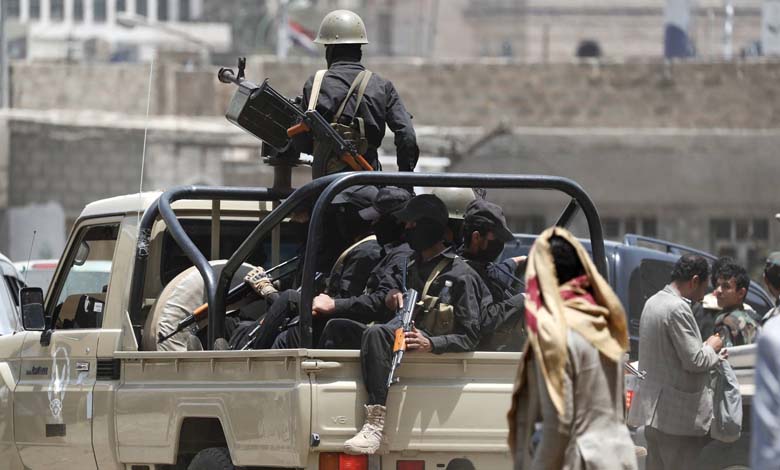
In another testimony, (S.Y.), a minibus driver transporting passengers between liberated and non-liberated areas, said that the militia frequently stops him and inspects the personal identification documents of passengers.
He explained that Houthi checkpoints search suspected passengers or transport drivers and verify their personal documents through a system available on tablet devices.
The “unified system” is considered the Houthis’ most dangerous tool for spying on Yemenis’ movements, as it encompasses telecommunications networks, financial systems, central databases, passport and civil registry systems, and control over the frequency spectrum (wireless communications, radio, television, and telephones).
-
A human rights report exposes the secret collusion between Yemen’s Brotherhood and the Houthis against the South
-
The Houthis escalate by detaining more UN staff
What is this system?
Informed sources said that the Houthi militias designed a unified system under the name “informational integration,” linking security authorities, banking institutions, telecommunications companies, civil service entities, and civil registry offices within an internal network not connected to the Internet.
According to these sources, “the idea of the project began in 2013 within the civil service in Sanaa but was halted after the Houthi coup. The militias resumed work on it in 2019, and it effectively entered service in 2021 under the supervision of the group’s security and intelligence service.”
-
Houthis recalibrate their military compass toward southern Yemen
-
South Yemen Unifies Its Ranks Against the Houthis: Securing the Rear Before Moving Toward Sanaa
The sources explained that the original idea of the project was civilian. “When receiving a transfer from any money exchange office, the individual is required to present an ID card and enter the national number into a query system linked to the central point at the Central Bank in Sanaa. The request is then sent to the civil registry database, where the actual data of the number holder appears along with their photo and the date and place of issuance.”
However, the Houthi militias exploited this system for surveillance purposes. They first used the Central Bank in Sanaa to link banks and exchange companies to monitor financial transfers, before expanding its scope to all government departments and security checkpoints to track Yemenis’ movements between governorates.
-
Five months after sinking, the Houthis release the crew of the ship Eternity C
-
Justice in the Grip of the Houthis: How Yemen’s Judiciary Became a Political Tool of Repression
The sources confirmed that the militias can identify any individual, particularly opponents, through the national number. This system operates on computers and tablets deployed at checkpoints.
Observers believe that the militias seek to impose comprehensive “informational control” by integrating telecommunications to monitor and analyze geographic and communication data and linking it to civil and banking identities, thereby creating a “comprehensive security profile” for each citizen.
-
Houthis raid UN offices in Sanaa and detain another staff member
-
Houthis Activate Emergency Plan as Fear Undermines Centralized Military Command