What happened in the first talks between Washington and Hamas since the Gaza truce?
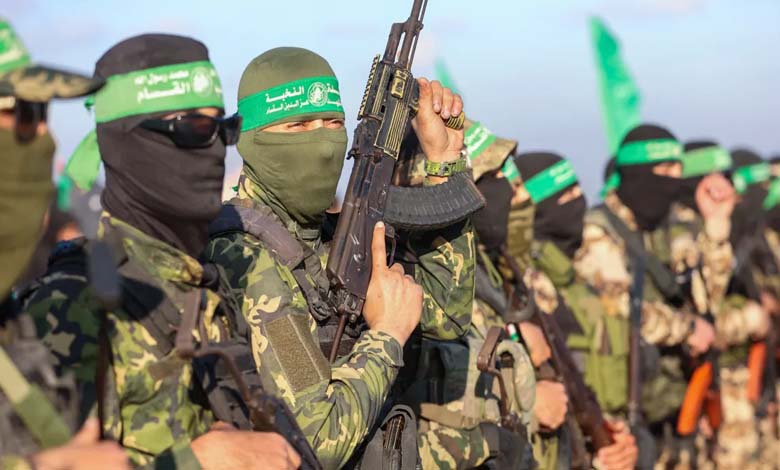
U.S. media reported that Washington and Hamas held their first direct talks since the Gaza truce, as part of efforts to reinforce a fragile agreement.
This was reported by CNN, citing two Hamas sources, while the White House did not confirm the talks.
According to CNN, a delegation led by senior U.S. adviser Ariyeh Lightstone met with Hamas chief negotiator Khalil al-Hayya in Cairo on Tuesday evening.
-
Hamas’s weapons hinder the Gaza peace plan: sharp disagreements
-
The emoji puzzle… the code used by Hamas reveals the secrets of the October 7 attack
Officials told the network that Lightstone was accompanied by Nikolay Mladenov, the High Representative of the Gaza Peace Council, backed by the United States, which mediated the ceasefire agreement.
When contacted for comment, a U.S. State Department spokesperson said, “We do not comment on ongoing negotiations.”
Sources added that al-Hayya, who survived an Israeli assassination attempt in the Qatari capital, Doha, last September, stressed during the meeting “the need for Israel to fully adhere to its commitments in the first phase of the agreement, including halting airstrikes and allowing more humanitarian aid to enter, in order to move to the next phase.”
-
Israel Involves Anti-Hamas Militia in the Management of the Rafah Crossing
-
WhatsApp and a hired killer: 55-page document on the Hamas attack turns fire on Netanyahu
The truce agreement, reached last October, ended two years of war in Gaza but did not answer fundamental questions about the future of the devastated territory, including the role of Hamas, which seized control of the Gaza Strip by force in 2007 after overthrowing Palestinian Authority institutions there.
Following the truce, most residents of the territory complain about Hamas’ arbitrary policies in areas outside Israeli control, both economically, socially, and in terms of security, while the Israeli army continues to conduct strikes in various parts of the territory.
-
An Israeli plan to disarm Hamas and new security arrangements at the Rafah crossing
-
Hamas’s plan ahead of disarmament talks: integrating its police forces in Gaza
Meeting with Netanyahu
According to a U.S. source and an informed diplomat, Tuesday’s meeting came days after Lightstone met Israeli Prime Minister Benjamin Netanyahu “to ensure Israel’s commitment to fully implementing the requirements of the first phase of the ceasefire.”
One source stated that Israel agreed to implement those requirements on the condition that Hamas commit to disarmament.
-
Netanyahu to present Trump with a new plan for Gaza if Hamas refuses to disarm
-
Hamas presents a new proposal regarding its weapons… and reveals the candidate to administer Gaza
Previously, meetings between Hamas, representatives of the Peace Council, and international mediators sought to reach an agreement on the next phase of the ceasefire, including Hamas’ disarmament, the deployment of an international force in Gaza, and the withdrawal of Israeli forces from the devastated territory.
However, multiple sources indicated that these talks repeatedly stalled due to Hamas’ demand that Israel first fulfill its first-phase commitments before the movement relinquishes its weapons.
Israel, for its part, denied failing to comply with the agreement’s provisions and accused Hamas of similar violations.
-
American newspaper reveals the situation of Hamas fighters trapped in the tunnels
-
Trapped Behind the Yellow Line… Hamas Seeks a Ray of Light in Rafah’s Tunnels
Mladenov’s message to Hamas
Since the ceasefire took effect, Israeli strikes on the Gaza Strip have killed more than 765 people, according to the Palestinian Ministry of Health.
A senior Hamas source said the movement considers the proposal unbalanced, arguing that it “reduces the entire process to a single point — disarmament — while postponing or canceling the other first-phase commitments.”
According to CNN, citing an informed source, Mladenov began conveying Israel’s demands and warning that it would resume the war if Hamas did not agree to disarm.
-
The United States sets a timeline for deploying the Gaza Force and disarming Hamas
-
Avatars and shadow accounts: new details on Hamas’s preparations for October 7
-
Israel signals possible military operation in Gaza to disarm Hamas
-
Gaza Donation Theft… The behind-the-scenes tensions within Hamas
-
Washington proposes resolving the crisis of Hamas fighters in Rafah by relocating its leaders
-
Israeli Defense Minister Orders Destruction of Gaza Tunnels: There Will Be No Hamas