Blood diamonds and drugs: Hezbollah’s funding arteries in Europe
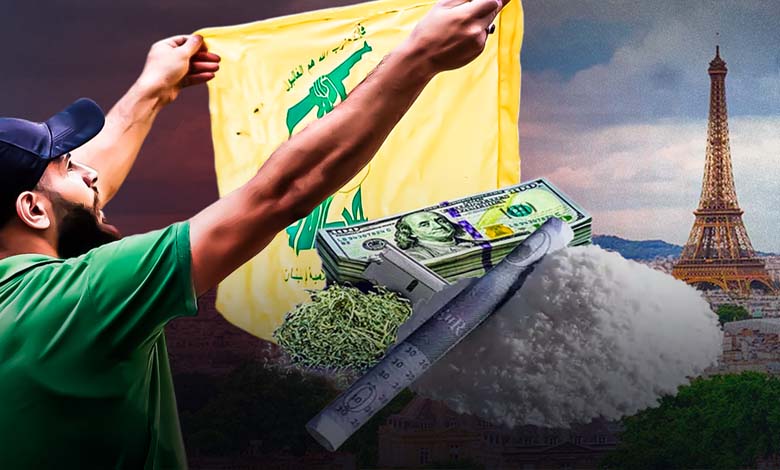
Europe represents a key hub for various criminal activities linked to Hezbollah, which relies on a broad network to collect donations and manage illegal operations.
Hezbollah is also deeply involved in criminal networks, particularly drug trafficking, which has drawn the attention of authorities in Austria, according to a study by the Documentation Center on Political Islam, established by the Austrian government to examine the activities of political Islamist organizations.
-
Hezbollah’s weapons… Netanyahu sets the primary objective of negotiations with Lebanon
-
Through incitement and protests, Hezbollah seeks to obstruct Lebanon–Israel negotiations
The study relied on the analysis of documents, court files, corporate records, and government reports, uncovering “links with companies operating globally” as well as “intertwining with legitimate businesses.”
Although Hezbollah has weakened militarily and politically in Lebanon, it has managed to maintain “its transnational networks across Europe, Latin America, Africa, and the Middle East,” the study said.
In addition to drug trafficking, Hezbollah is involved in oil smuggling, money laundering, and the trade of what are known as “blood diamonds,” meaning diamonds mined in conflict and war zones, as reported by the Austrian newspaper Kurier citing the study.
-
Israel announces the killing of the secretary to the Secretary-General of Hezbollah and his nephew
-
Washington and Tehran… Hezbollah, the Achilles’ heel of the truce
For example, in 2021, a smuggling network was uncovered transporting Captagon and cocaine from Lebanon to Italy via Belgium and Austria.
The drugs were concealed in various locations, including washing machines and pizza ovens. One of the hiding places in Austria was a pizza restaurant in Salzburg.
In another case, a senior Hezbollah member operated in Carinthia, recruiting young Lebanese men and subjecting them to military and ideological training before sending them to join militias in Lebanon.
He appeared before a court in Klagenfurt, Austria, in 2020 and was sentenced to several years in prison.
-
Beirut under fire… Israel expands its strikes against Hezbollah
-
Israel–Hezbollah war: UN concern and European call
A unified stance
According to the study, one-third of Hezbollah’s funding comes from illegal activities; however, many other activities are conducted under legal cover, particularly in Europe, due to divisions among European Union member states regarding Hezbollah’s classification as a terrorist organization.
Germany and the Netherlands, for example, consider the entire organization to be terrorist, as does Switzerland. In contrast, most EU member states, including Austria, designate only Hezbollah’s military wing as a terrorist organization.
This allows Hezbollah to obtain funds through legal means, whether through fundraising or participation in business activities.
-
Israel expands its operations in Lebanon… evacuation alerts and dozens of Hezbollah members killed
-
Israel intensifies strikes against Hezbollah: senior leaders killed and evacuation orders issued
The organization’s financial transactions often take place in the virtual space, particularly through cryptocurrencies, according to the study.
Therefore, the European Union is urged, according to the study, to adopt a unified legal position toward Hezbollah’s network and to enhance more consistent international cooperation to counter its threat.
In this context, Lisa Vellhofer, director of the Documentation Center on Political Islam, said: “The current study on Hezbollah’s financing networks highlights transnational structures that have long been firmly rooted in Europe.”
-
How Iran’s Revolutionary Guard reorganized Hezbollah’s ranks
-
Washington mobilizes to designate the Revolutionary Guards and Hezbollah as terrorist organizations
-
Smoke over Hezbollah headquarters… southern Beirut suburbs flare up again
-
Hezbollah and Iran’s war: Lebanon fears the cost of supporting Tehran