China steps up its diplomacy to end the war with Iran ahead of the Trump summit
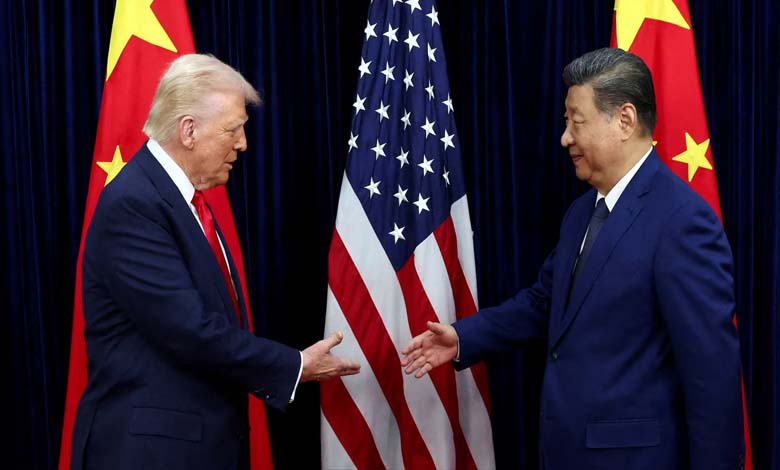
Beijing seeks, through the summit between Trump and Xi, to advance its objectives on trade and Taiwan.
China is intensifying its efforts to end the war with Iran by walking a particularly fine diplomatic line. The country is preparing to hold a summit next month with U.S. President Donald Trump, while at the same time trying not to antagonize Tehran.
Analysts say the anticipated meeting between President Xi Jinping and Trump in mid-May is casting a shadow over Beijing’s approach to the conflict in the Middle East, even as the world’s largest crude oil importer, which relies on the Middle East for half of its fuel needs, seeks to safeguard its energy supplies.
China’s measured approach to the war has sufficiently preserved its influence through back channels, to the extent that Trump credited Beijing with helping persuade Iran to take part in peace talks held over the weekend in Pakistan.
Eric Olander, editor-in-chief of the China-Global South Project, an independent organization analyzing China’s engagement with the developing world, said: “You’ve heard the U.S. president repeatedly mention how the Chinese spoke to the Iranians… That puts them in the same room as the negotiators, even if they don’t have a seat at the table.”
Sources familiar with Chinese thinking said authorities in Beijing see the summit as an opportunity to advance their goals regarding trade and Taiwan. They take into account that the U.S. president is driven by deal-making and is susceptible to flattery.
According to one of these sources, the prevailing view in Beijing is: “Flatter him, give him a warm welcome, and preserve strategic stability.”
China’s Foreign Ministry did not respond to questions about its diplomacy ahead of the summit, which will mark the first visit by a U.S. president in eight years. Trump said the meeting would take place on May 14 and 15.
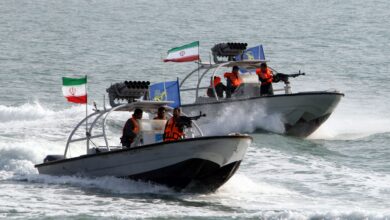
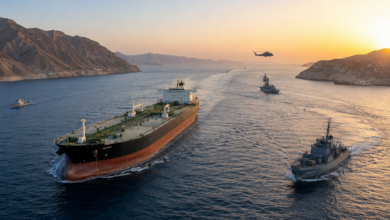
In view of the direct and growing threat posed by the U.S. naval blockade of Iranian ports, Beijing has engaged in a series of diplomatic activities and, according to analysts, has refrained from sharply criticizing Trump’s conduct in the war to ensure the summit proceeds smoothly. The summit had previously been postponed because of the war.
Xi broke his silence on the crisis on Tuesday with a four-point peace plan calling for adherence to peaceful coexistence, national sovereignty, the rule of international law, and a balance between development and security.
After the U.S. president warned Iran that “the entire country could be wiped out in one night,” Chinese Foreign Ministry spokesperson Mao Ning avoided condemnation, merely stating that China was “deeply concerned” and urging all parties to play “a constructive role in de-escalating the situation.”
Foreign Minister Wang Yi held nearly 30 calls and meetings with his counterparts in pursuit of a ceasefire, while special envoy Zhai Jun toured five Gulf and Arab capitals.
Zhai told reporters that on one occasion he traveled overland to avoid unstable airspace and could hear sirens.
The Chinese president presented his peace plan during a meeting with the Crown Prince of Abu Dhabi, Sheikh Khaled bin Mohamed bin Zayed Al Nahyan, in an effort to strengthen ties with a rival of Iran while pressing Tehran toward dialogue.
Some analysts say Iran needs China more than China needs Iran, allowing Beijing to press for a ceasefire while protecting the anticipated summit with Trump.
Drew Thompson, a fellow at the S. Rajaratnam School of International Studies in Singapore, said: “The ideal outcome for Beijing is to maintain unconditional relations with states hostile to the West like Iran, while at the same time preserving an opportunity to reach some form of coexistence with the United States.”
Although China has played a role in encouraging Iran to engage with the United States, its ability to influence decisions remains limited, as it lacks a military presence in the Middle East capable of backing its positions.
Some observers say China’s active diplomacy in the Middle East is more for show than a display of strategic finesse.
Patricia Kim of the Brookings Institution said: “While the Iranians are keen to highlight their relationship with China and have asked Beijing to act as a guarantor of the ceasefire, Beijing has shown no interest in taking on such a role. The Chinese side appears content to remain on the sidelines while the United States bears the brunt of the pressure.”
At the summit with Trump, China may agree to purchase Boeing aircraft, a deal delayed for years over regulatory concerns, which could become the largest order of its kind in history, in addition to substantial agricultural purchases.
Analysts say the meeting will likely be limited in scope and avoid ambitious topics such as AI governance, market access, and excess manufacturing capacity.
Scott Kennedy, chair of the Chinese business and economics department at the Center for Strategic and International Studies in Washington, said: “There is no chance that China will reach any kind of grand bargain with the United States.”