Debate over the classification of the Muslim Brotherhood: a political organization or a parallel influence structure?
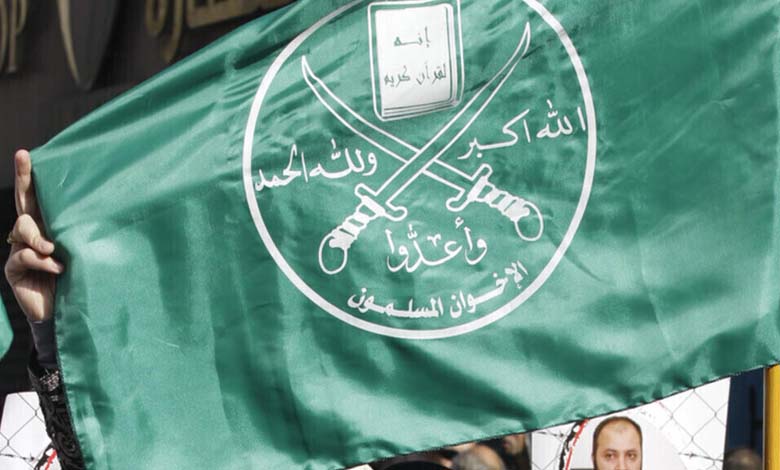
The debate over the nature of the Muslim Brotherhood and its organizational structure has resurfaced, amid interpretations that view it as more than merely a political faction or a religious preaching movement, but rather as a complex entity relying on sophisticated psychological and organizational tools to influence society. This perspective reflects the widening scope of controversy over how the organization should be understood, particularly in its relationship with society and its various institutions.
For his part, researcher on groups described as terrorist, Ibrahim Rabie, stated in an interview with Rose al-Youssef Gate that since its inception, the organization has sought to manage society through what he called the “nervous system,” namely the middle class and civil society institutions. According to him, the starting point was universities, with the aim of inserting members into professional unions, thereby ensuring the construction of a broad influence within the social structure.
Rabie explained that treating the group merely as a religious entity or a political actor leads to an inaccurate reading of the nature of its movements. In his view, this perception affects the understanding of its regional and international relationships and the interpretation of its members’ behavior in different contexts. Under this approach, the core issue lies in the analytical perspective rather than solely in the nature of the actions.
He added that religion is used within the organization as a tool for psychological and social influence, not merely as a doctrinal reference, as it is employed to build a discourse capable of attracting and directing the masses.
He further noted that the operational mechanism relies on two main stages: preparation through religious and media discourse, followed by control through economic, security, and organizational tools.
Rabie also characterizes the group as an “umbrella organization” comprising multiple and sometimes divergent currents operating under a single organizational structure despite internal differences, which grants it the ability to adapt and reposition itself according to political contexts.
He links this to what he calls an “organizational doctrine” based on a set of behaviors including exploitation, opportunism, and the use of rumors in managing influence.
The discussion also returns to a historical reading of the group’s trajectory, referencing incidents of violence and political assassinations dating back to the 1940s, viewed as part of a continuous context rather than isolated events. According to this view, understanding the present cannot be separated from the accumulation of the past, particularly regarding patterns of political and organizational action.
The analysis finally extends to the post–June 30 period, linking political changes to the rise of forms of violence associated with entities seen as extensions of the organization, which, according to this perspective, reflects the continuation of a confrontational pattern through different means.