Washington and Tel Aviv are preparing for a collapse of the truce by defining an Iranian target bank
There are no signs of preparations for new talks between Washington and Tehran in the Pakistani capital.
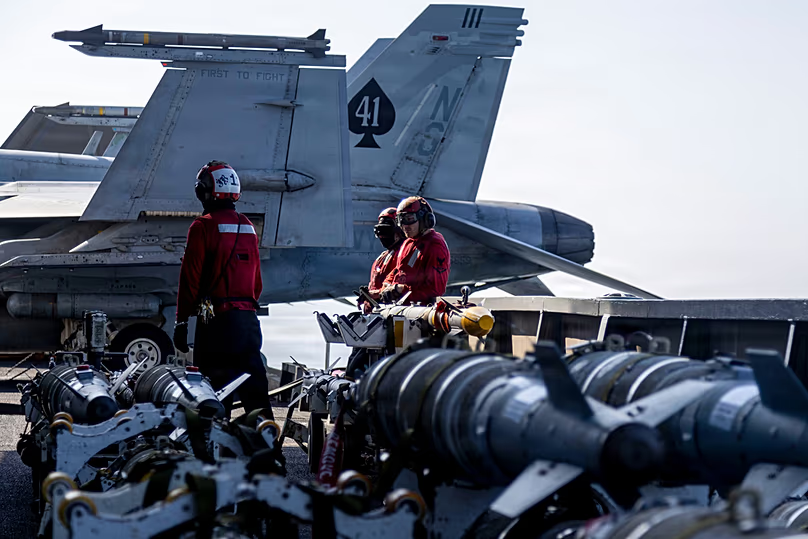
Hebrew media reported that Israel and the United States are bracing for a sudden collapse of the ceasefire with Iran. The two sides are working in close coordination and have defined a target bank that will this time include Iranian energy facilities.
The newspaper Maariv reported on Sunday, citing a senior Israeli military official, that in recent days the commander of the United States Central Command (CENTCOM), Admiral Brad Cooper, visited Israel and met with Israeli Chief of Staff Eyal Zamir. The official explained that the current coordination focuses on the possibility of a sudden collapse of the ceasefire with Iran.
He added: “We are prepared, as are the Americans, for this possibility. If we are forced to resume fighting, we know exactly what must be done. We are in full coordination, and the strike we deliver will be extremely painful and will inflict very severe damage on the Iranians.”
The official noted that the target bank has been updated and that military intelligence is closely monitoring developments in Iran, pointing out that the targets the two armies may strike this time will also include Iranian energy facilities.
U.S. President Donald Trump said on Sunday that Israel is “a great ally” of the United States, stating that its stance in times of conflict and tension demonstrates courage, intelligence, and loyalty to Washington’s interests.
Trump said: “Whether people like Israel or not, it has proven to be a great ally of the United States. It is brave, bold, loyal, and smart.” He added that Israel demonstrates its combat capability and cohesion in decisive moments, unlike other parties that, in his view, “revealed their true nature” under pressure, adding that “Israel fights hard and knows how to win.”
American and Israeli statements hinting at a resumption of war with Iran are increasing, while Iran’s chief negotiator Mohammad Bagher Ghalibaf stated that recent talks with the United States have made progress, although disagreements remain over nuclear issues and the Strait of Hormuz. Trump, for his part, spoke of “very good talks” with Tehran while warning against “blackmail” over the vital maritime shipping route.
Neither side provided details on the status of negotiations on Saturday, just days before the fragile ceasefire in the U.S.-Israeli war against Iran was set to expire.
The war, now in its eighth week, has killed thousands and expanded to include Israeli strikes in Lebanon, causing oil prices to rise due to the effective closure of the strait, through which one-fifth of global oil shipments passed before the war.
Ghalibaf told state media, referring to talks earlier in the previous week: “We have made progress, but there is still a large gap between us… There are some points we insist on… and they also have red lines. But these issues may be only one or two.”
Trump confirmed that the United States is conducting “very good talks,” without providing further details.
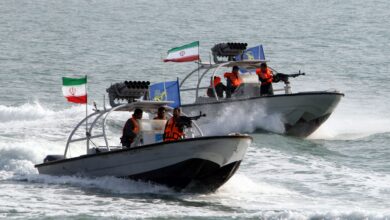
Tehran shifted course on Saturday and reasserted control over the strait, again closing this crucial energy passage, increasing uncertainty surrounding the war launched by the United States and Israel on February 28.
Tehran said the closure of the strait is a response to the continued U.S. blockade of Iranian ports, which it considers a violation of the ceasefire, while Iran’s Supreme Leader Mojtaba Khamenei said the Iranian navy is ready to inflict “new bitter defeats” on its enemies. Trump described the move as “blackmail,” even as he praised the talks.
Iran announced on Friday the temporary reopening of the Strait of Hormuz following a separate ten-day ceasefire agreement mediated by the United States between Israel and Lebanon.
Trump defended the U.S. blockade of Iranian ports and threatened to “start dropping bombs again” unless a long-term agreement is reached before the ceasefire expires on Wednesday.
State media reported that Iran’s Supreme National Security Council said Tehran’s control of the strait includes demanding payment for services related to security, safety, and environmental protection.
Concerns persisted after at least two ships reported being attacked on Saturday while attempting to cross the Strait of Hormuz. The Indian government said it summoned the Iranian ambassador in New Delhi and expressed deep concern after two Indian-flagged vessels came under fire in the strait.
CENTCOM said its forces are imposing a naval blockade on Iran but did not comment on the latest Iranian measures. Tehran’s shift increased the risk of continued disruption to oil and gas shipments through the strait, as Trump considers the possibility of extending the ceasefire.
Informed sources said that when U.S. and Iranian negotiators met in Islamabad earlier in the previous week, the United States proposed suspending all Iranian nuclear activities for twenty years, while Iran proposed a suspension of three to five years. Iranian Deputy Foreign Minister Saeed Khatibzadeh said no date has been set for the next round of negotiations, adding that a framework of understanding must first be agreed upon.
Trump had said on Friday that talks could take place early in the week and that the two sides were “very close to reaching an agreement.”