Mojtaba Khamenei: Uncertainty surrounds the fate of the absent Supreme Leader
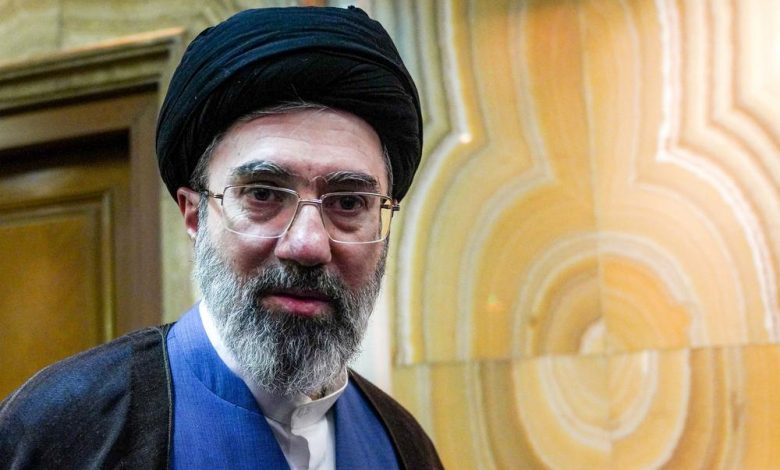
Uncertainty continues to surround the health condition of Iran’s new Supreme Leader, Mojtaba Khamenei, amid a clear discrepancy between the Iranian narrative and Western and Israeli assessments regarding the nature of the injuries he allegedly sustained during the airstrike that resulted in the death of his father, the former Supreme Leader.
While Iranian authorities insist that Khamenei is in “full health” and continues to carry out his duties normally, Western reports suggest that he sustained severe injuries that may have affected his political presence and ability to appear in public, according to The Times.
Doubts about Mojtaba Khamenei’s health have increased due to his complete absence from the public scene since the attack. He has not appeared at any official event or in any video broadcast, and his messages and communications have been limited to written statements relayed through close intermediaries, under strict security measures believed to be aimed at concealing his actual location and preventing further targeting.
In the first high-level Israeli comment on the situation of the Iranian leader, Israeli Prime Minister Benjamin Netanyahu stated that Mojtaba Khamenei is likely still alive but hiding in a secret location or inside a fortified shelter.
He added that available information does not allow for an accurate assessment of his health condition, while suggesting that Khamenei’s son does not appear to possess the same level of influence and ability to govern as his father, indicating a possible weakening of his political standing due to his complex medical condition.
Tehran, for its part, categorically denied reports of serious injuries. Mazaher Hosseini, a senior official in the Office of the Supreme Leader, stated that Khamenei had only suffered minor injuries, including a limited back wound, a knee injury still recovering, and a minor injury behind the ear that has been fully treated.
Hosseini added that the leader would appear before the public “at the appropriate time,” without specifying when.
However, this official account conflicts with more detailed Western media reports. A report by The New York Times, citing high-level Iranian sources, indicated that Khamenei underwent several surgeries on his leg and hand, with reports of serious facial injuries requiring reconstructive procedures, in addition to speech difficulties resulting from burns and injuries sustained during the attack.
These accounts suggest that Iran’s new Supreme Leader may still be undergoing a complex phase of medical treatment and rehabilitation, while retaining his mental faculties and continuing to issue directives through indirect communication channels.
In an apparent attempt to contain speculation, Tehran has in recent days intensified official signals emphasizing that Khamenei continues to manage state affairs.
Iranian President Masoud Pezeshkian announced that he met with the leader for nearly two hours, praising what he described as his “humility and leadership vision.” Meanwhile, the Fars news agency reported that Khamenei held a meeting with General Ali Abdallah, commander of the Iranian armed forces, during which he issued new directives regarding military preparedness in the face of what Tehran describes as “American-Zionist threats.”
Despite these political messages, the absence of any recent images or video recordings of the Supreme Leader remains a key factor fueling doubts, especially as U.S. assessments suggest that his health condition may now be affecting decision-making mechanisms within the Iranian system.
Between the Iranian narrative asserting full recovery and Western reports pointing to severe injuries, the central question remains unanswered: Is Mojtaba Khamenei temporarily leading Iran from behind the scenes for security reasons, or has his health condition imposed a new political reality at the top of Iran’s power structure?
Until he appears publicly, all narratives will remain open to interpretation.