Southern Lebanon and the Gaza model: an escalation that redraws the map of destruction
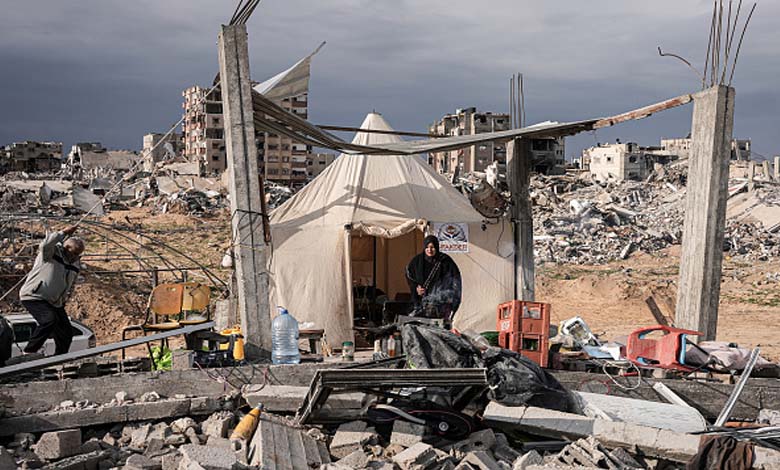
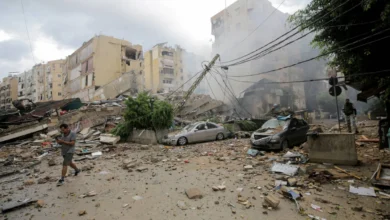
Scenes of devastation in southern Lebanon are increasingly reflecting what is known as the “Gaza model,” where entire villages are reduced to rubble within an expanding military context.
In the town of Bint Jbeil, located just a few kilometers from the Israeli border, The New York Times and other Western media outlets documented the scale of destruction nearly two months after Israel resumed its ground offensive in southern Lebanon.
Entire streets have been flattened, homes and shops completely destroyed, including a café that had been one of the town’s main landmarks.
-
Alerts and evacuations in southern Lebanon… Hezbollah stronghold under fire
-
Israel turns the yellow line into a belt of death in southern Lebanon
Despite the ceasefire agreement, Israel continues to carry out attacks, particularly in southern Lebanon, and its forces are conducting extensive demolition and blasting operations in border towns, where it has announced the establishment of a “yellow line” separating dozens of villages from the rest of Lebanese territory.
An analysis of satellite imagery, along with photos and videos published online and verified by The New York Times, highlights the scale of this Israeli military campaign in villages and towns across southern Lebanon.
Large-scale demolition operations have leveled vast areas comprising at least twenty towns and villages near the border, damaging government buildings and civilian infrastructure, including schools, hospitals, and mosques.
Villages now appear as a single stretch of ashes, with the white color of debris dominating the landscape from one locality to another.
After renewed fighting between Israel and Hezbollah in early March, when the group launched an attack on Israel in solidarity with Iran, Israel established a buffer zone several kilometers deep, stating that it would continue to occupy it until the group’s threat is contained.
Since the war began, Israeli officials have repeatedly stated that Tel Aviv intends to establish a “security zone” inside Lebanon up to the Litani River, approximately 30 kilometers from the border, with the declared aim of ending Hezbollah’s threat to northern Israel.
-
Latest news on the war against Iran: Israeli strikes west of Tehran and in southern Lebanon
-
For the first time, Israel calls for the evacuation of more than 80 towns in southern Lebanon and orders residents not to return
According to the terms of the ceasefire agreement published by the U.S. Department of State, Israel retains “the right to take all necessary measures to defend itself at any time against attacks” by Hezbollah.
Lebanese President Joseph Aoun said on Wednesday that Israel must “fully” comply with the ceasefire with Hezbollah before any direct negotiations between the two countries, under U.S. mediation.
A broader military presence
The American newspaper notes that the destruction seen in Bint Jbeil, considered a Hezbollah stronghold, is not an isolated case but is repeated in many border villages. The area, once characterized by its green landscape and varied terrain, has turned into expanses of rubble after Israeli forces destroyed entire villages as part of an effort to prepare the ground for a broader military presence.
-
Israel arrests a member of the Islamic Group and kills another from Hezbollah in southern Lebanon
-
The specter of an Israeli invasion looms over southern Lebanon
Israeli Defense Minister Israel Katz stated that this approach was inspired by tactics used by the army in the Gaza Strip, where entire neighborhoods, buildings, and streets were reduced to ruins.
Israeli Chief of Staff Eyal Zamir warned last Wednesday, during a visit to forces deployed in southern Lebanon, that “any threat, anywhere, against our communities or our forces, including beyond the yellow line and north of the Litani, will be eliminated.”
For its part, Lebanon believes that Israel’s actions reflect “a clear intention to impose a new occupation of Lebanese territory,” according to Defense Minister Michel Menassa.
-
Israel builds a concrete wall in southern Lebanon, a new violation
-
Israel Accuses UNIFIL of Shooting Down a Reconnaissance Drone Over Southern Lebanon
The vast majority in Lebanon view Hezbollah as having dragged the country into a devastating war in service of Iran, accusing it of ignoring the cost of escalation for civilians, as thousands fled from southern areas and Beirut’s southern suburbs in search of safety.
Nabil Senbel, 67, who works in a bakery in Bint Jbeil and fled to Beirut with only a few belongings, said, “I feel as though I am collapsing from anger and sorrow.”
Satellite images show that the area where Senbel lived and worked was heavily damaged, although it remains unclear whether his home was completely destroyed.
-
Amnesty International calls for investigation into alleged Israeli war crimes in southern Lebanon
-
Israel plans to expand its ground operations in southern Lebanon
Since the outbreak of the war, Israeli strikes have killed more than 2,600 people in Lebanon, according to the Lebanese Ministry of Health, including journalists and medical workers.
Infrastructure such as bridges and fuel stations has also been destroyed. More than one million people have been displaced. Fighting continued despite the ceasefire brokered by the United States, which was extended until mid-May.
The Israeli army says it targets infrastructure and positions belonging to the Iran-backed Hezbollah, which has launched hundreds of drones, rockets, and anti-tank missiles at Israel.
-
The Silent Catastrophe: A Quarter of Historic Buildings in Southern Lebanon Collapse in the Face of Israeli War
-
Political Analyst: Netanyahu Seeks Expansion and Annexation of Southern Lebanon under Military Cover
It maintains that its forces operate “in accordance with international law” and that its directives allow for the demolition of buildings used by Hezbollah.
The Israeli army had previously invaded southern Lebanon in early 1978, followed by a broader invasion in 1982 that reached Beirut, with the stated aim of pushing the Palestine Liberation Organization away.
Israeli forces gradually withdrew in the following years before establishing what became known as the “security belt” in the south of the country.
-
Violent Clashes Between Hezbollah and Israel Amid Preparations for Total War in Southern Lebanon
-
Assassinated in a Night Raid on Southern Lebanon: Who is the Senior Hezbollah Military Leader Taleb Abdullah?
-
Ghost Towns: How Southern Lebanon Became Deserted Areas After Israeli Strikes?