Israel seeks to displace more Lebanese people
Marco Rubio affirms that there is no problem between Tel Aviv and Beirut, and that the real problem lies with Hezbollah.
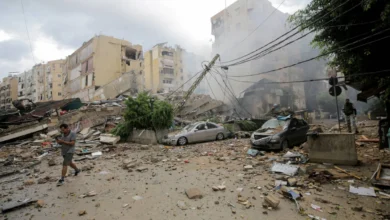
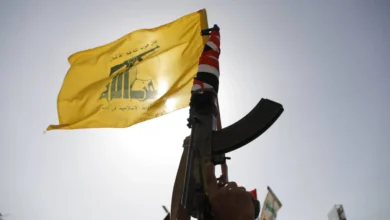
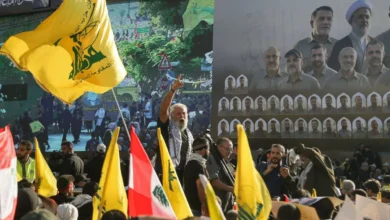
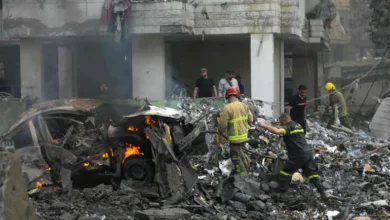
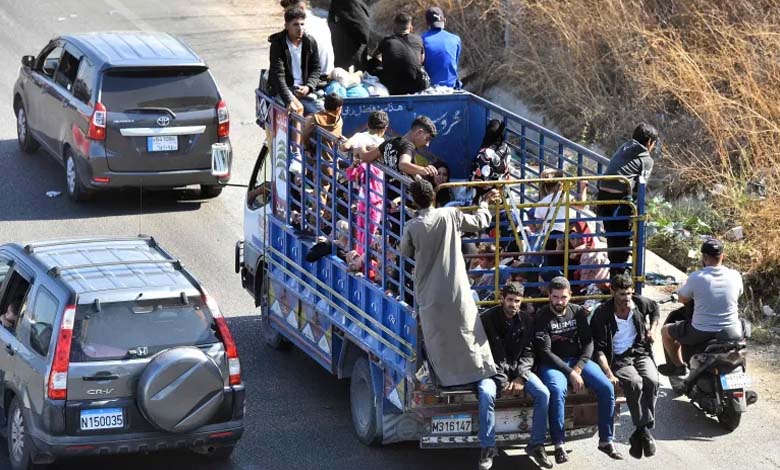
On Wednesday, the Israeli army warned residents of 12 towns in southern and eastern Lebanon to immediately evacuate their homes, in preparation for strikes it claimed would target Hezbollah positions, in a new escalation following a statement by U.S. Secretary of State Marco Rubio asserting that there is no dispute between Tel Aviv and Beirut and that the real issue lies with the Iran-backed group.
-
Southern Lebanon and the Gaza model: an escalation that redraws the map of destruction
-
America conditions its support for Lebanon on a direct meeting between Aoun and Netanyahu
The warning comes as these towns are subjected to Israeli artillery shelling, as part of a continued series of violations of the ceasefire agreement.
Israeli army spokesperson Avichay Adraee stated that the warning includes the towns of Kouthariyat al-Sayyad, Al-Ghassaniyeh, Mazraat al-Daoudiyeh, Bdeyas, Rihan, Zellaya, Al-Bazouriyeh, Harouf, Habboush, Ansariyeh, Qlawayeh, and Deir al-Zahrani.
Among the towns included in the warning is Zellaya, located in the Western Beqaa region in eastern Lebanon.
-
Washington and negotiations for a settlement in Lebanon… The carrot and stick formula
-
Surgical strikes against Hezbollah… U.S. pressure to restrain Israel in Lebanon
Adraee added on the X platform: “You must evacuate your homes immediately and move at least one thousand meters away from villages and towns toward open areas,” noting that the evacuation order precedes attacks on what he described as sites belonging to the Shiite group.
For his part, Rubio stressed that the United States is attempting to resolve issues by bringing the Israeli and Lebanese governments closer together despite the current field escalation, emphasizing that “Israel does not claim any rights to Lebanese territory, and the Iran-backed Hezbollah poses a direct threat to both the Lebanese people and Israel.”
Since March 2, Israel has been conducting an offensive against Lebanon that has resulted in 2,702 deaths, 8,311 injuries, and more than 1.6 million displaced persons, representing one-fifth of the population, according to the latest official figures.
-
Israel is wiping out an entire Lebanese village near the border
-
Israel gives Lebanon two weeks to reach an agreement
On April 17, U.S. President Donald Trump announced a renewable 10-day truce between Israel and Hezbollah, stating that Tel Aviv would no longer attack Lebanon thereafter. A three-week extension of the truce was later announced.
The Lebanese and Israeli sides also held two rounds of talks in Washington on April 14 and 23, as a prelude to potential peace negotiations.
However, Israel continues to violate the truce almost daily, justifying this by what it describes as “the right to take necessary measures to defend itself against threats.”
The ceasefire agreement includes a clause that Israel invokes to justify its attacks, stating that it retains what it claims is “its right to take all necessary measures to defend itself at any time against planned, imminent, or ongoing attacks, and that this right will not be restricted by the cessation of hostilities.”
Israel occupies areas in southern Lebanon, some for decades and others since the previous war between 2023 and 2024, and during the current offensive it has advanced approximately 10 kilometers inside the southern border.
Israel also occupies Palestinian territories and others in Syria and refuses to withdraw from them or to accept the establishment of an independent Palestinian state as stipulated in United Nations resolutions.
-
The United Nations documents war crimes in the confrontation between Israel and Hezbollah
-
Extension of the truce between Lebanon and Israel for three weeks
-
Lebanon seeks to extend the truce with Israel during upcoming negotiations
-
He will pay with his head: Israel escalates against Naïm Qassem and Hezbollah