Trump trapped in the Iran war between no victory and no peace
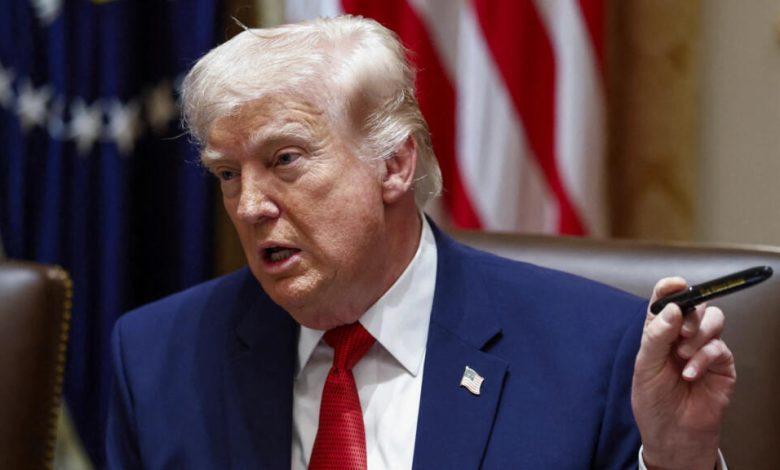
Analysts say the US president now faces two options: accept a potentially flawed agreement as an exit from the crisis, or escalate militarily and risk prolonging the war.
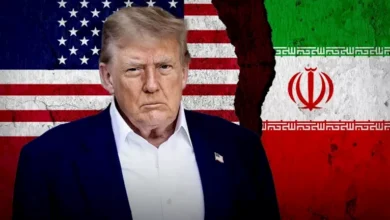
While US President Donald Trump highlights a series of military and tactical successes in the war against Iran, analysts argue that turning these gains into a clear and decisive outcome remains elusive, opening a broader debate over whether Washington is moving toward conflict resolution or sliding into a long war of attrition.
-
Trump and Iran: three military paths on the decision table
-
Iran to Trump: we did not request the extension of the truce, and the loser does not set the terms
With Tehran’s control over the Strait of Hormuz, its refusal to make concessions on the nuclear issue, and the clerical system remaining largely intact, doubts are growing over Trump’s ability to achieve a geopolitical victory.
Some analysts say his repeated claims of total victory sound hollow, as both sides oscillate between uncertain diplomacy and recurring US threats of renewed strikes, which would likely trigger Iranian retaliation through attacks on regional states.
Trump now risks the United States and its Gulf Arab allies emerging from the conflict in a worse position, while the Islamic Republic, despite military and economic strikes, could end up with greater leverage after demonstrating its ability to control one-fifth of global oil and gas supplies.
-
Trump and Iran: 4 Possible Scenarios, Including “Shock and Awe”
-
Trump trapped in the Iran war between no victory and no peace
The crisis is not over, and some experts believe Trump may still find an exit that preserves face if negotiations go his way. Others, however, predict a bleak post-war outcome for him.
Aaron David Miller, a former Middle East negotiator under both Republican and Democratic administrations, said: “Three months have passed, and what was designed as a short-term adventure is turning into a long-term strategic failure.”
For the US president, this is particularly significant given his well-known sensitivity to being seen as a loser—a label he frequently applies to his opponents. In the Iran crisis, he sees himself as commander-in-chief of the world’s most powerful military, facing a second-tier power convinced it holds the upper hand.
-
The war with Iran and the constraints of Congress… Trump surpasses the 60-day deadline
-
Mutual criticism… the Iran war reignites the rift between Trump and Merz
Analysts say this deadlock could push Trump, who has yet to define a clear exit strategy, to reject any settlement that appears as a retreat or as a repetition of the 2015 nuclear deal under Barack Obama, from which he withdrew during his first term.
White House spokesperson Olivia Wells said the United States “has achieved or exceeded all our military objectives in Operation ‘Epic of Fury’,” adding that “the president holds all the cards and wisely keeps all options on the table.”
Pressure and frustration
Trump ran for a second term promising to avoid unnecessary military interventions, but he has now drawn the United States into a quagmire that could permanently damage his foreign policy record and international credibility.
-
We destroyed their forces and nuclear laboratories: Trump outlines the results of the war against Iran
-
Trump keeps Iran under pressure and anticipates an imminent end to the war
The crisis is unfolding amid domestic pressure from rising US fuel prices and declining approval ratings, after launching an unpopular war ahead of November’s midterm elections. His Republican Party is seeking to maintain its congressional majority.
After more than six weeks of ceasefire, some analysts believe Trump faces a difficult choice: accept a flawed deal as an exit, or escalate militarily and risk prolonging the war. Another option would be limited but intense strikes framed as a decisive victory.
Another scenario is that Trump attempts to shift attention toward Cuba, as he has suggested, in search of an easier political win.
-
Trump’s deadline enters its decisive hours… Iran under bombardment and warning about trains
-
U.S. President Donald Trump threatened to destroy bridges and power stations in Iran
If so, he may again underestimate the challenges, just as some aides privately admit he misjudged the Iran operation, expecting it to resemble a quick raid that led to the removal of Venezuela’s president.
Nonetheless, Trump still has defenders. Alexander Gray dismissed the idea that the Iran campaign is failing, arguing that the damage inflicted on Iran’s military capabilities is already a “strategic success,” and that the war has brought Gulf states closer to the US while distancing them from China.
However, Trump has shown frustration at his inability to control the narrative, attacking critics and accusing the media of “treason.”
-
Trump mobilizes for a Hormuz alliance and broader international involvement in the war against Iran
-
Trump studies Iran’s future after the war and keeps an eye on Khamenei’s successor
The conflict has already exceeded Trump’s initial six-week expectation after he joined Israel in launching the war on February 28. Despite initial support from his political base, cracks have emerged in what was once near-unanimous Republican backing.
Early airstrikes destroyed much of Iran’s ballistic missile stockpile, damaged parts of its navy, and killed several senior commanders.
But Tehran responded by closing the Strait of Hormuz, sharply increasing energy prices, and launching attacks on Israel and Gulf states. Trump’s maritime blockade also failed to bring Iran to heel.
Iranian leaders have portrayed Trump’s claims of victory as a “crushing defeat,” even as observers note they may have overstated their own military prowess.
-
Iran protests put Trump to the test between escalation and dialogue
-
After Trump’s threats, Iran affirms readiness for war and dialogue
Unmet and shifting objectives
Trump has stated his goals are to prevent Iran from obtaining nuclear weapons, end its regional destabilisation capacity, and encourage regime change.
There is little evidence these shifting objectives have been achieved, and many analysts consider them unlikely. Jonathan Panikoff, former deputy national intelligence officer for the Middle East, said Iran views its survival and its ability to exert control over Gulf maritime routes as a success in itself.
He added that Tehran believes it can endure economic pain longer than Trump can sustain political pressure.
-
Iran Warns Trump Against Intervention and Draws the Red Line
-
Energy Investments: Iran’s New Card to Woo Trump and End Sanctions
The main objective—eliminating Iran’s nuclear capability—has also not been achieved, and Iran has shown little willingness to restrain its programme.
A stockpile of highly enriched uranium is believed to remain buried despite US and Israeli airstrikes, and could potentially be recovered and weaponised. Iran insists on its right to enrich uranium for what it says are peaceful purposes.
Some analysts warn the war may push Iran closer, not further, to pursuing nuclear weapons, similar to nuclear-armed North Korea.
Another stated US objective—ending Iranian support for allied armed groups—has also not been achieved. Iran is believed to retain significant missile and drone capabilities post-conflict.
-
Iran’s Nuclear Program Back in the Spotlight… and Trump Seeks Political Breakthrough
-
Between Escalation and De-escalation: How Will Trump Handle Iran?
Trump also faces worsening relations with traditional European allies, most of whom refused to support a war they were not consulted on.
China and Russia, meanwhile, are said to have learned lessons from the limitations of US military power against Iranian asymmetric tactics and from the depletion of US munitions stocks.
Robert Kagan, a fellow at the Brookings Institution, argues the outcome represents a deeper setback for US global standing than Vietnam or Afghanistan, as those wars were geographically removed from core global competition zones.
In a recent article titled “Checkmate in Iran,” he wrote: “There will be no return to the status quo ante, and no decisive American victory that erases the damage done.”
-
Trump’s Return Pushes European Powers to Demand Increased Pressure on Iran
-
Iran Keeps Door Open for Dialogue with Trump and Prepares for New Sanctions