The Decision to Establish Iraq’s Supreme Sovereign Council for Integrity Sparks Constitutional Debate
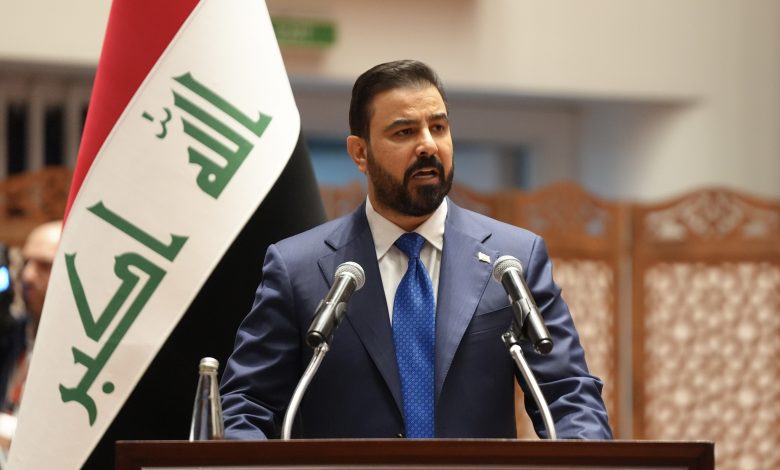
Critics of the measure argue that Al-Zaidi’s chairmanship of a council that includes oversight bodies tasked with monitoring government performance raises concerns about a conflict of roles.
The decision by Iraqi Prime Minister Ali Faleh Al-Zaidi to establish the Supreme Sovereign Council for Integrity, Oversight, and Public Funds Recovery has sparked widespread debate, with opinions divided between those who view the move as necessary for combating corruption and strengthening oversight, and those who believe it contradicts the independent nature of oversight institutions as stipulated by the Constitution.
The initiative comes as part of the government’s efforts to review public contracts and audit government projects. Al-Zaidi directed the creation of a new council responsible for overseeing major oversight-related files, chaired by himself and including the heads of the Integrity Commission and the Federal Board of Supreme Audit. The outcomes of its work are expected to be referred to the judiciary so that appropriate measures can be taken against violators and individuals implicated in corruption cases.
The controversy surrounding the establishment of the Supreme Sovereign Council for Integrity highlights the scale of the challenges posed by corruption in Iraq. Despite successive governments and numerous anti-corruption campaigns, reports continue to point to the existence of influence networks that exploit administrative and oversight loopholes to misappropriate public funds.
The so-called “Heist of the Century” remains one of the most prominent examples that shocked Iraqi public opinion in 2022, when investigations revealed the disappearance of $2.5 billion from tax trust funds in what became one of the largest financial corruption scandals in the country’s modern history.
This case has become a central reference point in discussions concerning the effectiveness of oversight institutions and the state’s ability to protect public funds. It has also strengthened public and political demands for stricter monitoring of government contracts and the closure of corruption and waste channels that have cost the Iraqi treasury billions of dollars over the years.
Al-Zaidi’s government seeks to strengthen oversight of government contracts, verify the economic feasibility of projects, recover public funds, and prevent the recurrence of violations that accompanied many programs in recent years. These measures are also part of the executive authority’s efforts to demonstrate greater seriousness in addressing corruption, one of the most persistent challenges facing the Iraqi state.
However, the decision has not gone unchallenged. Member of Parliament Mohammed Jassem Al-Khafaji argued that the creation of the new council lacks both legal and constitutional basis. He noted that the Federal Integrity Commission and the Federal Board of Supreme Audit are constitutionally linked to Parliament and enjoy independence from the executive branch in order to oversee government institutions and investigate corruption cases.
Critics contend that having the Prime Minister chair a council that includes bodies responsible for monitoring the government itself creates a conflict of roles. They point out that these institutions are fundamentally tasked with overseeing ministries and government agencies, including the Prime Minister’s Office, raising questions about whether the new structure aligns with the constitutional principle of independent oversight.
They also emphasized that existing legislation, particularly the Integrity Commission Law and the Federal Board of Supreme Audit Law, clearly defines the powers and operational mechanisms of these institutions. In their view, priority should be given to strengthening their independence and appointing permanent leadership rather than leaving sensitive positions under acting appointments, thereby ensuring a more effective fight against corruption free from political influence.
Supporters of the move, however, argue that Iraq needs greater coordination among oversight, judicial, and financial bodies to confront the complex corruption networks that drain state resources. They believe the new council could serve as a platform for unifying efforts, accelerating information exchange, and monitoring major contracts that require cooperation among multiple oversight agencies.
The debate comes at a time when Al-Zaidi’s government is intensifying oversight measures. The Prime Minister had previously ordered extensive investigations into several major government contracts, including reviews of their compliance with applicable laws and regulations and efforts to identify beneficiaries of any potential violations committed at the expense of public funds.
The ongoing debate surrounding the Supreme Sovereign Council for Integrity reflects a longstanding dilemma in Iraq: how to balance the need for strong governmental leadership in the fight against corruption with the preservation of the independence of oversight and judicial institutions. The controversy is likely to continue in the coming period, especially if objections move beyond the political arena into legal and constitutional challenges, potentially making the future of the new council dependent on constitutional interpretations and the limits of executive authority in managing oversight affairs.