Peace Between Lebanon and Israel: Progress in Negotiations as the United States Identifies the Only Obstacle
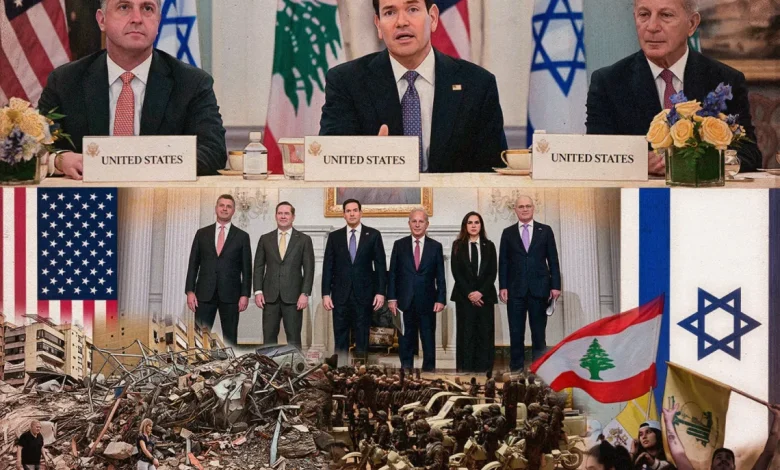
At the conclusion of the first day of the fourth round of direct negotiations between Lebanon and Israel in Washington, signs of political and security progress emerged, according to the U.S. Department of State.
-
Rubio on Hezbollah: an obstacle hindering peace between Lebanon and Israel
-
Extension of the truce between Lebanon and Israel for three weeks
U.S. Secretary of State Marco Rubio stated that Hezbollah represents the “only obstacle” to reaching a peace agreement between the two countries, as the group continues to reject negotiations and the disarmament demanded by Israel.
Tommy Pigott, spokesperson for the U.S. Department of State, wrote on the platform X after the first day of talks that “progress continues on both the political and security tracks,” noting that another session will be held on Wednesday.
Lebanese Prime Minister Nawaf Salam stated on Tuesday that the objective of the talks is to “consolidate the ceasefire throughout Lebanon,” adding that “negotiations are the least costly option for Lebanon and the Lebanese people.”
-
New U.S. Plan to Contain Escalation Between Israel and Lebanon
-
Israel Expands Operations in Southern Lebanon in Preparation for Occupying New Areas
The Only Obstacle
Meanwhile, U.S. Secretary of State Marco Rubio declared on Tuesday that Israel and Lebanon could reach a peace agreement “as early as tomorrow” if Hezbollah did not exist, coinciding with the launch of the fourth round of talks in Washington.
Responding to a question during a hearing before the Senate Foreign Relations Committee, Rubio said: “Israel and Lebanon can reach a peace agreement tomorrow. Israel is not demanding any Lebanese territory, and Hezbollah is the only obstacle.”
He added that “without Iran, there would be no Hezbollah,” stressing that the United States, which is mediating the negotiations, insists on separating Lebanese-Israeli talks from negotiations with Iran, a position that Tehran rejects.
-
Israel intensifies operations in Lebanon amid troop mobilization and airstrikes
-
Lebanon–Israel negotiations enter a complex security and political phase
Details of the Negotiations
On Tuesday, the U.S. Department of State welcomed representatives from Lebanon and Israel to begin a new round of direct discussions, while clashes between Israel and Hezbollah continue despite U.S. President Donald Trump’s announcement that both sides had agreed to halt mutual attacks.
The Lebanese delegation is headed by former ambassador Simon Karam, while the Israeli delegation is led by Ambassador Yechiel Leiter. Representing the United States is Daniel Hohler on behalf of Secretary of State Marco Rubio, who is absent from this round. This marks the fourth round of discussions between the two countries since the outbreak of the war between Israel and Hezbollah on March 2.
The talks are scheduled to continue for two days. None of the participants made public statements upon arriving at the U.S. Department of State headquarters.
-
Southern Lebanon: Israel announces the death of its twentieth soldier and issues warnings to five villages
-
New alerts in Lebanon: Israel expands the scope of confrontation with Hezbollah
Lebanese President Joseph Aoun stated in a communiqué released by the presidency on Tuesday that “there is no alternative to negotiation, and it should not be viewed as surrender, concession, or defeat. True strength does not lie in waging war but in possessing the courage and wisdom to end it through negotiations in the interest of the nation, which remains the highest priority.”
While Lebanon seeks to consolidate the ceasefire and secure Israel’s withdrawal from its territory, Israel aims to ensure Hezbollah’s disarmament. Hezbollah, however, rejects direct negotiations between the two countries and maintains that its weapons are an internal Lebanese matter and not part of the negotiations.
-
Through incitement and protests, Hezbollah seeks to obstruct Lebanon–Israel negotiations
-
Israel expands its operations in Lebanon… evacuation alerts and dozens of Hezbollah members killed
On Monday evening, the Lebanese Embassy in Washington issued a statement announcing that Hezbollah had agreed to a “mutual cessation of attacks” with Israel and that U.S. President Donald Trump had informed Lebanese officials that Israel had also agreed to the proposed arrangement. However, neither party has officially confirmed its commitment to the agreement.
Meanwhile, Lebanese Parliament Speaker Nabih Berri, who serves as an intermediary between Hezbollah and the United States, insists that any ceasefire on the Israeli side must be “comprehensive” in order to ensure compliance by the Iranian-backed group, according to statements made by his adviser to Agence France-Presse on Tuesday.
-
Lebanon today: Israeli strikes on Beirut, ground incursion, and over one million displaced
-
Latest news on the war against Iran: Israeli strikes west of Tehran and in southern Lebanon
The Lebanese front between Israel and Hezbollah has witnessed significant escalation in recent days, with the Israeli military continuing its advance into southern Lebanon.
Israel has also intensified its airstrikes on several areas in southern Lebanon in recent weeks. On Monday, Israeli officials warned that the military would resume strikes on Beirut’s southern suburbs, an area that has largely been spared since the ceasefire announced on April 17.
-
Israeli attacks on Beirut and Iran as Golani Brigade deployed to Lebanon
-
Israel acknowledges failure of a landing operation in Lebanon to search for a pilot’s remains
-
Unprecedented Double Missile Strike from Lebanon and Iran Hits Israel